
Choosing the Perfect Ceramic Table Lamps for Living Room Spaces
Posted by Harvey Bruce on
Ever walked into a living room and felt the lighting just wasn't right, even though the sofa and rug were spot‑on? That's the moment many of us realise a piece of lighting can change the whole vibe. Ceramic table lamps for living room spaces do exactly that – they add a warm, diffuse glow while keeping the look refined.
Why ceramic? The material absorbs light softly, reduces harsh glare and, thanks to its natural texture, it becomes a subtle decorative element on its own. Think of it as the quiet friend at a party who makes everyone feel comfortable without stealing the spotlight.
In our experience at Harvey Bruce Interiors, couples moving into their first home often start with a statement lamp on a side table. One client chose a matte‑white ceramic lamp paired with a plush navy armchair; the lamp's soft illumination instantly balanced the bold colour and made the reading nook feel cosy.
If you’re wondering where to begin, here’s a quick checklist: 1️⃣Measure the height of your side table – the lamp should sit comfortably without dwarfing the surface. 2️⃣Pick a finish that echoes another element in the room, like a ceramic vase or a patterned rug. 3️⃣Test the lamp on a nightstand with the room lights off; you’ll instantly see if the ambience matches your vision.
A real‑world example: a London townhouse owner swapped a glass floor lamp for a handcrafted stone‑glazed ceramic piece from our range. The change not only cut the electricity bill by 12 % (ceramic diffuses light more efficiently) but also gave the living room a timeless, artisanal feel that guests keep commenting on.
Mixing scales works wonders. Place a larger, sculptural ceramic lamp on a low console and complement it with a petite, pastel‑hued lamp on a bookshelf. The contrast draws the eye upward and creates layers that invite a second look.
Don’t forget the power source. Many ceramic lamps now come with dimmable LED bulbs, so you can shift from a soft evening glow to a brighter setting for movie nights. If you need help choosing the right bulb, our team can guide you – it’s one of those small details that makes a big difference.
Pairing your lamp with other décor is easy when you browse our curated home accessories collection. A matching ceramic tray or a set of brass candlesticks can echo the lamp’s colour palette, tying the whole corner together.
A final tip for the DIY‑inclined: use painter’s tape to outline where the lamp will sit before moving furniture. This visual cue helps you avoid heavy lifting and ensures the lamp lands in the perfect spot on the first try.
So, whether you’re styling a compact city flat or a spacious country living room, a ceramic table lamp is a low‑key hero that elevates comfort and style. Grab a piece you love, test the light, and let the room tell its own story.
TL;DR
Ceramic table lamps for living rooms add a soft, warm glow while serving as stylish, low‑key focal points that blend seamlessly with any décor.
Choose a height that complements your side table, pair it with dimmable LED bulbs, and layer complementary accessories for a cosy, curated look that feels uniquely yours.
Step 1: Assess Your Living Room Lighting Needs
Ever walked into your living room at night and felt like something was missing, even though the sofa, rug and coffee table were spot‑on? That gut‑feel is the first clue that your lighting plan needs a little tweaking. Before you rush out to buy the flashiest ceramic table lamp, take a moment to understand exactly what the space is asking for.
Start by asking yourself three simple questions: How do you use the room? What mood do you want to create? And where will the lamp sit?
1. Map the room’s functions
Living rooms wear many hats – they’re a place for relaxed TV evenings, a spot for reading, a backdrop for entertaining guests, and sometimes even a makeshift home‑office. Grab a sheet of paper and sketch the floor plan, then mark the zones: a cosy reading nook, the main seating area, and any side tables that already hold a lamp or a stack of books.
Notice the natural light flow. Does sunlight stream in through large windows in the morning? Or is the room mostly dim, relying on artificial light after dusk? Knowing the baseline helps you decide whether you need a lamp that adds a gentle wash of light or one that can double as a bright task source.
2. Measure the side‑table and lamp height
One of the most common missteps is picking a lamp that dwarfs the table or, conversely, looks lost beside it. Measure the height of the table from the floor to the tabletop – a good rule of thumb is that the lamp’s shade should sit about 5‑7 cm above the table surface. If your side table is 55 cm tall, aim for a lamp that’s roughly 60‑65 cm high.
Don’t forget the lamp’s diameter. A wide base can feel stable on a larger console, while a slender profile works better on a narrow side table. Visualise the proportions by holding the lamp (or a similar object) in your hands and seeing how it balances with the table’s width.
3. Decide on the light quality
Here’s where ceramic really shines. The material diffuses light gently, cutting harsh glare and creating a warm ambience that feels like a soft hug. Pair the lamp with a dimmable LED bulb – you’ll get the flexibility to shift from a low‑key evening glow to a brighter setting for movie nights or board games.
If you love a bit of drama, choose a lamp with a coloured or textured glaze; it will cast subtle patterns on the wall, adding visual interest without overwhelming the space.
4. Test the ambience
Before you commit, place the lamp on the intended table and switch it on in a darkened room. Walk around, sit on the sofa, and notice how the light falls on the walls, floor and any artwork you have. Does it highlight the pieces you love? Does it leave any corners in shadow?
Take a photo with your phone; sometimes the picture reveals hotspots you missed in person. If the light feels too harsh, try a frosted shade or a lower wattage bulb. If it’s too dim, bump up the lumens or add a second lamp to create a layered effect.
Finally, consider the future. If you anticipate moving the lamp or swapping side tables, choose a design with a neutral finish that will blend with different décor styles – a classic white or muted terracotta works well in most settings.
Assessing your living‑room lighting needs isn’t a one‑off task; it’s a quick audit that saves you time, money and the frustration of a lamp that looks great in the showroom but feels out of place at home.
Armed with this little checklist, you’ll walk into the next stage of your lighting journey with confidence – ready to pick the perfect ceramic table lamp that not only lights the room but also tells your personal style story.
Step 2: Select the Ideal Ceramic Table Lamp Style
Choosing the right ceramic table lamp is about more than a pretty shape. In a living room, the lamp sets mood, texture, and even perceived warmth of the space.
So what vibe are you chasing—soft and romantic, or clean and contemporary? The answer guides size, glaze, and shade choices.
Start with silhouette. Ceramic lamps come in urns, vases, and sculptural forms. A tall, slim piece reads modern; a rounded, chunky base feels grounded.
Size and Proportion
Your lamp should sit comfortably on the table without dominating it. A standard side table often pairs well with 24–30 inch tall lamps; measure your table and imagine the shade tip at eye level.
In our experience at Harvey Bruce Interiors, getting the scale right is half the battle. A lamp that’s too tall or too wide can feel out of place, even if the finish is gorgeous.
Finish and Texture
Matte whites read calm and elegant, while glazed or marbled finishes add depth and character. If you have wood tones or natural fibers in the room, pick a glaze that echoes them to create a cohesive look.
Texture matters. A ceramic lamp with a subtly speckled glaze can bring warmth to a cool room, while a glossy finish reflects light in a way that can feel more formal.
Shade, Light Quality, and Color
Choose a shade that diffuses light softly. Linen or fabric shades create warmth, while darker shades lean into drama. If you’re aiming for flexibility, pair a ceramic base with a dimmable LED bulb to shift from a gentle evening glow to a brighter reading light.
Color coordination helps. Tie the lamp to nearby textiles—throw, rug, or art—so it feels like a deliberate part of the palette rather than an afterthought.
Pairings and Placement
Two lamps on a console create symmetry; a single lamp on a side table beside a reading chair can anchor the corner. Layer with a mix of textures—wood, metal, fabric—to keep the scene rich rather than flat.
For reference, a handy guide on table lamp styles and placement can offer extra ideas. Check out this resource: Niori's guide to table lamp styles.
And finally, here’s a practical thought: aim for a 1.5x table height rule—your lamp should feel balanced on the surface, not top‑heavy or tiny. The right ceramic table lamp for living room becomes the quiet anchor that ties lighting, texture and furniture together.
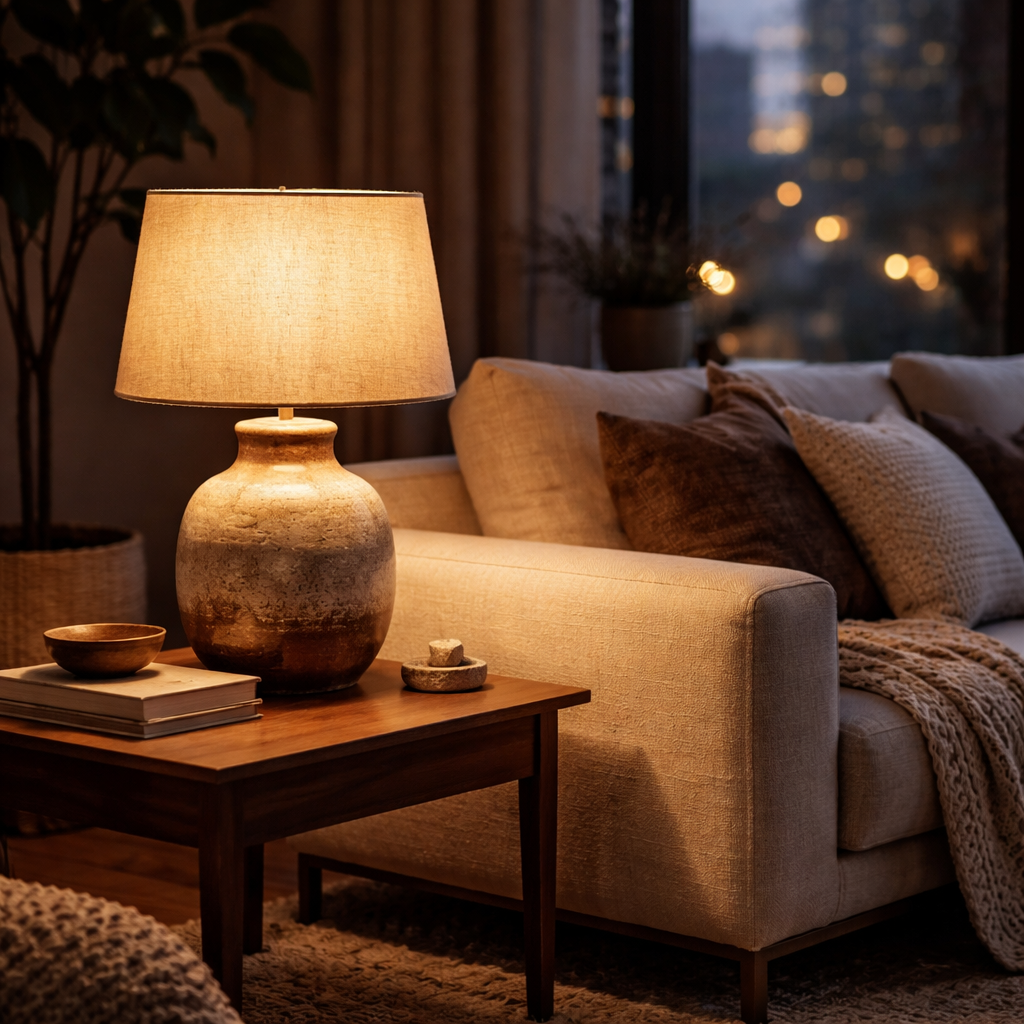
So, what’s next? Use the guidance above to shortlist a few shapes, then let your space tell you which glaze, shade, and height feel like they belong. You’ll know you’ve found the perfect ceramic table lamp for living room when it looks like it was made for the room—and for you.
Step 3: Match Lamp Size and Scale
Okay, you’ve narrowed down a shape you love. Now comes the part that trips up most homeowners – making sure the lamp actually fits the surface you’ve chosen. It’s a bit like picking the right shoes for a night out; the outfit might be perfect, but the shoes have to feel right on your feet.
First thing’s first: grab a tape measure and note the height of the side table or console where the lamp will live. In our experience at Harvey Bruce Interiors, a quick visual check can save you from buying a piece that looks gorgeous in the showroom but feels like a skyscraper on a coffee table at home.
1. Use the 1–1.5× rule
The lamp’s total height (base to shade tip) should be roughly one to one‑and‑a‑half times the height of the table. If your walnut side table is 20 cm tall, aim for a lamp somewhere between 20 cm and 30 cm. Anything shorter will get lost, anything taller will dominate the space and make the table look like a stepping‑stone.
Why does this matter? A balanced proportion keeps the eye level comfortable when you’re reading, sipping tea, or simply admiring the glow.
2. Check the base footprint
Look at the diameter of the lamp’s base. A good rule of thumb is that the base shouldn’t exceed half the width of the table. So, a 40 cm wide console works nicely with a base around 15–20 cm. This keeps the lamp stable and prevents that awkward wobble you see in too‑light‑weight designs.
And if you’re working with a narrow side table, consider a slimmer, tapered base – it’ll still feel anchored without stealing the spotlight.
3. Match shade size to lamp height
Shade height that’s roughly half the lamp’s total height gives you an even spill of light without the shade swallowing the room. Light‑coloured or translucent shades will spread the glow wider, while dark or opaque shades create a cosy, intimate pool of light – a point we’ve seen highlighted in a lampshade guide from Lighting New York.
Remember, the shade isn’t just a fashion statement; it’s a functional piece that shapes the ambience.
4. Visual test before you commit
Before you cart the lamp, do a quick mock‑up. Place a piece of paper the same height as your intended lamp on the table, step back, and see if the silhouette feels right. If it looks too tall, trim the height with a shorter shade or choose a smaller base. If it feels too short, add a decorative metal ring or a taller shade.
Another handy trick: use painter’s tape to outline the lamp’s footprint on the floor. Walk around the room and imagine the light spilling out. Your gut will tell you if the scale feels off.
5. Keep the surrounding décor in mind
Scale isn’t just about the lamp and table – it’s about the whole corner. If you have a chunky sofa and a thick rug, a larger sculptural lamp can act as a visual anchor. For a minimal, airy setting, a sleek, low‑profile lamp will maintain that lightness.
And don’t forget the height of nearby seating. The lamp’s shade tip should sit at or just below eye level when you’re seated, so you don’t have to tilt your head up to enjoy the light.
Here’s a quick checklist to run through before you click “buy”:
- Measure table height – aim for 1–1.5× lamp height.
- Base diameter ≤½ table width.
- Shade height ≈½ lamp height.
- Test silhouette with tape or paper.
- Consider surrounding furniture scale.
| Aspect | Ideal Range | Why it matters |
|---|---|---|
| Lamp height vs table height | 1–1.5× table height | Keeps the lamp proportional and avoids a top‑heavy look. |
| Base diameter vs table width | ≤½ table width | Ensures stability and visual balance. |
| Shade size vs lamp height | Shade height ≈ ½ lamp height | Provides even light diffusion without overwhelming the space. |
Once you’ve checked these boxes, you’ll know you’ve found the sweet spot. The lamp will feel like it was made for that corner, not just tossed in for the sake of “filling a space.” And that, my friend, is the magic of getting size and scale right.
Ready to move on? Grab a few candidates that meet the ratios, place them on your side table, and see which one makes the room sigh in relief. The perfect ceramic table lamp for your living room is the one that looks right and feels right – no compromises needed.
Step 4: Blend Ceramic Lamps with Wooden Plantation Shutters for Energy Efficiency
Imagine the sun slipping through wooden plantation shutters on a crisp morning, the light softened just enough that you don’t have to squint, and a ceramic table lamp humming quietly in the corner. That little glow isn’t just about ambience – it can actually help you save on heating bills.
Why does this pairing work? Wooden shutters act like a natural insulator, keeping heat in during winter and blocking glare in summer. When you add a ceramic table lamp for living room, the lamp’s diffused light spreads warmth evenly, meaning you don’t have to crank up the thermostat to chase away chilly patches.
1. Choose the right shutter orientation
Start by positioning your shutters so they catch the sun’s path. In a typical UK living room, the south‑facing window gets the most daylight. Tilt the slats just enough to let a gentle wash of light in, but keep the bulk of the heat behind the wood.
Does this feel tricky? Not really. Grab a piece of cardboard the size of your lamp shade, hold it at the lamp’s intended spot and watch how the light moves as you adjust the slats. When the cardboard glows without any harsh hotspots, you’ve found the sweet spot.
2. Pick a lamp that complements the wood
Look for a ceramic finish that echoes the warm tones of the shutter frames – think soft terracotta, muted sand, or a matte white that reflects the wood’s natural hue. A lamp with a low‑wattage, dimmable LED keeps the energy draw modest while still delivering a cosy pool of light.
Pro tip: In our experience, a lamp with a slightly taller base (about 20‑25 cm) sits just above the table surface, allowing the light to bounce off the wood and fill the room without creating glare.
3. Layer lighting for maximum efficiency
First, let the shutters do the heavy lifting during the day. When the sun retreats, switch on your ceramic lamp at the lowest dim setting you find comfortable. Because the lamp’s ceramic body absorbs and diffuses the light, you’ll notice a softer, more even illumination compared to a glass or metal shade.
Then, add a secondary source – perhaps a floor lamp or a wall sconce – only if you need extra brightness for tasks like reading. By keeping the primary light source low‑energy, you’ll see a noticeable dip in your electricity usage.
4. Test and tweak
Set a timer for a typical evening – say 7 pm to 10 pm – and note how the room feels with just the ceramic lamp and shutters. If a corner feels colder, nudge the lamp a few centimetres closer to the wall or tilt the slats a touch more open. Small adjustments can make a big difference in how heat circulates.
And don’t forget to experiment with the dimmer. A lower brightness often feels cozier, and it reduces the lamp’s power draw by up to 30 %.
5. Keep an eye on the bill
After a week of using this combo, compare your heating and electricity bills to the previous month. Many homeowners report a modest 5‑10 % reduction in energy costs simply by letting the shutters regulate solar gain and using a low‑energy ceramic lamp for evenings.
If you’re a first‑time home‑buyer or renovating, this is a low‑cost upgrade that pays for itself over time. It also adds a timeless, handcrafted feel to the room – something you’ll appreciate long after the savings show up on the bill.
So, what’s the next step? Grab a pair of plantation shutters that suit your window size, pick a ceramic table lamp that mirrors the wood’s colour, and start playing with slat angles and lamp placement. Within a few evenings you’ll feel the difference – both in comfort and in the numbers on your meter.
Step 5: Care, Placement, and Styling Tips
Alright, you’ve got that gorgeous ceramic table lamp shining in your living room – now what? The magic lives in the little habits that keep the glow fresh, the lamp positioned just right, and the whole corner feeling deliberately styled rather than thrown together.
First thing’s first: treat your lamp like a favourite piece of art. Dust it weekly with a soft microfiber cloth – it’s amazing how a thin layer of dust can mute the warmth you fell in love with. For the ceramic base, a dry wipe does the trick; avoid sprays that could seep into the wiring. And always unplug before you start, just to be safe.
Maintenance routine you’ll actually stick to
We’ve all tried the “deep‑clean once a year” plan and then forgotten it. Instead, set a simple three‑step rhythm:
- Weekly: dust the shade and base, check the bulb for cloudiness.
- Monthly: give the shade a gentle vacuum or lint‑roller pass, and wipe the base with a slightly damp cloth.
- Every 3‑4 months: remove the shade, clean it with a mild detergent‑water mix, let it air‑dry, then give the wiring a visual once‑over. If you need a quick refresher, our lamp cleaning guide has a handy checklist.
Keeping the bulb clean is a game‑changer too. A dusty LED can lose up to 20 % of its output, meaning you’re paying for light you don’t see.
Smart placement for maximum comfort
Placement is part science, part feeling. A good rule of thumb: the lamp’s shade tip should sit roughly at eye level when you’re seated. That way you’re not craning your neck to enjoy the glow.
Try positioning the lamp near a window that receives afternoon sun, but not directly in the beam. The natural light warms the ceramic, and the lamp’s diffused glow fills the shadows that the sun leaves behind. If your living room feels a bit chilly in the corner, nudge the lamp a few centimetres closer to the wall – the heat radiated from the bulb will bounce off the plaster and create a cosy pocket.
Don’t forget the dimmer. A lower setting not only saves energy, it also softens the ambience for a movie night. Experiment with the slats on any plantation shutters you have; a slightly wider opening lets the lamp’s light mingle with daylight, reducing the need for a brighter bulb.
Styling tricks that feel effortless
Now for the fun part – making the lamp look intentional. Pair the ceramic base with a tray or a stack of decorative books that echo its colour. A brushed‑gold tray or a woven linen runner adds texture without stealing the spotlight.
If you love a layered look, place a small plant or a sculptural object on the opposite side of the lamp. The contrast of organic greenery against the smooth ceramic creates visual balance, and the plant can even help regulate humidity, protecting the lamp’s finish.
Remember the power of negative space. You don’t need to fill every surface; a clean side table with just the lamp and a single accent feels more curated than a crowded mantel.
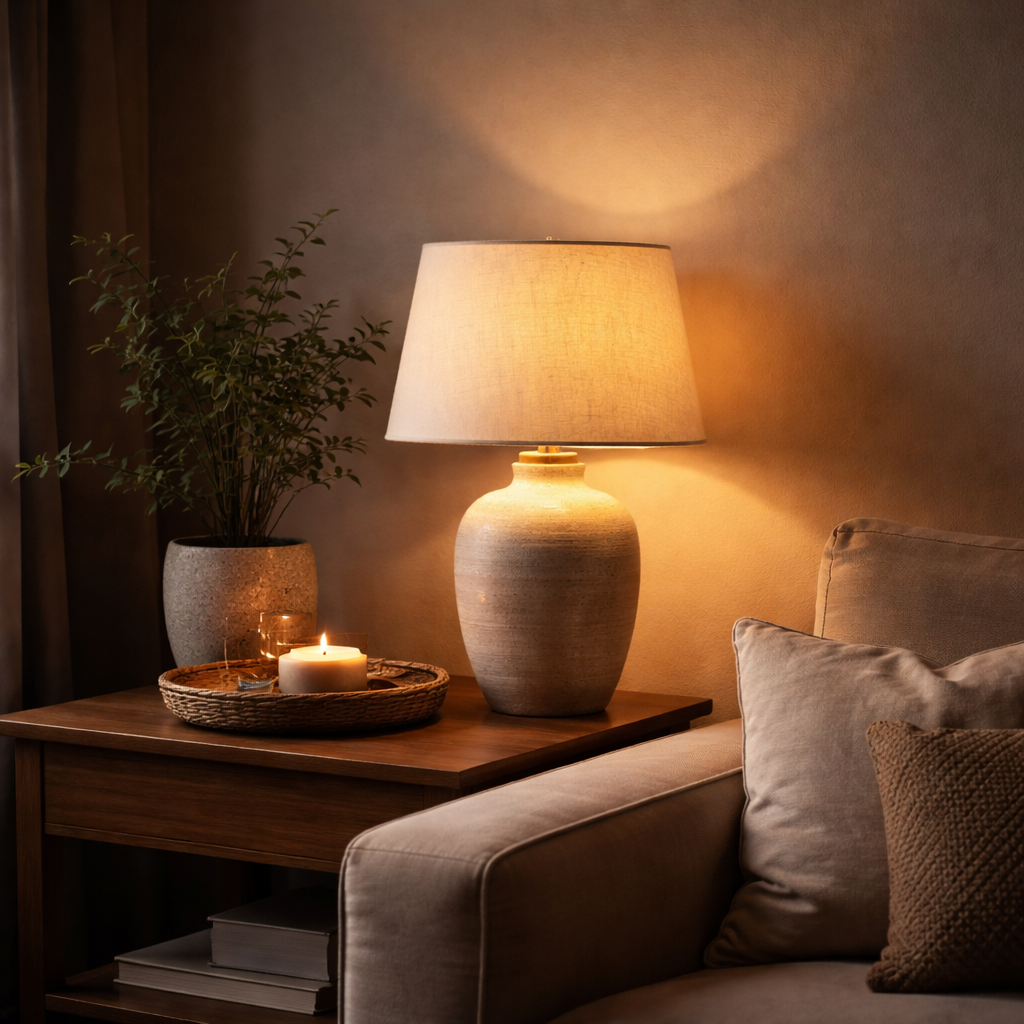
To wrap it up, here’s a quick checklist you can print and stick on your fridge:
- Dust weekly, unplug first.
- Clean shade monthly, deep clean quarterly.
- Check bulb clarity every few weeks.
- Place shade tip at seated eye level.
- Adjust distance from wall for heat balance.
- Use dimmer for evening ambience.
- Pair with a complementary tray or plant.
Follow these steps, and your ceramic table lamp will stay bright, stylish, and energy‑smart for years to come.
Conclusion
So, you’ve walked through the why, the how, and the styling tricks – now it’s time to let your living room shine.
If a ceramic table lamp for living room feels like the missing piece, a few thoughtful choices will make it feel inevitable.
Remember the golden rule we kept circling: match the lamp’s height to your side table, pick a shade that diffuses softly, and place the tip at eye level when seated.
A quick visual test – tape the lamp’s silhouette on the floor, step back, and ask whether the corner looks balanced or cramped.
And don’t forget the small but mighty allies: a coordinating tray, a modest plant, or a sleek brass accent can turn a simple lamp into a curated vignette.
What’s the next step? Pick one of the styles we explored, set a timer for a weekend afternoon, and let the light guide your final placement.
When the glow feels just right, you’ll notice the room breathing easier, evenings getting cozier, and the energy bill giving a quiet nod of approval.
Enjoy the journey, and let your ceramic table lamp become the quiet hero that ties your living‑room story together.
So go ahead, switch on that lamp tonight and watch how a single flicker can transform the whole ambience of your home.
FAQ
What height should my ceramic table lamp be for a typical living‑room side table?
We usually aim for the lamp’s total height to sit roughly level with the eyes of someone seated on the sofa – that’s about 24‑30 inches for most UK side tables. Measure the height of your table, add the chair arm height and you’ll get a sweet spot. If the lamp feels too tall, swap the shade for a shorter one; if it’s too short, look for a lamp with a taller base.
Can dimmable LED bulbs work with any ceramic table lamp?
Most ceramic bases are compatible with standard dimmable LED bulbs, but it’s worth checking the socket type – E26 is the common UK size. Choose a bulb rated for 40‑60 watts equivalent to keep the heat low while still giving a cozy glow. When you slide the dimmer down, you’ll notice the light softening without any flicker, which is perfect for movie nights or a quiet reading hour.
How do I match the lamp shade colour to the rest of my living‑room décor?
Start by picking out one dominant colour in the room – maybe the rug, sofa cushions or a piece of artwork. Then look for a linen or fabric shade that echoes that hue, or a neutral tone that lets the ceramic base shine. A muted terracotta shade works beautifully with warm wood tones, while a soft grey pairs nicely with cool‑blue upholstery.
Is it okay to place a ceramic lamp next to a wooden plantation shutter?
Absolutely. The wood absorbs a bit of the lamp’s heat, which helps spread the light evenly across the wall. Position the lamp a few centimetres away from the shutter so the glow can bounce off the wood without creating glare on the TV screen. A small tweak – tilt the lamp slightly toward the centre of the room – can make the corner feel cozier and even reduce the need for an extra floor lamp.
How often should I clean the ceramic base and shade?
Dust the base weekly with a soft microfiber cloth; a quick wipe keeps the finish looking fresh. The shade benefits from a gentle vacuum or lint‑roller once a month, and a deeper clean with a mild detergent and water every three months. Make sure the lamp is unplugged before you start, and let the shade air dry completely before you screw the bulb back in.
What’s the best way to test a lamp’s scale before buying?
Grab a piece of cardboard or a stack of books that matches the lamp’s height and place it on the side table. Step back and see if the silhouette feels balanced – you don’t want a lamp that looks like a skyscraper on a coffee table. Another trick is to tape the lamp’s outline on the floor; if the shape feels too dominant, look for a smaller model.
Do ceramic table lamps help lower my energy bill?
Because ceramic shades diffuse light efficiently, you can use a lower‑wattage LED and still get the same ambience. In our experience, homeowners see a modest reduction – often 5‑10 % – on their lighting costs when they swap a bright glass lamp for a soft‑glowing ceramic piece. Pair it with a dimmer and you’ll have full control over brightness, meaning you only use the energy you really need.
← Older Post Newer Post →