
how to style a bar cart: creative ideas for modern homes
Posted by Harvey Bruce on
Picture this: you’ve just set up a sleek kitchen island and the bar cart is staring back at you, half‑filled with glassware but looking a little… empty. That moment of “something’s missing” is the perfect spark to start styling.
In our experience, the first step is to pick a focal piece that tells a story – think a polished wooden tray, a vintage brass decanter, or a bold coloured bottle. It should be the anchor that draws the eye, just like the Avia Mist Barstool does in a living‑room set‑up, balancing modern lines with subtle texture.
Once you’ve chosen that star, layer height. A stack of sturdy coasters, a small potted herb, and a decorative bowl create visual rhythm. Real‑world example: a couple in Edinburgh swapped a plain metal tray for a reclaimed oak slab from a local craftsman; the warm grain instantly lifted the whole cart, making their evening cocktails feel more intimate.
Next, think colour harmony. Pull a hue from your existing décor – perhaps the muted teal of your sofa cushions – and repeat it in a glass pitcher or a set of copper‑finished bar tools. Consistency makes the cart feel curated rather than cluttered.
Don’t forget function. A few well‑placed storage boxes keep napkins, stirrers, and spare bottles out of sight. We’ve seen homeowners use wicker baskets from the same collection as their side tables; the tactile contrast adds depth while staying practical.
Finally, add a personal touch that sparks conversation. A handcrafted wooden bottle holder, a sculptural ice bucket, or even a tiny framed recipe card can make the cart uniquely yours. For that extra dash of personality, consider a piece from a fellow maker – like a carved wooden accent from Atlantic Wood N' Wares – which brings a touch of regional craftsmanship into your home.
Actionable checklist:
- Choose one statement item (tray, decanter, or barstool) as the centerpiece.
- Build height with coasters, plants, and bowls.
- Echo a colour from your room in accessories.
- Include hidden storage for everyday bar essentials.
- Finish with a unique, handcrafted accent.
Follow these steps and your bar cart will go from functional to fabulous, inviting guests to linger and you to enjoy the little moments of style.
TL;DR
Styling a bar cart is all about picking a focal piece, layering height, echoing colours, adding hidden storage, and finishing with a unique handcrafted accent.
Follow our quick checklist to transform your cart from functional to fabulous, creating a curated, conversation‑starter display that fits any luxury‑focused home and delight your guests.
Step 1: Choose the Right Bar Cart Base
When you first glance at a bare bar cart, the biggest question is – what will hold it all together? The base isn’t just a functional platform; it sets the tone for everything you’ll layer on top. Think of it as the canvas for your cocktail‑hour masterpiece.
Start by asking yourself what vibe you want. Do you lean toward sleek modern lines, or does a touch of reclaimed charm feel more you? A metal frame with a brushed finish can whisper contemporary, while a solid oak base brings warmth and a sense of heritage. The material you pick will echo through the rest of your styling choices.
Next, consider the cart’s height and width. A taller base gives you vertical space for bottles and decorative bowls, but make sure it doesn’t tower over your kitchen island or dining table. A good rule of thumb is to keep the top of the cart at or just below eye level when you’re standing. That way you can reach for a glass without a stretch, and guests can admire the display without craning their necks.
Stability matters, too. If you have kids or love to entertain on a lively Friday night, a wider footprint with sturdy legs will keep the cart from wobbling when someone leans in for a refill. Look for reinforced joints or cross‑bracing – those little details can make a big difference in durability.
So, what should you do next? Take a quick inventory of the space where the cart will live. Measure the clearance around doorways and countertops, then match those numbers to the base dimensions you’re eye‑ing. If you’re unsure, sketch a simple rectangle on a piece of paper and overlay it on a floor plan. Visualising it helps you avoid surprises later.
Once you’ve zeroed in on size and style, think about finish. A matte black metal can pair beautifully with a copper decanter, while a natural wood grain complements a set of pastel glassware. You can even paint a plain metal base in a colour that pulls from your living‑room palette – just make sure you use a durable, heat‑resistant paint if the cart will sit near the stove.
Notice how the video shows a cart with a sleek brushed‑steel base, then adds a wooden tray on top for texture. That contrast is a simple trick you can replicate with whatever materials you choose.
Finally, give the base a little personality. A handcrafted wooden accent from a local maker can become the conversation starter you’re after. For example, a carved wooden block from Atlantic Wood N' Wares adds a tactile element that feels both rustic and refined.
Here’s a quick checklist to lock in your base choice:
- Decide on material – metal, wood, or a mix.
- Measure height and width against your space.
- Check stability – wider legs or cross‑bracing.
- Select a finish that complements your colour story.
- Add a unique handcrafted touch for character.
With a solid foundation in place, the rest of your styling journey becomes a lot smoother. The base is the silent hero that lets you play with height, colour, and texture without worrying about wobble or mismatched scale.
Ready to move on? Your next step will be layering height and texture on top of that perfect base.
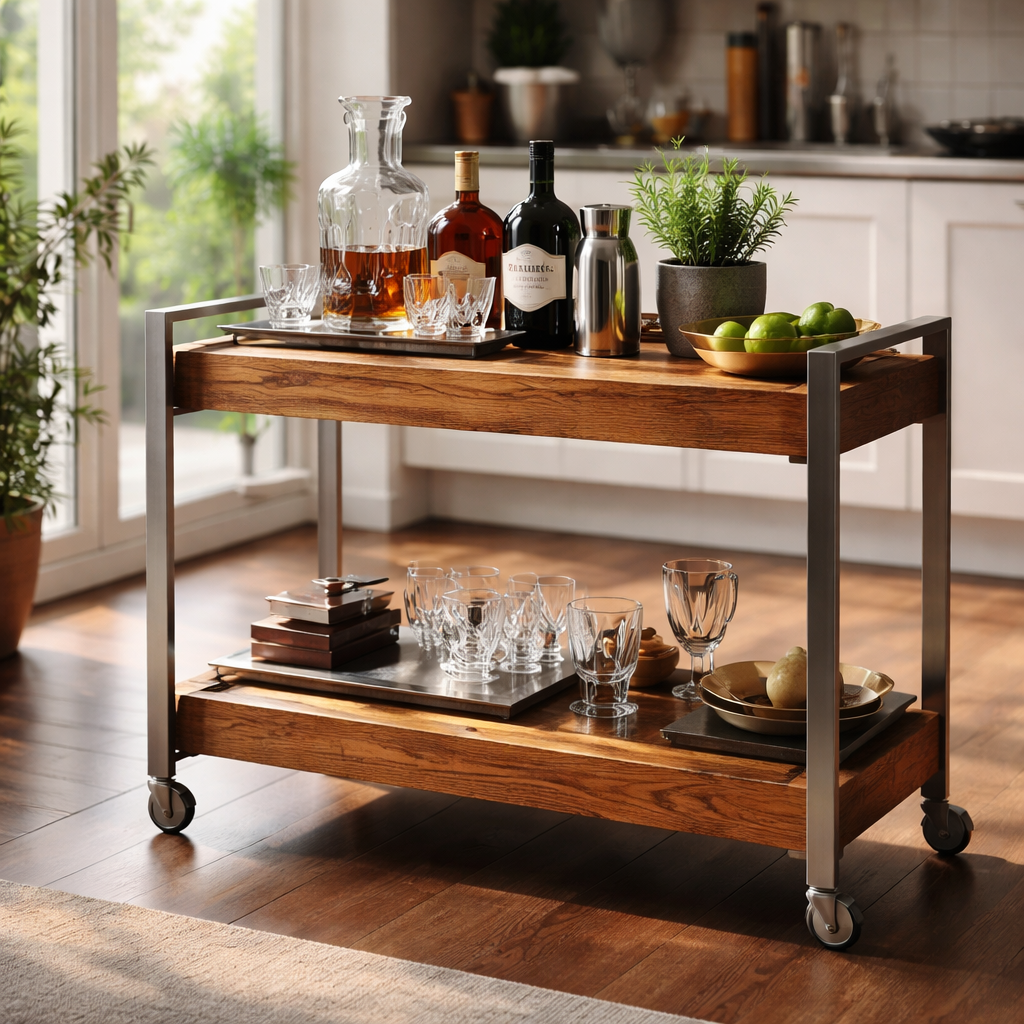
Step 2: Curate a Cohesive Color Palette
Ever stood in front of an empty bar cart and felt that little pang of uncertainty, wondering whether the colours you love will clash or click? You’re not alone – we’ve all been there, squinting at a swatch board while the clock ticks. The good news is that choosing a colour story for your bar cart is as much about feeling as it is about looking.
First, scan the room you’re dressing up. Which hue already dominates – the muted teal of your sofa cushions, the warm caramel of a walnut sideboard, or perhaps the soft ivory of your kitchen walls? That dominant shade becomes your anchor. Pulling a single colour from an existing piece instantly ties the cart into the wider design narrative, making the whole set‑up feel intentional rather than an after‑thought.
Use the 60‑30‑10 rule
Think of your bar cart as a mini‑canvas. Fill roughly 60 % of the surface with a neutral base – brushed steel, matte black, or natural wood are safe bets. Then, introduce a secondary colour that covers about 30 % – this could be the colour of your favourite glassware or a set of coasters. Finally, sprinkle in a 10 % accent – a pop of copper, a splash of deep navy, or a handful of jewel‑toned cocktail picks. The rule keeps the palette balanced while still giving you room to play.
Warm tones like terracotta, mustard, or soft rose work beautifully with wooden carts, adding a cosy, lived‑in vibe. Cool tones such as sage, slate, or dusty blue pair well with sleek metal frames, creating a crisp, contemporary feel. If you’re unsure, lay a few colour swatches next to the cart and step back – your eye will tell you which direction feels right.
Echo a colour from your décor
Say you’ve got a plush velvet bar stool in a deep plum – why not let that plum whisper through a set of cocktail stirrers or a patterned linen napkin? The Ideal Home trend guide notes that repeating a hue from one element to another creates a cohesive, Instagram‑ready look, especially when you’re repurposing a bar cart as a dessert trolley.
Metallics are the silent heroes of colour harmony. A brushed brass ice bucket, a gold‑rimmed coupe, or a copper‑tinted shaker can act as a unifying thread, especially if you already have brass light fixtures or a copper vase nearby. The shine catches the eye without overwhelming the palette.
Play with pattern and texture
Colour isn’t the only way to tie things together – pattern does a lot of the heavy lifting too. A set of patterned glassware that mirrors the geometry of a rug, or a woven tray that picks up the subtle stripes in a wallpaper, adds depth. The Architectural Digest bar cart ideas recommend clustering bottles by colour family and layering textured coasters to break up solid blocks of colour.
Don’t be afraid to let one item steal the show. A bold, coloured cake stand or a vibrant ceramic pitcher can become the focal point, while everything else plays supporting roles. It’s the same trick designers use on larger furniture pieces – keep the base neutral, then let a single accent pop.
Quick colour‑curation checklist
- Identify the dominant colour in the room (sofa, wall, flooring).
- Apply the 60‑30‑10 rule across base, secondary, and accent tones.
- Echo at least one colour in an accessory (napkin, stirrer, garnish bowl).
- Introduce metallic touches that match existing hardware.
- Balance solid colours with patterned or textured pieces.
When you step back after arranging, ask yourself: does the cart feel like a natural extension of the room, or does it look like a stray element? If the answer leans toward the former, you’ve nailed the colour story.
Remember, styling a bar cart is a chance to experiment without the commitment of a whole room makeover. Trust your instincts, have a little fun with a splash of colour, and watch the cart transform from a functional trolley into a stylish gathering spot that feels uniquely yours.
Step 3: Select Signature Glassware & Accessories
Ever stood in front of a half‑filled cart and thought, "These glasses just aren't speaking to me"? I’ve been there – the feeling that something's missing, that the whole vibe could be elevated with just the right pieces. That’s why choosing a signature glassware set is the secret sauce when you learn how to style a bar cart.
First, pick a shape that feels unmistakably you. Do you gravitate toward the timeless coupe for a touch of Hollywood glamour, or does the crisp silhouette of a highball glass whisper "modern lounge"? When you have one shape you love, repeat it across the whole cart – it creates an instant visual anchor and tells guests, "We’ve thought this through".
But don’t stop at shape. Think material.
Crystal adds that extra sparkle, especially under soft lighting, while hand‑blown glass brings an artisanal feel that pairs beautifully with a reclaimed‑wood tray. If you’re after durability for daily use, go for thick‑walled soda‑lime glass – it won’t chip as easily and still looks elegant.
And what about colour? A muted amber tumbler can echo the warm tones of a copper shaker, while a matte black coupe adds drama against a light‑wood base. The trick is to keep the palette limited – two‑three finishes maximum – so the cart feels curated, not chaotic.
Now, accessories. A sleek decanter, a brushed‑brass ice bucket, and a set of stainless‑steel bar tools are the functional cousins of your glassware. They should complement, not compete. For example, a copper‑finished shaker will pick up the same metallic gleam as a brass cocktail pick, tying the whole story together.
We like to look at the experts for inspiration. Architectural Digest points out that mixing classic and unexpected glass pieces – like a traditional martini glass alongside a quirky, coloured stem – adds personality without feeling forced (see how they style a bar cart). Take that idea and apply it to your own space.
Here’s a quick comparison to help you decide which elements belong on your cart:
| Item | Material / Finish | Styling Note |
|---|---|---|
| Signature Glassware | Creamy crystal or hand‑blown glass | Pick one shape, repeat it; limit colour to 2 tones |
| Decanter | Clear crystal or smoked glass | Place centrally; mirrors the glassware silhouette |
| Ice Bucket | Brushed brass or matte black metal | Match metal accents on bar tools for cohesion |
And because we love a good shortcut, keep these five tips in mind when you shop:
- Choose a glass shape that you’ll reach for daily.
- Limit materials to two – glass plus one metal finish.
- Echo a colour from your room’s palette in a single accessory.
- Invest in sturdy bar tools; cheap shakers break the vibe fast.
- Group like items together – all glasses on one shelf, tools on another.
When you step back, ask yourself: does the cart feel like an extension of your living room, or does it look like a random collection? If the answer leans toward the former, you’ve nailed the signature look. Grab a tray, line up your chosen pieces, and watch the cart transform from functional trolley to conversation‑starter masterpiece.
Step 4: Arrange for Function & Flow
Let’s be honest: a bar cart that looks stunning but doesn’t function smoothly can wreck the mood fast. In our experience, the real magic happens when you plan for function and flow, not just a pretty finish.
So, what should you do next? Treat the cart as a compact, movable work zone—a tiny kitchen station you actually enjoy using. Set up two or three clear zones that cover drinks, tools, and ambience, rather than letting bottles wander aimlessly across the shelves.
Define zones on the cart
First, decide two or three vignettes: a drinks station, a garnish/prep area, and a display shelf. This keeps items legible at a glance. Create a height rhythm using stadium seating: tallest bottles at the back, mid-height glassware in the middle, small accessories up front.
- Ground the heaviest items on the bottom shelf: spirits, an ice bucket, and a sturdy decanter.
- Mid-height holds glassware and frequently used tools: shaker, tongs, jiggers.
- Top shelf or a dedicated tray shelves garnishes, napkins, and a signature piece.
Ground with a tray and create micro‑vignettes
A shallow tray anchors a group of items and reduces visual clutter. Arrange each mini‑scene with 3–5 pieces to feel intentional rather than chaotic. Pair a couple of glasses with a bottle and a small decorative object, then repeat the pattern on the opposite shelf so the eye travels naturally.
As Sunny Circle Studio suggests, grounding with a tray and shaping mini‑vignettes keeps a bar cart cohesive while you rotate pieces for the seasons. Grounding with a tray and mini‑vignettes.
Leave room for movement and flow
Don’t crowd every inch of surface. Leave about 20% of the top free so you have space to mix a drink without knocking into a garnish jar or a candle. If space is tight, use layered shelving: heavier items on the bottom, glassware in the middle, a small decorative piece on top. The result should read like a calm, intentional composition, not a grocery‑store display.
That three‑tier height approach is exactly what The Decorholic highlights to keep things visually dynamic and easy to use. Read their tips here.
Accessibility, safety and everyday practicality
Place the heaviest items on the bottom shelf and keep everyday tools within easy reach. If your cart moves, opt for lockable wheels or a base with a rubberised foot to protect floors. In real life, this means gatherings stay effortless and your home remains kid- and pet‑friendly.
Think about lighting as part of function. Soft lighting makes glassware sparkle and sets a welcoming mood without glare. A warm LED strip under the top shelf or a nearby dimmable pendant can elevate the look while preserving practicality.
Coherence and finishing touches
Choose a single metal finish to anchor the metallic accents—brass, gold, or chrome—and echo that across tools, ice bucket, and tray. A natural wood tray or a leather‑edged tray can soften the metal and add tactility, tying the whole vignette together with a tactile, premium feel.
At Harvey Bruce Interiors, we believe a bar cart should feel like part of your living space, not an afterthought. Our Bespoke Homewares offer sustainable, refined pieces that help you achieve that elegant, cohesive look with intentional texture and quality craftsmanship.
So, take a moment to map your space, define two to three zones, and test the flow. Then gather a tray, a handful of glasses, and a couple of signature pieces—the cart will start to feel like a natural extension of your room.
Step 5: Add Personal Touches with Bespoke Homeware
So you’ve got the base, the colour story, the glassware – now what makes a bar cart feel like it belongs in your living room and not just a borrowed piece from a showroom? It’s the little, intentional details that whisper ‘you’ every time someone walks by.
Think about a handcrafted wooden bottle holder that’s been cut from reclaimed oak. The grain tells a story, and when you pair it with a copper shaker, the metal catches the light just enough to feel intentional. That contrast of warm wood and cool metal is the sweet spot where luxury meets lived‑in comfort.
Do you remember the first time you saw a hand‑painted ceramic coaster on a friend’s bar cart and thought, “That’s exactly what my space needs”? A bespoke coaster set can become a conversation starter, especially if the pattern pulls a colour from your sofa or a piece of artwork. It’s not about matching every shade; it’s about echoing a hint that ties the whole room together.
Here’s a quick way to scout the perfect piece: head to a local craft market or browse a curated collection like handcrafted bar accessories from Earl Home. Look for items that feel tactile – think hand‑carved wood, hand‑blown glass, or ceramic with subtle imperfections. Those imperfections are the human touch that mass‑produced pieces lack.
Once you’ve picked a few bespoke items, think placement. A small, sculptural ice bucket on the middle shelf becomes a focal point when you’re pouring drinks. Pair it with a slim, linen‑wrapped napkin holder on the top shelf – the linen adds softness and the height variation keeps the eye moving.
Do you ever wonder why a single piece can change the vibe of an entire cart? It’s because our brains love stories. When a visitor spots a unique, handcrafted bowl, their mind automatically asks, “Who chose that? What’s the story behind it?” That curiosity turns a functional cart into a curated vignette.
Another tip: use scent as a subtle personality boost. A small, reusable wax seal candle in a glass jar (think soft amber) can sit beside a vintage cocktail recipe card. The flicker of the flame adds ambience, while the scent of vanilla or cedar makes the space feel cozier. Just keep the flame low and away from any flammable décor.
Now, let’s talk texture layering. A leather‑trimmed tray on the bottom shelf grounds heavier bottles and adds a tactile contrast to a polished metal shaker. If you love the look of brass, choose a brass‑finished bottle stopper; the warm tone will echo any brass light fixtures you already have.
So, how do you avoid over‑stuffing the cart with too many personal pieces? The rule of three works well: pick one statement item (like a handcrafted wooden holder), one supporting texture (leather tray), and one subtle accent (a scented candle). That keeps the cart curated without feeling cluttered.
Imagine you’re hosting a small gathering. Your guests drift to the bar, their eyes land on the bespoke wooden holder, they ask where it’s from, you share the story – instantly you’ve become the host with the most thoughtful setup. That’s the power of personal touches.
Finally, remember sustainability. Choose pieces made from reclaimed or responsibly sourced materials. Not only does it align with Harvey Bruce’s commitment to sustainable luxury, but it also adds an extra layer of meaning – you’re styling with items that respect the planet.
Take a moment now: walk around your cart, spot the empty space that feels a little flat, and envision a handcrafted element that could fill it. Grab a sketchbook, jot down the material, the colour, the story, and then hunt for that perfect piece. In no time, your bar cart will feel like an extension of your home’s personality, not an afterthought.
Ready to give your cart that bespoke finish? Start with one piece, see how it shifts the mood, and build from there. You’ll be surprised how quickly a few thoughtful touches transform a functional trolley into a stylish, conversation‑worthy hub.
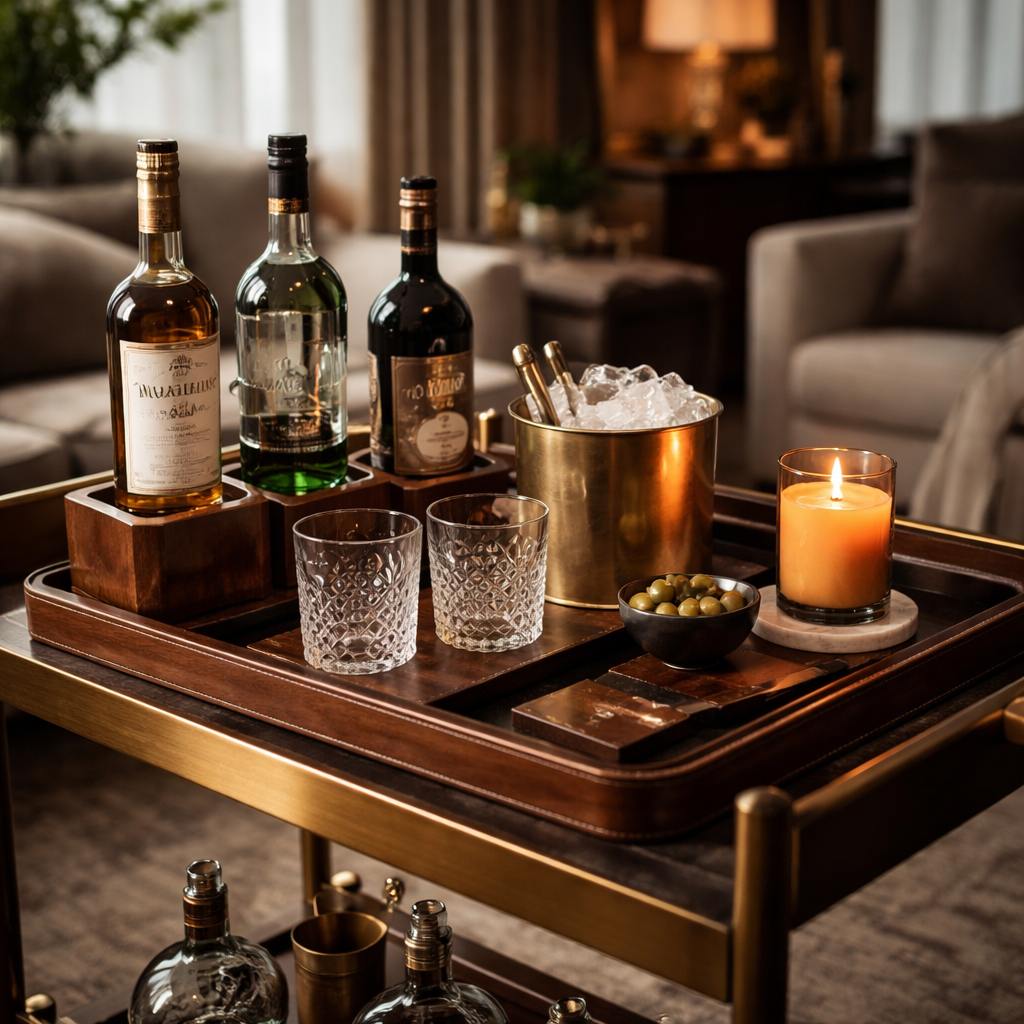
Comparison: Bar Cart Styles vs Traditional Shelving
Let’s be honest: you want a space that’s easy to entertain in, not a museum of decor that never gets used. Bar carts and traditional shelving both hold glassware and bottles, but they do it in very different ways. Bar carts are the portable stage for drinks, while shelving is the grounded backbone of storage. At Harvey Bruce Interiors, we love helping homeowners decide which approach fits their lifestyle and space—because the right choice makes everyday moments feel more luxurious.
Mobility matters. A wheeled bar cart can glide from kitchen to living area, follow the party, and tuck away when the music fades. But if your room is compact or you want a fixed design moment, built-in or freestanding shelves create a stable display that reads as furniture, not an impulse buy. A rule of thumb: aim for a cart when you crave flexibility and a shelf when you crave permanence and a clean, cohesive line with your other cabinetry.
In terms of layout, bar carts encourage micro‑vignettes. Tall spirits at the back, glassware mid‑tier, and a few decorative touches up top—that rhythm keeps the eye moving. Shelving, by contrast, supports larger collections and accessories in a straight, legible order. It’s easier to keep track of inventory on shelves—no rolling mechanism to deal with and less risk of bottles tipping if you have curious guests or pets.
Aesthetics play a big role too. Metal frames with glass or wood shelves on a cart bring a sense of dynamism and a touch of theatre; it’s the “look at what I can wheel into the room” moment. Traditional shelves offer a more timeless, rooted feel. They can be built in with matching finishes to your kitchen or living room, creating a curated stream of materials that anchors the space. The material palette you choose—brass, matte black, warm oak—will read differently on a cart versus a shelf, so pick accordingly.
Practical considerations aren’t sexy, but they matter. A cart deserves sturdy wheels, a good brake, and a top that can support a heavy ice bucket. Shelving should be sturdy enough to handle glass and bottles at height, with proper anti‑tip considerations and easy access for daily use. If you live in a compact city apartment, a hybrid approach often wins: a compact bar cart for special occasions plus a matching set of open shelves that hold everyday glassware and bar tools. This blend gives you flexibility without sacrificing style.
If you’re looking for a deeper dive into how real designers approach this, this guide from The New York Times Wirecutter on best bar carts offers practical insights into materials, stability, and usability that can inform your choice. Best bar carts guide.
So, what’s next? Measure your space, list your must‑have items, and sketch two layouts: one with a cart, one with shelves. Then test with real objects. You’ll know which path helps you how to style a bar cart or whether you’re better off with a steady shelving solution—both routes can look incredibly luxurious when styled with Bespoke Homeware from Harvey Bruce. It’s all about balance.
FAQ
How do I choose the right size bar cart for a small living room?
First, measure the flat surface where the cart will live and keep a two‑inch breathing room on each side. A good rule of thumb is to let the cart cover about two‑thirds of that length – big enough for bottles and glasses, but not so large that it overwhelms the room. In our experience, a cart with a footprint of roughly 30‑inch wide works beautifully in a compact UK flat, giving you storage without crowding the sofa.
What’s the best way to organise bottles so they look tidy and stay stable?
Group spirits by colour or type and line them up on the bottom shelf, tallest bottles at the back. Use a shallow wooden or metal tray to corral smaller bottles and keep them from tipping. Adding a non‑slip liner under the tray gives extra grip, and a few decorative bookends can double as visual anchors while keeping the bottles steady.
Can I mix metal finishes on my bar cart without it looking chaotic?
Yes – but pick one dominant metal and let the others play supporting roles. For example, if you love brushed brass on your shaker, keep other accents like the ice bucket or tray in brushed brass too, and use matte black or polished chrome sparingly for hardware. The contrast adds depth, and the consistent texture ties the whole vignette together. Harvey Bruce Interiors often recommends a single metal theme to maintain that luxe, cohesive feel.
How often should I rotate the accessories on my bar cart?
Switching up accessories every season keeps the cart feeling fresh. In spring, swap a heavy velvet tray for a light linen‑wrapped one; in winter, bring out a copper‑toned cocktail set for a cosy vibe. A quick 10‑minute refresh – moving a few glassware pieces, adding a seasonal garnish jar, or swapping a candle – prevents the cart from feeling static and lets you showcase new bespoke homeware you’ve acquired.
Is it okay to display decorative items alongside functional bar tools?
Absolutely. Treat the cart like a mini‑gallery: place functional tools – shaker, jigger, tongs – together, then create a small vignette of decorative pieces on a separate shelf or tray. A sculptural ice bucket, a handcrafted wooden bottle holder, or a scented candle can sit next to the tools without interfering with usability. The key is to keep a clear work zone on the middle shelf for everyday mixing, and let the decorative zone sit above or beside it.
What lighting works best for highlighting a bar cart in the evenings?
A soft, warm LED strip tucked under the top shelf adds a subtle glow that makes glassware sparkle without harsh glare. If you prefer a more classic look, a small table lamp with a linen shade placed nearby creates a cosy ambience. Keep the light temperature between 2700‑3000K for that inviting, cocktail‑hour feel. Just make sure any cords are neatly concealed to maintain the cart’s sleek silhouette.
Conclusion
We’ve walked through everything you need to know about how to style a bar cart, from picking the right base to adding those personal touches that make the space feel uniquely yours.
Remember, the magic lives in the details – a cohesive colour palette, a thoughtful arrangement of tools, and a few bespoke pieces that tell a story.
So, what’s the next step? Grab a tray, line up your favourite glassware, and experiment with a seasonal garnish jar or a handcrafted candle. Trust your instincts; if it feels right, it probably is.
In our experience, a quick ten‑minute refresh – swapping a bottle or rotating a decorative element – keeps the cart feeling fresh without a full overhaul.
Don’t be afraid to play with texture: a leather‑trimmed tray, a brass ice bucket, or a wooden bottle holder can instantly elevate the look.
When you step back, ask yourself whether the cart now reads as an extension of your living room rather than a stand‑alone piece. If the answer is yes, you’ve nailed how to style a bar cart.
Ready to give your home that luxe, curated vibe? Start small, enjoy the process, and let your bar cart become the conversation starter you’ve always wanted.
← Older Post Newer Post →