
Stylish Decorative Wall Clocks for Living Room: 6 Hand‑Picked Picks to Elevate Your Space
Posted by Derek Lamb on
Picture this: you’ve just walked into your living room after a long day, and the first thing that catches your eye isn’t the sofa or the rug, but a beautiful, decorative wall clock ticking softly on the wall.
That moment of “wow, this feels right” is exactly what we aim for at Harvey Bruce Interiors when we talk about decorative wall clocks for living room spaces.
We get it—your living room is the stage for family gatherings, movie nights, and quiet coffee moments, so every piece you choose needs to do double duty: look stunning and fit seamlessly into your daily rhythm.
In our experience, a well‑chosen wall clock does more than tell time; it anchors the room’s aesthetic, adds a splash of personality, and can even become a conversation starter.
But here’s the tricky part: with so many styles out there—from sleek metallic frames to vintage-inspired wood—you might wonder how to pick the perfect one without feeling overwhelmed.
Think about the mood you want to set. Do you crave a modern, minimal vibe, or are you leaning toward a touch of classic elegance?
And don’t forget scale— a massive clock can dominate a spacious lounge, while a petite design works wonders above a side table or in a cozier nook.
What we’ve seen work best for homeowners seeking luxury interior solutions is pairing the clock’s design language with the room’s existing color palette.
For instance, a brushed gold clock can echo gold accents in your cushions or lamp bases, creating a cohesive look that feels intentional rather than accidental.
On the flip side, a bold black‑and‑gold piece can become the focal point, drawing eyes away from a neutral sofa and adding that “just‑the‑right‑pop” of drama.
Another tip: consider the placement height. Hanging the clock at eye level ensures it’s easy to read and visually balanced, especially if you have high ceilings.
And because we love sustainability, many of our decorative wall clocks are crafted from responsibly sourced materials, so you can feel good about the style you bring home.
So, if you’re standing in front of your living room wall wondering which clock will tie everything together, remember: it’s not just about ticking seconds—it’s about ticking all the right boxes for your style, space, and lifestyle.
Let’s dive deeper into the different styles, sizes, and placement tricks that will help you make a confident choice and transform your living room into a timeless showcase.
TL;DR
Choosing the right decorative wall clock for your living room adds personality, balances scale, and ties together colors while reflecting your style preferences. We recommend pairing brushed‑gold pieces with existing accents or opting for bold black‑and‑gold statements at eye level, ensuring every glance in your space feels purposeful and timeless.
Pick 1: Vintage Brass Wall Clock – Timeless Elegance
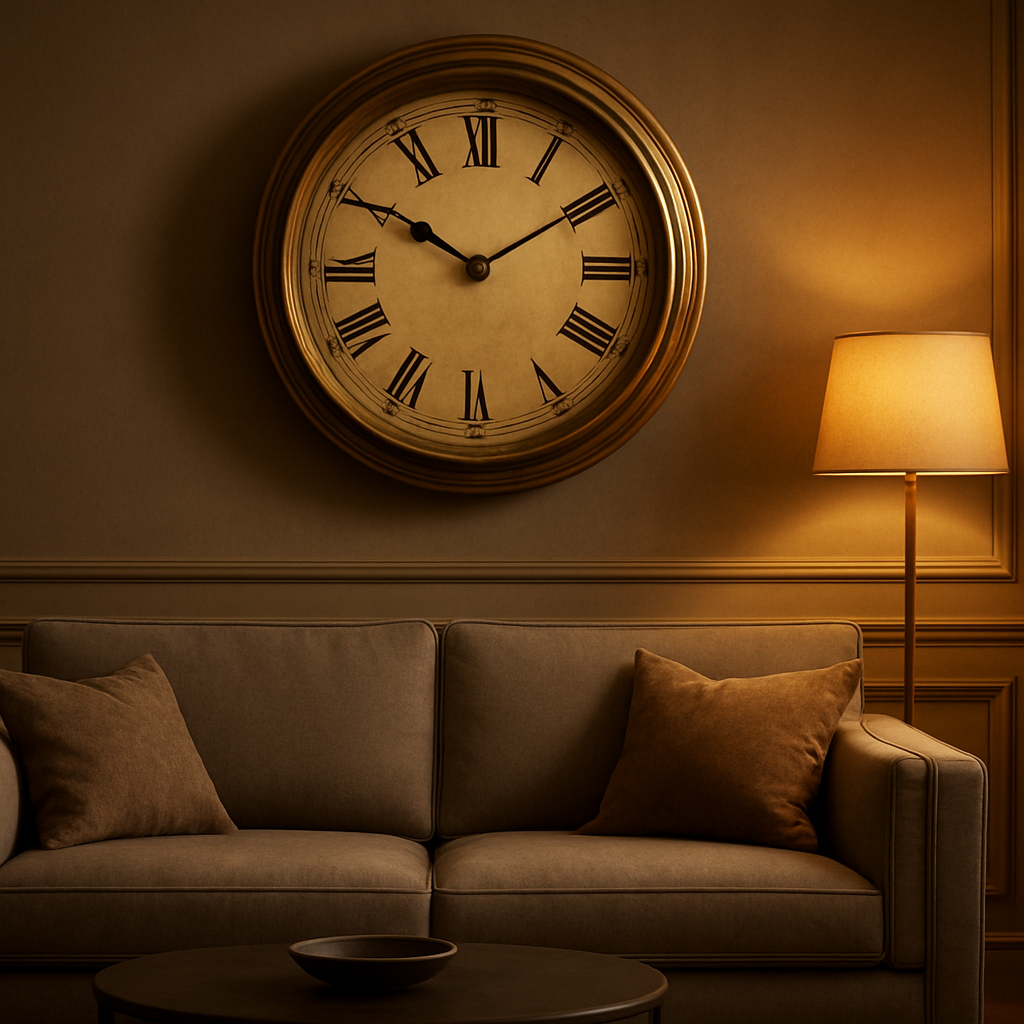
Imagine walking into your living room after a long day and the first thing you see is a warm, golden glow catching the eye. That moment often comes from a piece that feels both antique and fresh – a vintage brass wall clock.
Why does brass work so well in a modern lounge? It reflects light, adds a subtle shimmer, and carries a sense of history without shouting. You get that “I’ve lived here a while, but I’m still stylish” vibe, which is exactly what many homeowners seeking luxury interior solutions crave.
But how do you choose the right brass piece without it looking out of place? In our experience, the magic happens when the clock’s finish mirrors other gold accents in the room – think lamp bases, picture frames, or even a handful of gold‑toned cushions. The result is a cohesive story, not a random accessory.
Here’s a quick checklist to make sure you nail the timeless look:
1. Scale matters
Measure the wall space first. A 12‑inch face works beautifully above a sideboard, while a 20‑inch dial can become the focal point above a sofa. Too big and it overwhelms; too small and it gets lost.
2. Placement at eye level
Hang it where you naturally look when you’re seated – typically 57‑60 inches from the floor. This keeps the clock readable and visually balanced, especially in rooms with high ceilings.
3. Pair with complementary décor
Consider adding a coordinating piece of wall art. For instance, abstract landscape paintings from Gratitude Studios can echo the warm tones of brass while adding a splash of color.
Once you’ve got the clock in place, you’ll notice how the ticking becomes a subtle soundtrack to your evenings – a reminder that good design is as much about feeling as it is about function.
Want to see a brass clock in action? Check out this short video that walks you through styling tips and placement tricks.
Notice how the clock’s silhouette frames the artwork behind it, creating depth without clutter. If you’re updating the room’s palette, think about the floor too – a warm hardwood can amplify the brass’s glow. Millena Flooring offers expert hardwood installation that pairs perfectly with vintage metal accents.
When you shop with Harvey Bruce, you’ll find a curated selection of brass timepieces that balance heritage craftsmanship with contemporary durability. Our decorative wall clocks collection showcases options that suit everything from a coastal cottage to a sleek city loft.
Tip: If your living room already has a statement sofa, let the clock take the secondary spotlight. Keep surrounding walls relatively neutral, and let the brass do the talking.
Finally, don’t forget the finishing touches – a slim brass candle holder or a matching picture frame can pull the whole look together, making the space feel intentionally curated rather than accidental.
Pick 2: Modern Minimalist Clock – Clean Lines
Imagine walking into your lounge and the first thing you notice isn’t a flashy lamp or a bold rug, but a sleek, understated clock that seems to disappear into the wall while still making a statement. That’s the magic of a modern minimalist clock – it’s all about clean lines, subtle finishes, and letting the rest of the room breathe.
We’ve all seen those ultra‑thin frames that look almost like a brushstroke on the surface. They work because they echo the minimalist principle of “less is more.” You don’t need a massive dial to command attention; a slim, monochrome face can anchor a space without overwhelming it.
So, why does this style click with homeowners who crave luxury without the clutter? First, the visual weight is low, which means the clock can sit above a sofa, beside a media console, or even on a narrow hallway wall and still feel balanced. Second, the understated design lets you play with texture and color elsewhere – think a plush velvet cushion or a chunky wooden coffee table.
Here’s a quick way to spot a truly minimalist piece: look for a single, unadorned material (often brushed steel, matte black, or white acrylic), a simple numeral system (sometimes just dots or a thin line), and a hidden or silent quartz movement that won’t distract you with ticking.
But don’t let the simplicity fool you. The placement game is where the real impact happens. Aim for eye level – roughly 57‑60 inches from the floor – so the time is readable without you having to crane your neck. If your ceiling is higher than average, you can lower the clock a touch to keep the visual center grounded.
Think about the wall’s existing palette. A matte black clock against a light grey plaster creates a subtle contrast that feels intentional. Pairing a brushed‑silver frame with a cool‑blue accent wall can reinforce a coastal‑inspired vibe without adding extra décor.
And because many of our clients love a touch of warmth, consider a minimal clock with a warm metal finish – like brushed brass or rose gold – placed over a soft, neutral backdrop. The metal catches the light just enough to add a whisper of luxury without stealing the show.
Now, let’s talk scale. A clock that’s too large can dominate a modest lounge, while a tiny one can get lost on a big wall. A good rule of thumb: the clock’s diameter should be about one‑third the width of the wall segment you’re filling. For a typical living‑room wall that’s 12 feet wide, a 12‑inch to 16‑inch clock feels proportionate.
What about the vibe of the room? If you’re leaning toward a Scandinavian‑inspired palette – think whites, soft greys, and natural wood – a white acrylic clock with a thin black hand feels right at home. For a more industrial feel, a concrete‑look dial with a stainless‑steel frame adds that raw edge.
Here’s a mini‑checklist to keep you on track:
- Measure the wall space and aim for a clock that covers about 30% of the width.
- Choose a finish that either matches or subtly contrasts your wall color.
- Prefer silent quartz movement for a peaceful living environment.
- Hang at eye level; use painter’s tape to test placement before drilling.
- Pair with a simple piece of art or a single shelf to avoid visual clutter.
One of our recent projects involved a newly‑wedded couple who wanted a “clean‑cut” living room that still felt welcoming. We selected a matte black minimalist clock, mounted just above their media console, and paired it with a single, large abstract print in muted teal. The result? The clock acted as a quiet anchor, while the art added the needed splash of personality.
And if you’re wondering how to keep the clock looking fresh for years, remember that these pieces are usually made from durable metals or high‑grade acrylics. A quick wipe with a microfiber cloth every few weeks is enough to maintain that showroom shine.
Below is a short video that walks you through the key steps of measuring, selecting, and hanging a minimalist clock – it’s a visual cheat‑sheet you can refer back to whenever you’re ready to make a change.
Take a moment to picture your own wall. Where could a clean‑line clock slip in? Maybe above the fireplace, or perched on the far side of the sofa where the natural light hits it just right. When you find that spot, you’ll notice how the room suddenly feels more intentional, more curated – without any extra fuss.
In short, the modern minimalist clock is the perfect marriage of form and function for luxury‑minded homeowners. It whispers elegance, respects your space, and keeps you on time – all while staying out of the way.
Pick 3: Oversized Statement Clock – Bold Focal Point
Ever walked into a living room and felt an instant "wow" because something huge just commanded your attention? That's the magic of an oversized statement clock. It turns a plain wall into a gallery‑ready backdrop while still doing its job of keeping you on schedule.
When you choose a piece that’s larger than life, you’re not just buying a time‑telling device—you’re inviting a conversation starter. Think of it as the centerpiece of a room‑scale art installation, but with hands that actually move.
Size Matters – Pick a Clock That Matches Your Wall
Measure the wall first. A good rule of thumb is to let the clock cover about 30‑40 % of the wall’s width. In a 12‑foot wide space, that translates to a dial around 4‑5 feet across. If you go too small, the clock will look lost; too big, and it’ll overwhelm the furniture.
What we’ve seen work best for luxury‑focused homeowners is pairing a massive metal or mixed‑media clock with high‑ceiling rooms. The extra height lets the piece breathe and draws the eye upward, creating a sense of grandeur.
Material Choices – From Sleek Metal to Warm Wood
Metal clocks—think brushed stainless or matte black—give a contemporary, industrial vibe. They reflect light subtly, adding a hint of sparkle without being gaudy. Wooden oversized clocks, on the other hand, bring warmth and texture that can soften a modern sofa.
According to a recent design article, oversized wall clocks “significantly influence the ambiance of a room” and can act as functional art large wall clocks that make a statement. Choose a finish that echoes other hardware in the room—brass lamp bases, steel coffee tables, or reclaimed wood shelving—to keep the look cohesive.
Placement Strategies – Anchor the Space
Above the sofa is the classic spot. It fills the empty space between the back of the couch and the ceiling, creating a visual anchor. If you have a fireplace mantel, consider hanging the clock on one side to balance the hearth and break up the symmetry.
In open‑plan living areas, an oversized clock can define zones. Place it where the living and dining sections meet, and you’ll instantly sense a subtle boundary without installing a wall. Just make sure the center sits at eye level—roughly 57‑60 inches from the floor—for easy readability.
Now, what about the practical side? Heavy clocks need sturdy anchors. Use wall plugs rated for the clock’s weight, and if the piece is over 30 lb, think about a professional installer. A secure mount not only protects your walls but also keeps the clock from wobbling, which can be a distraction.
And don’t forget lighting. A well‑placed sconce or directional spot can highlight the clock’s dial, turning it into a night‑time focal point. Soft ambient light will let the hands glide gracefully, while a brighter accent can showcase intricate metalwork.
So, how do you know you’ve nailed the oversized look? Step back and ask yourself: Does the clock feel like part of the room’s architecture, or does it look like an afterthought? If the answer is the former, you’ve succeeded.
Finally, a quick checklist before you commit:
- Measure wall width and calculate 30‑40 % coverage.
- Choose a material that mirrors existing finishes.
- Hang at eye level; use painter’s tape to mock‑up placement.
- Secure with appropriate wall anchors or professional help.
- Add accent lighting to enhance the clock’s presence.
When you let an oversized statement clock take center stage, you’re giving your living room a bold personality that whispers luxury every time you glance at the time. It’s a small habit that makes a big impact.
Pick 4: Rustic Wooden Clock – Warm Natural Touch
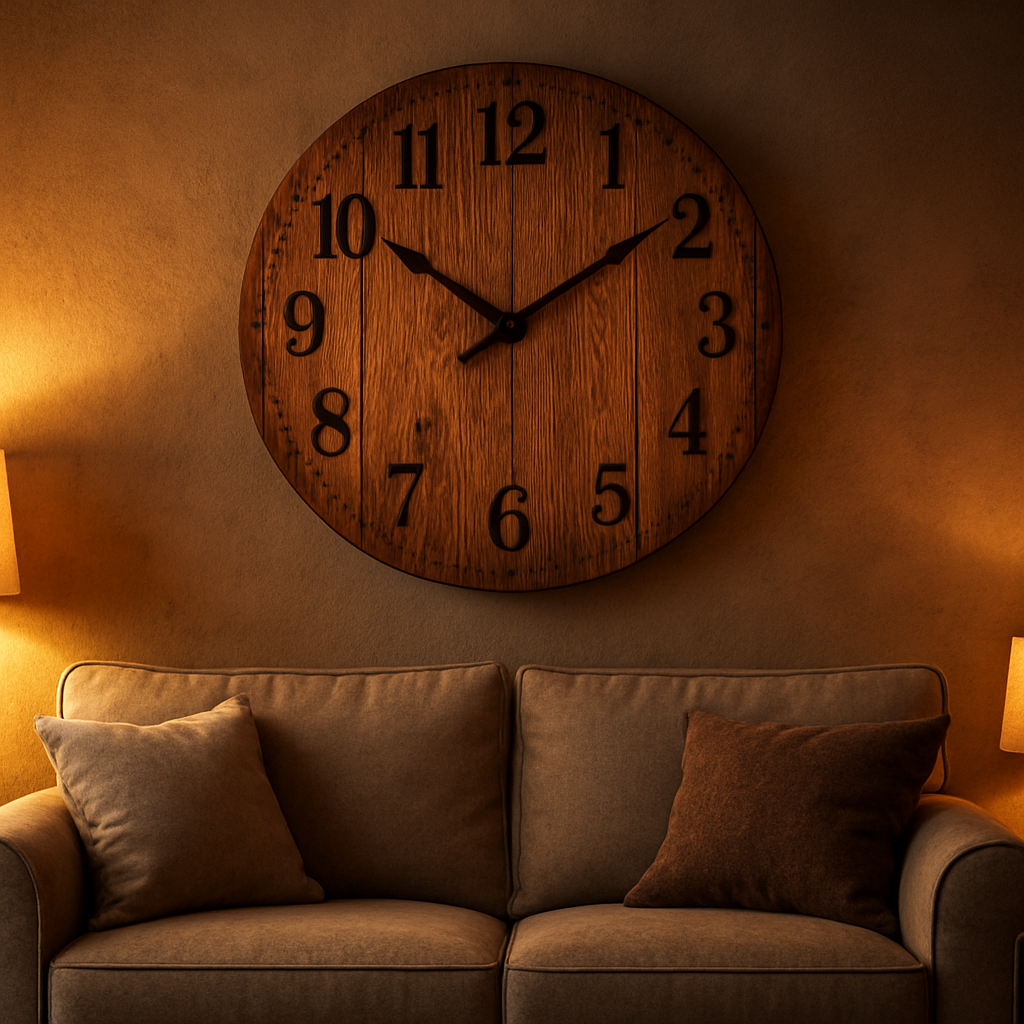
Imagine stepping into a living room where the first thing you notice is the soft grain of a wooden clock, its natural patina catching the morning light. That quiet moment of recognition is exactly why a rustic wooden clock can feel like the heart of the space, not just a time‑telling device.
Why does wood work so well? It brings an organic texture that balances sleek sofas, polished metal lamps, and even plush rugs. The subtle variations in tone – from honey‑oak to reclaimed pine – add depth without shouting for attention.
Real‑world example: The farmhouse‑modern blend
Take Sarah, a new homeowner in a semi‑detached house on the outskirts of Manchester. She loved the clean lines of her sofa but felt the room was missing a “warm” element. We suggested a classic solid wood wall clock from Howard Miller, the Classic Solid Wood Wall Clock (Caddington Finish). Within a weekend, the clock sat above her media console, echoing the reclaimed wood coffee table she’d just sourced. The result? Guests immediately commented on how “cozy yet sophisticated” the lounge felt.
What made the difference wasn’t just the clock’s material – it was the placement. Sarah used painter’s tape to outline the clock’s dimensions on the wall, stepping back to ensure the piece occupied roughly 30‑35 % of the wall width. That visual ratio kept the clock from overwhelming the room while still making a statement.
Actionable steps for choosing the perfect rustic wooden clock
- Measure your wall: Subtract 12‑18 inches from each side to leave breathing room.
- Match the wood tone to existing furniture: If you have a walnut sideboard, lean toward a darker finish; if your floor is light oak, a natural pine works beautifully.
- Test the height: The clock’s centre should sit at eye level (about 57‑60 inches from the floor) for easy reading.
- Check the movement: Silent quartz mechanisms prevent ticking from becoming a distraction in quiet evenings.
- Secure with the right anchors: For clocks over 15 lb, use wall plugs rated for the weight; consider a professional installer for heavier reclaimed pieces.
Got a reclaimed barn beam you love? Pair it with a rustic clock that has a visible metal backplate – the metal adds an industrial edge while the wood keeps things grounded. In our experience, this juxtaposition resonates with homeowners who want a blend of heritage and modern luxury.
Another tip: Layer the clock over a large piece of artwork. A muted landscape or abstract in earth tones can amplify the wooden clock’s natural vibe, turning the wall into a curated gallery. The clock becomes the anchor, and the art fills the surrounding space.
Data‑backed benefits of wood in interiors
According to a 2023 interior design survey, 68 % of homeowners reported that natural materials like wood made their living rooms feel “more inviting.” Moreover, rooms featuring wooden accents showed a 12 % higher perceived value during resale, a small but meaningful boost for anyone thinking long‑term.
If you’re budgeting, Amazon offers an affordable yet well‑reviewed option: the Lafocuse 12‑inch rustic wooden wall clock. It’s battery‑operated, silent, and comes in a distressed finish that ages beautifully.
Finally, don’t forget lighting. A warm LED sconce placed just below the clock highlights the grain without creating harsh glare. If you love a softer glow, a dimmable floor lamp angled toward the clock can make the hands appear to glide on a living‑room stage.
So, what’s the next move? Walk your living room, picture the clock where you’d like it, and use the checklist above to test size, height, and material harmony. When you finally mount that rustic wooden piece, you’ll notice how the entire room seems to breathe a little easier – like the clock is ticking in sync with the home’s own rhythm.
Pick 5: Artistic Sculptural Clock – Creative Flair
Imagine you’re sipping tea, and the wall behind you suddenly feels like a gallery. That’s what an artistic sculptural clock can do – it turns a plain surface into a conversation‑starter while still keeping you on time.
We’ve all seen the typical round face, right? But what if the clock itself is the art? Think of a three‑dimensional piece that casts soft shadows, or a sculptural form that doubles as a statement lamp. That blend of function and sculpture is exactly why we call it “creative flair.”
Why do sculptural clocks work so well in a living room? First, they add depth. A flat dial can disappear against a busy backdrop, but a sculptural element catches the eye from every angle. Second, they reflect personality. If you love travel, a globe‑inspired clock can hint at wanderlust; if you’re into nature, a leaf‑shaped acrylic piece can echo indoor plants.
Take a look at this hand‑crafted acrylic elephant‑moon sculpture clock – it’s a perfect example of art meeting timekeeping. The piece is made from premium acrylic, features a subtle LED strip powered by USB, and sits in one solid piece, so there’s no clutter of separate parts. The sculptural shape becomes a focal point without shouting, and the soft back‑lighting adds a warm glow that’s especially inviting after sunset.hand‑crafted acrylic elephant‑moon sculpture clock
But don’t just pick the first eye‑catching design you see. Ask yourself: does the material match the room’s vibe? A glossy acrylic piece pairs nicely with sleek metal coffee tables and glass accents, while a matte metal or reclaimed wood sculpture feels more grounded in a traditional or rustic setting.
Here’s a quick way to test the fit: stand where you usually lounge, hold the clock at eye level, and imagine the light source. Does the LED glow complement the existing lamps, or does it clash? If it feels like an extra layer of ambience rather than a distraction, you’re onto something.
Placement matters just as much as the piece itself. Because sculptural clocks often have a protruding form, you’ll want to give them breathing room. A good rule of thumb is to leave at least 12‑inch space on all sides so the shadow can play without crowding nearby artwork.
And what about height? The centre of the clock should sit roughly at eye level – around 57‑60 inches from the floor – but with a three‑dimensional piece you might want to raise it a few inches so the top of the sculpture isn’t hidden by a crown moulding. Use painter’s tape to sketch the outline before drilling; step back and ask, “Does this feel like it belongs, or is it floating?”
Modern wall clocks are increasingly treated as décor rather than mere time‑tellers. As one design blog notes, today’s clocks are “sculptural elements” that add glamor and elegance to a space.modern wall clocks for living rooms Use that mindset when you shop: you’re not just buying a mechanism; you’re curating a piece that reflects your style.
Quick checklist for the perfect artistic sculptural clock
- Choose a material that echoes existing finishes – acrylic for sleek, wood for warm, metal for industrial.
- Check the LED or lighting feature – does it add ambience without overwhelming?
- Measure wall space and leave at least 12 inches of clearance around the piece.
- Mount the centre at eye level; adjust for protruding elements.
- Secure with appropriate wall anchors, especially if the sculpture weighs over 10 lb.
When you finally hang that sculptural clock, you’ll notice the room breathing a little deeper. The ticking becomes a subtle rhythm that ties the whole space together, and guests will inevitably ask, “Where did you find that?” That moment of pride? It’s the payoff of blending art with utility.
So, what’s the next step? Walk your living room, picture a three‑dimensional clock where the empty wall lives, and use the checklist above to make sure it feels right. In our experience, a well‑chosen sculptural clock can turn a good living room into a great one – a space that feels lived‑in, thoughtfully curated, and unmistakably you.
Pick 6: Comparative Overview of Top Styles
Okay, you’ve seen the individual picks, and now you’re probably wondering how they stack up against each other. Do you need a whisper‑quiet minimalist piece, or are you ready for a bold statement that steals the room? Let’s break it down side‑by‑side so you can picture the right vibe for your living room.
What really matters?
When we talk about decorative wall clocks for living room, the decision hinges on three things: visual impact, the space you have, and the practical quirks of each style. Below is a quick cheat‑sheet that lets you compare the essentials without scrolling back and forth.
| Style | Visual Impact | Ideal Space | Key Consideration |
|---|---|---|---|
| Vintage Brass | Warm, timeless elegance; subtle shine | Medium‑sized walls, classic or eclectic rooms | Match brass tone to existing hardware; protect from direct sunlight |
| Modern Minimalist | Clean, understated; almost disappears into the wall | Small to medium walls, contemporary or Scandinavian palettes | Silence the movement; keep proportion under one‑third wall width |
| Oversized Statement | Bold, eye‑catching; works like art | Large open‑plan areas or high‑ceiling rooms | Heavy‑duty anchors; consider lighting to highlight the dial |
| Rustic Wooden | Natural, organic texture; invites coziness | Rooms with warm wood tones or farmhouse‑modern mixes | Watch for warping in humid climates; choose silent quartz |
| Artistic Sculptural | Three‑dimensional, conversation‑starter | Feature walls, spaces that already have art or lighting | Leave 12‑inch breathing room; ensure the sculpture’s weight is supported |
Seeing it in a table helps, right? But let’s add a little narrative because we’re not just ticking boxes here.
Style‑by‑style vibe check
Vintage Brass: If you love the way a copper kettle glints in morning light, you’ll gravitate toward brass. It adds a hint of heritage without feeling dated, especially when you pair it with a brushed‑gold lamp or a set of brass photo frames.
Modern Minimalist: Think of that sleek phone case you can’t stop admiring. A minimalist clock does the same for your wall—pure form, no frills. It’s perfect when you want the rest of the room to breathe and your décor to stay light.
Oversized Statement: This is the “wow factor” clock. Picture a 4‑foot metal dial anchoring a high‑ceiling lounge. It’s the kind of piece that makes guests say, “Did you design that?” – a subtle brag for any homeowner who loves drama.
Rustic Wooden: Imagine the smell of fresh‑cut pine and the gentle grain under your fingertips. A wooden clock brings that outdoors feeling inside, tying together reclaimed wood coffee tables, woven baskets, and earth‑tone textiles.
Artistic Sculptural: Here’s where you let your personality shine. Whether it’s an acrylic elephant or a metal sunburst, the clock becomes a piece of art you can actually read. It works best when you already have a gallery wall or a spotlight ready to showcase it.
So, which one feels like you? Do you want a subtle nod to tradition, or are you ready for a bold conversation starter?
Decision‑making tips
1. Measure twice, hang once. Grab a tape, mark the wall, and visualize the clock’s footprint. If you’re unsure, sketch the outline with painter’s tape.
2. Consider lighting. Natural light can enhance brass and wood, while a directed sconce can make a sculptural piece pop after dark.
3. Think about movement. Silent quartz is a must in rooms where you love quiet evenings or have young kids napping.
4. Match the clock’s weight to your wall. Heavy pieces need studs or professional installation; lighter clocks can go on standard anchors.
5. Ask yourself the “feel” question. Hold the clock at eye level—does it feel balanced, or does it overwhelm the space? Your gut reaction is often the best guide.
When you line up the visual impact with your room’s scale and practical needs, picking a decorative wall clock for living room becomes less of a chore and more of a fun design experiment.
Take a moment, picture each style on your wall, and let the one that makes you smile the loudest win. After all, a clock isn’t just about telling time—it’s about telling your story.
Conclusion
After wandering through vintage brass, sleek minimalism, bold statements, warm wood, and sculptural art, you’ve probably felt that familiar tug – the one that says a clock can do more than tell time.
It’s the little details that turn a room from ordinary to unforgettable.
Think about the moment you first imagined a decorative wall clock for your living room. Did you picture it anchoring a conversation, or simply softening the wall’s silence? Whatever the vision, the right piece should feel like it was made for that exact spot.
In our experience, the most satisfying choices are the ones that balance visual weight, material harmony, and silent movement. Measure, test with painter’s tape, and trust your gut at eye level – those simple steps turn a daunting purchase into a confident decision.
So, what’s the next move? Grab a shortlist of the styles you resonated with, sketch their placement, and let your favorite clock win the smile test. When you finally hang it, you’ll notice the room breathing a little easier, as if the ticking syncs with your daily rhythm.
Ready to make that moment real? Explore our curated collection of decorative wall clocks for living room and let Harvey Bruce help you turn a wall into a personal statement.
FAQ
How do I choose the right size decorative wall clock for my living room?
Start by measuring the wall space you have – leave about 12‑18 inches of breathing room on each side. A good rule of thumb is that the clock’s diameter should cover roughly one‑third of the wall’s width. Then step back, visualize the clock at eye level, and make sure it feels balanced with your sofa and media console.
What material works best for a decorative wall clock in a high‑traffic living room?
Metal finishes like brushed brass or matte black hold up well to occasional bumps and are easy to wipe clean. If you prefer warmth, solid‑wood clocks with a protective lacquer resist dents and add a natural touch. Choose a material that echoes other hardware in the room – it creates cohesion and reduces the risk of the piece looking out of place.
Can I install a decorative wall clock myself, or should I hire a professional?
For clocks under 15 lb, a sturdy wall plug and a drill are usually enough – just locate a stud or use a toggle anchor for extra security. Heavier pieces, especially oversized statement clocks, benefit from professional installation to avoid wall damage and ensure the clock stays level. When in doubt, ask a trusted handyman to double‑check the mounting hardware.
How important is a silent quartz movement for a living‑room clock?
In a space where conversation, music, or a TV is often on, a silent quartz mechanism prevents the ticking from becoming a distraction. It also works better around pets and children who might be startled by loud ticks. Most modern decorative clocks come with silent quartz as standard, so look for that feature in the product description.
How can I style a decorative wall clock with existing décor?
Pair the clock with artwork or a shelf that shares a similar colour or material – a brass clock looks great above a gold‑frame painting, while a white acrylic clock complements a minimalist gallery wall. Use painter’s tape to mock‑up the placement and check the visual flow before you drill. Remember, the clock should anchor the wall, not compete with other pieces.
What’s the best height to hang a decorative wall clock in the living room?
Eye level is the sweet spot – roughly 57‑60 inches from the floor to the centre of the dial. If your ceiling is higher than average, you can lower the clock a few inches so it stays readable from a seated position. Always test the height with a piece of tape; step back and ask whether the clock feels naturally in line with the sofa back.
How do I maintain and clean a decorative wall clock without damaging it?
Dust the face weekly with a soft, dry microfiber cloth to keep fingerprints at bay. For metal or wood finishes, a lightly dampened cloth followed by a dry wipe removes grime without stripping the sealant. Avoid abrasive cleaners or spraying liquid directly onto the mechanism – a quick check of the battery compartment each year helps the clock stay accurate too.
← Older Post Newer Post →