
Large Modern Wall Clock Ideas to Inspire Your Home Décor
Posted by Derek Lamb on
Imagine walking into your living room and instantly feeling the space breathe a little easier—because a large modern wall clock is hanging above the sofa, its sleek metal face catching the light.
That moment of quiet recognition? It’s what we all crave after a long day of juggling work, kids, and endless to‑do lists—a single piece that says, ‘I’ve got style, and I’m on time.’
But choosing the right clock isn’t just about size. It’s about how the design talks to the rest of your décor, whether you’re leaning into a minimalist palette or a bold, eclectic mix.
In our experience at Harvey Bruce Interiors, we’ve seen homeowners transform a blank wall into a focal point simply by picking a clock that blends clean lines with a hint of personality.
Think about a spacious loft with concrete floors and tall windows; a large modern wall clock in brushed steel can anchor the room without overwhelming it, while still making a statement.
Or picture a cozy family home where the dining area needs a touch of elegance—opting for a rectangular clock with a subtle matte finish adds sophistication without shouting.
You might wonder, ‘Will a big clock look cramped in a smaller hallway?’ Not if you balance it with negative space and pair it with simple lighting. The key is proportion, not just dimensions.
So, what should you look for? First, a clean face with minimal clutter; second, a size that stretches at least a third of the wall width; third, materials that echo your existing hardware—think brass, brushed nickel, or matte black.
When you pick a piece that checks those boxes, you’re not just buying a time‑teller; you’re adding an artful anchor that keeps your home feeling curated and cohesive.
Ready to let your walls tell time in style? Let’s dive in and explore the details that make a large modern wall clock the perfect blend of function and fashion.
TL;DR
A large modern wall clock can become the stylish anchor of any room, marrying sleek design with practical time‑telling effortlessly without overwhelming your space. Choose a clean face, proportionate size, and finish that echoes your hardware, and you’ll instantly elevate your home’s vibe while keeping every minute in view immediately.
1. Minimalist Designs That Elevate Large Modern Wall Clocks
When you walk into a room and the first thing you notice is a clean, understated clock, you know the space was curated with intention. Minimalist designs don’t scream—they whisper, and that whisper can set the tone for the whole home.
Here are five minimalist styles that let a large modern wall clock become the quiet hero of any room.
1. Brushed Metal Simplicity
Think of a brushed steel face with barely-there hour markers. It catches the light just enough to give depth without stealing the spotlight. In our experience, pairing a brushed metal clock with matte black fixtures creates a sleek, cohesive look. If you’re after a real‑world example, check out the Flemings Large Wall Clock – its metal finish is a perfect case study.
Imagine the clock hanging above a concrete wall, the subtle sheen reflecting the natural light that streams through floor‑to‑ceiling windows. The result? A room that feels both expansive and grounded.
2. Monochrome Matte
A matte white or charcoal face with no numbers, just simple lines, gives the space a calming, almost zen vibe. It works especially well in a room where you’ve chosen a neutral palette for the walls and furniture. A soft, warm grey floor can enhance the effect—something a flooring specialist like Millena Flooring could help you choose.
Because the clock itself is understated, you can let other elements—like a plush rug or a statement art piece—take the stage without clashing.
3. Geometric Frame
Picture a thin, rectangular frame in matte black that frames a plain white dial. The geometry adds a subtle visual anchor, and the clean lines echo the modern aesthetic of most large wall clocks. This style pairs beautifully with a fresh coat of paint on the surrounding wall. A professional painter, such as J Painting Service, can help you pick a hue that highlights the clock without overwhelming it.
And if you’re feeling adventurous, try a muted pastel—think soft sage or dusty blush—to give the space a hint of personality while keeping the overall look restrained.
4. Natural Wood Accents
Even in minimalist interiors, a touch of warm wood can add depth. A clock with a thin wooden border—light oak or walnut—creates a gentle contrast against a white wall. It’s the kind of detail that feels handcrafted yet still very much on‑trend.
Pair it with a sleek console table or a set of floating shelves in a matching finish, and you’ve got a cohesive vignette that feels intentional.
5. Integrated LED Backlight
Subtle LED backlighting behind a simple dial adds a modern glow without being flashy. It’s perfect for evenings when you want the clock to be visible but not harsh. The backlight can be set to a warm amber tone, echoing the ambient lighting you might have in the room.
Think of it as a low‑key nightlight that also doubles as a design element—great for a hallway or bedroom where you need a gentle illumination.
Now, let’s see one of these styles in action.
Notice how the clock’s minimal face complements the surrounding décor without demanding attention. It’s the perfect illustration of “less is more.”
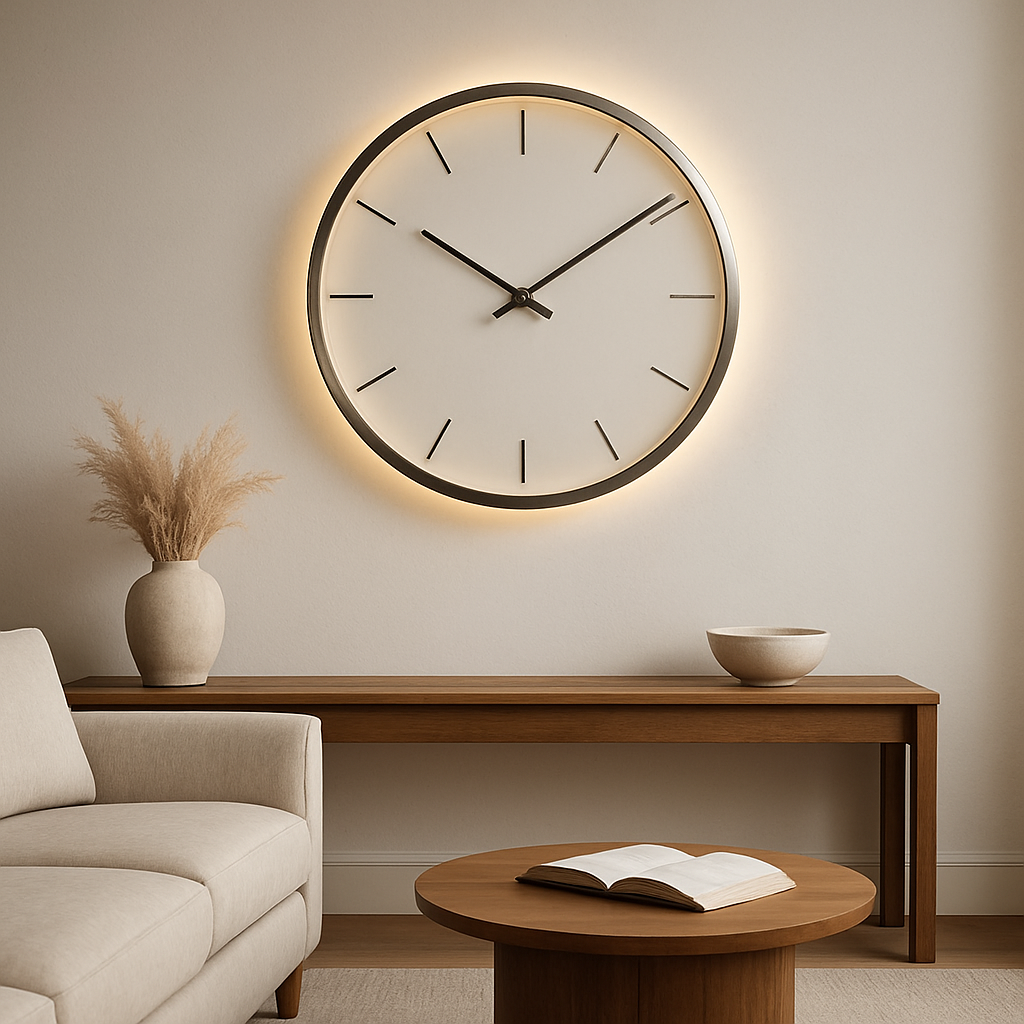
When you choose a minimalist clock, remember it’s not just about the piece itself—it’s about the harmony it creates with walls, flooring, and lighting. A thoughtfully selected clock can anchor your design, making the space feel intentional and inviting.
So, which of these styles resonates with your home? Take a moment to picture the vibe you want, then let the clock be the quiet statement that ties everything together.
2. Bold Statement Pieces for Large Modern Wall Clocks
When you want a wall to do more than just hold a picture, a large modern wall clock becomes the conversation starter. Think of it as the sculpture your living room has been begging for—functional, but bold enough to draw a second glance every time you glance at the time.
1. Go Oversized and Geometric
One of the easiest ways to make a statement is to let the clock own the wall. A 30‑inch‑plus diameter piece with clean lines can anchor a high‑ceiling loft without feeling cramped. In a recent project, we hung a 36‑inch brushed‑steel clock above a sectional, and the room instantly felt balanced— the clock filled the vertical gap while still leaving breathing room on either side.
Actionable tip: Measure your wall, then calculate 30‑40 % of its width. Choose a clock that meets that range, and mark the center point at eye level (about 57‑60 inches from the floor). This ensures readability and visual harmony.
2. Embrace Metallic Drama
Metal finishes—think matte black, polished brass, or brushed nickel—add an industrial edge that screams confidence. A large metallic clock reflects ambient light, making the piece glow without extra lamps. We loved the effect of a black‑metal starburst clock from a niche maker; its radiating arms turned a plain white wall into a dynamic backdrop.
Want to try it yourself? Look for a starburst metal wall clock that’s at least 24 inches wide. Pair it with soft, warm‑white LED strips above the clock to accentuate the metallic sheen.
3. Mix Materials for Visual Interest
Combine wood and metal for a mixed‑media masterpiece. A wooden frame with a metal face offers the warmth of timber and the sleekness of steel in one piece. In a coastal cottage, we installed a walnut‑bordered clock with a brushed‑steel dial; the natural grain softened the modern vibe while still commanding attention.
Step‑by‑step: 1) Choose a wood tone that echoes existing furniture. 2) Select a metal finish that matches hardware (door knobs, light fixtures). 3) Order a custom clock or look for a ready‑made option that pairs both. 4) Hang it using sturdy anchors—large clocks can weigh 15 lb or more.
4. Add a Pop of Color
Bold isn’t just about size; it’s also about hue. A deep navy or emerald clock can become a color anchor for the room’s palette. A client with a monochrome grey sofa opted for a teal‑tinted dial; the splash of color tied together teal cushions, a patterned rug, and a few green plants.
Pro tip: Keep other décor muted when you go colorful. Let the clock be the focal point, and use accent pieces (vases, cushions) that pick up its shade.
5. Position for Zone Definition
In open‑plan homes, a large modern wall clock can act as a visual divider between the kitchen and living area. By placing the clock directly above the island, you create a subtle line that says “here’s where cooking ends and lounging begins.”
Data point: A study from Modest Hut notes that oversized wall clocks “significantly influence the ambiance of a room,” acting as both functional time‑teller and decorative anchor.
Quick checklist for zone‑defining placement:
- Pick a wall that’s visible from both zones.
- Align the clock’s center with the eye level of the tallest person using the space.
- Ensure surrounding walls stay uncluttered—let the clock breathe.
Now, let’s see how it looks in action.
After the video, take a moment to walk the room. Does the clock feel like a centerpiece or an afterthought? If it still feels “just there,” consider scaling up or adding a complementary lighting fixture. The right combination of size, material, and placement turns a large modern wall clock from a utility into a bold statement piece that reflects your personal style.
3. How to Choose the Perfect Size and Placement (Video Guide)
Ever stared at an empty wall and wondered if the clock you love will look cramped or float like a cloud? You’re not alone. The sweet spot for a large modern wall clock is a mix of math, eye‑level intuition, and a dash of personality.
1. Start with the wall’s width
Grab a tape measure and note the total width of the wall you’re eyeing. As a rule of thumb, aim for the clock to cover roughly 30‑40 % of that span. On a 12‑foot (144‑inch) wall, that’s a 43‑ to 58‑inch diameter piece – big enough to command attention without stealing the whole room.
Tip: Sketch a paper cut‑out of the clock size and tape it to the wall. Step back and see if it feels balanced. If it looks like a postage stamp, you’ve undersized it; if it dominates the whole wall, you’ve overscaled.
2. Align with eye level – the “human scale” trick
Most people notice art at about 57‑60 inches from the floor – that’s the average eye level for a standing adult. Hang the clock’s centre at this height, or adjust slightly higher if the room has high ceilings. This keeps the time readable without forcing anyone to tilt their head.
And remember: in a kitchen or dining zone, you might want the centre a few inches lower so you can glance at it while you’re seated.
3. Consider the room’s function and flow
In an open‑plan loft, a large modern wall clock can double as a visual divider. Place it above the island or the sofa to signal “cooking ends, lounging begins.” In a hallway, a slimmer vertical clock works better – it guides the eye along the passage rather than stopping it.
We’ve seen couples in their first home use a 24‑inch rustic‑modern piece from Montoire above a console table. The clock anchors the entryway while the surrounding wall stays light, letting the piece breathe.
4. Play with lighting and surrounding décor
Even the most perfectly sized clock can look flat if the lighting is wrong. A subtle LED strip or a directional track light aimed at the dial adds depth and highlights the hands. If you love a bit of motion, a pendulum clock like the one from JTWALCLOCK creates a gentle sway that catches the eye without being noisy.
Leave at least 12‑inch breathing space on either side. That negative space lets the clock sit like a piece of art rather than a wall‑paper pattern.
5. Mock‑up with removable hooks
Before you drill any holes, give yourself a rehearsal. A removable adhesive hook or a simple command strip lets you hang the clock temporarily. Step back, snap a photo, and live with it for a day. If it feels off‑center or the scale seems wrong, you can reposition without leaving a scar on the wall.
6. Pair with surrounding furniture
Look at the furniture that lives underneath. A low‑profile sofa or a sleek console creates a clean line that lets the clock float. If you have a chunky bookshelf, offset the clock a few inches to the side so the pieces don’t compete. The goal is a visual rhythm – the clock, the furniture, the floor, all speaking the same design language.
Quick checklist – size and placement in a nutshell
- Measure wall width; aim for 30‑40 % coverage.
- Center the dial at 57‑60 inches from the floor (adjust for seating zones).
- Use a paper template to visualize scale before drilling.
- Choose lighting that accentuates the face without glare.
- Leave at least 12 inches of clear wall on each side.
So, what’s the next step? Grab that tape measure, pull out a piece of cardboard, and start visualising. When the clock feels right in your mind’s eye, you’ll know it’ll feel right on the wall, too. Happy hanging!
Remember, a large modern wall clock is more than a time‑teller; it’s a piece that can shape how you experience a room. Follow these steps, trust your eye, and you’ll end up with a statement that feels custom‑made.
4. Mixing Materials: Metal, Wood, and Acrylic Options
Why mix materials in the first place?
When you pair metal, wood, and acrylic in a large modern wall clock, you get a visual conversation rather than a monologue. The cool precision of steel, the warm texture of timber, and the light‑weight translucence of acrylic each tell a different part of your room’s story. That contrast makes the clock feel custom‑made, even if you bought it off the shelf.
Metal‑forward statements
Think of a brushed‑nickel frame that catches the kitchen’s pendant lights. In a loft with exposed concrete, a metal‑dominant clock anchors the industrial vibe without feeling cold. The key is choosing a finish that already lives in the space – brushed brass if you have brass hardware, matte black if your lighting fixtures are blacked‑out.
Action step: Grab a swatch of your existing metal hardware, hold it up to the clock’s casing, and notice the undertone. If they sing, you’ve found a match.
Wooden warmth adds depth
Wood brings a tactile softness that metal alone can’t deliver. Picture a walnut‑bordered clock above a living‑room sofa with a reclaimed‑wood coffee table. The grain ties the whole seating area together, and the clock becomes a bridge between modern shape and classic material.
Real‑world example: a client with a mid‑century modern sofa chose a clock with a light‑oak frame. The result was a subtle echo of the sofa’s tapered legs, making the wall feel like an extension of the furniture rather than a separate object.
Action step: Measure the dominant wood tone in your room (floor, mantel, or sideboard). Then look for a clock with a frame within three shades lighter or darker – that small shift adds depth without clash.
Acrylic: the unexpected light‑weight hero
Acrylic is the chameleon of wall décor. Clear or frosted acrylic can make a large clock feel airy, especially in a small hallway where a solid metal piece would dominate. Because acrylic reflects ambient light, it can double as a subtle lighting feature.
One of our recent projects used a clear‑acrylic clock above a glass console table. The clock’s face seemed to float, and the surrounding art pieces appeared brighter thanks to the light bounce.
Action step: Test the acrylic’s clarity by holding it up to a light source. If you see a gentle glow, you’ve got a piece that will amplify your room’s illumination.
Mix‑and‑match: three proven formulas
- Metal + Wood: A steel bezel with a reclaimed‑pine inner ring creates a rugged‑yet‑refined look. Ideal for industrial‑modern hybrids.
- Metal + Acrylic: Brushed‑gold metal accents on a clear acrylic face add a touch of glamour without weight. Works well in contemporary kitchens.
- Wood + Acrylic: A walnut frame surrounding a frosted acrylic dial softens the acrylic’s sleekness, perfect for Scandinavian‑inspired spaces.
Practical checklist for material mixing
- Identify the dominant material in your room (metal, wood, or acrylic).
- Choose a clock where the secondary material complements, not competes – aim for a 60/40 visual balance.
- Test finishes side‑by‑side with existing hardware or furniture under the same lighting.
- Consider weight: metal‑heavy clocks may need reinforced anchors; acrylic is lighter but can be more fragile.
- Plan lighting: a recessed LED strip above a metal frame adds a halo; a soft wall sconce highlights wood grain.
Expert tip from our design team
We often start with a “material mood board.” Pull a photo of your wall, a sample of your flooring, and a swatch of your metal hardware. Then overlay three clock options – one metal‑focused, one wood‑focused, one acrylic‑focused. The board instantly shows which combo feels most cohesive. If two options clash, swap the secondary material until the visual rhythm clicks.
Final thought
Mixing metal, wood, and acrylic isn’t about being flashy; it’s about letting each material do the work it does best. When you balance them thoughtfully, your large modern wall clock becomes a unifying centerpiece that ties together the room’s textures, lighting, and personality.
5. Color Trends and Customization for Large Modern Wall Clocks
1. Classic Black – The Luxe Anchor
Black has been the go‑to shade for 2024 because it instantly adds depth without shouting.
If your sofa is a soft neutral, a black‑finished metal frame makes the clock pop like a piece of jewelry on the wall. It also hides fingerprints, which is a nice side‑effect for busy households.
2. Crisp White – Quiet Confidence
White clocks keep the vibe airy, perfect for rooms drenched in natural light.
Pair a white acrylic face with a subtle brushed‑nickel bezel and you get a piece that feels custom‑made yet budget‑friendly.
3. Bold Blues – A Splash of Serenity
From deep navy to electric teal, blue is the color that whispers “I’m modern, but I’m also calm.”
We love seeing a cobalt‑metal clock above a kitchen island; the hue mirrors the sky outside and ties together steel appliances.
4. Fresh Greens – Nature’s Whisper
Green is making a quiet comeback, especially in matte finishes that feel like a soft moss against the wall.
A sage‑green wooden clock can act as a bridge between a plant‑filled corner and a sleek living‑room sofa.
5. Custom Color Pops – When You Want to Stand Out
Because you’re not a copy‑cat, why not ask a maker to dip the hands or the hour markers in a color that matches your favorite cushion?
Many boutique suppliers let you choose a custom powder‑coat or even a hand‑painted accent. The result? A clock that feels as personal as a family portrait.
So, how do you decide which shade fits your space? Here’s a quick three‑step cheat sheet.
- Identify the dominant hue in your room – walls, upholstery, or flooring.
- Pick a clock color that either matches (for harmony) or contrasts (for drama) that dominant hue.
- Test the finish under your room’s lighting – daylight, warm LEDs, or incandescent – because a color can shift dramatically.
And don’t forget the power of customization beyond paint. Swapping out the clock’s hands for brass, copper, or even a sleek matte black can change the whole mood without buying a new piece.
We’ve seen a client in a coastal cottage choose a turquoise‑tinted dial to echo the sea‑glass tiles in their bathroom. The subtle hue tied the whole home together without a single extra accessory.
Need a data‑driven perspective? 2024 wall‑clock color trends highlight black, white, blue, and green as the top picks, confirming that what we’re recommending isn’t just a gut feeling.
If you’re still on the fence, try a temporary mock‑up. Print the clock’s silhouette on kraft paper, tape it to the wall, and walk around the room. The silhouette will show you whether the color and size really work with your existing décor before you make a permanent commitment.
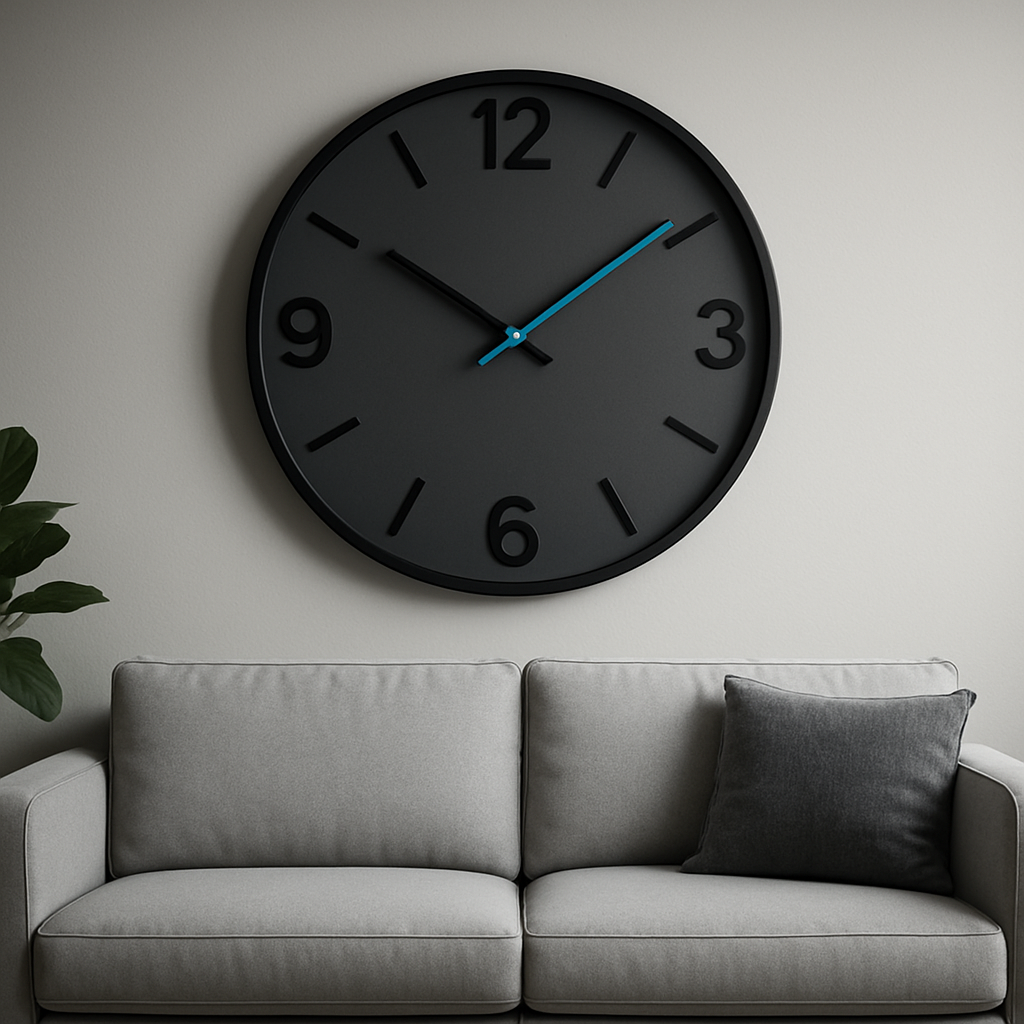
Finally, remember that a large modern wall clock is a statement piece, not a background prop. Choose a color that makes you smile when you glance at it, and don’t be afraid to experiment with a custom finish. After all, you’re the one living there, and the clock should feel like it belongs to your story.
6. Comparison Table: Top 5 Large Modern Wall Clock Brands
When you start hunting for that perfect large modern wall clock, the brand you pick can make or break the whole vibe. After all, a clock isn’t just a time‑teller; it’s a design statement that lives on your wall for years.
We’ve boiled the market down to five brands that consistently deliver quality, style, and the kind of durability you expect from a piece you’ll admire daily.
Below you’ll see a quick‑read table that lines up the basics – size options, price brackets, and the signature feature that sets each label apart.
We started with three simple criteria: how many size options the brand offers, whether the price feels fair for the materials, and that one signature detail that makes the clock instantly recognizable. By scoring each label on those points, the table below lets you compare apples to apples without digging through endless product pages.
| Brand | Notable Series | Typical Size | Price Range (GBP) | Key Feature |
|---|---|---|---|---|
| Flemings | Industrial Minimal | 30‑42 in | £150‑£300 | Brushed‑steel frame, clean dial |
| Brooklyn | Black & Gold | 28‑34 in | £300‑£350 | Three‑part mirrored face |
| Twemco | Flip Wall Clock | 30‑32 in | £200‑£280 | Mechanical flip mechanism |
| Miller | Walnut‑Nickel | 36 in | £180‑£250 | Solid wood border |
| Williston | Square Geo | 30 in | £160‑£210 | Geometric square face |
Take a quick scan: if industrial chic is your jam, Flemings or Brooklyn will hit the sweet spot. Want a retro kinetic feel? Twemco flip clocks do the trick. For warm wood vibes, Miller shines, while Williston delivers bold geometry for a gallery‑wall vibe. Use the price column to see which fits your budget at a glance.
Flemings leans into industrial minimalism. Their brushed‑steel frames pair well with loft‑style interiors, and most models sit between 30‑ and 42‑inches in diameter. Pricing lands in the £150‑£300 range, which feels reasonable for a piece that can anchor a living‑room wall without looking cheap.
Brooklyn’s Black And Gold line adds a splash of luxe. The three‑part mirrored face catches ambient light, making a bold visual punch in a neutral room. Sizes run 28‑34 inches, and the price point nudges up to £350, reflecting the hand‑finished glass work.
If you’re into a retro vibe with modern precision, Twemco flip clocks deliver that kinetic charm. Their wall‑mounted flip models can stretch to 32 inches, and the mechanical flip mechanism adds a satisfying visual cue every minute. Prices sit around £200‑£280, a sweet spot for a piece that’s both functional and conversation‑worthy.
Miller focuses on wood‑rich designs. A walnut‑bordered clock with a brushed‑nickel bezel brings warmth to a minimal space, and the 36‑inch option feels substantial without overwhelming the wall. Expect to pay between £180 and £250, which aligns with the craftsmanship of solid timber.
Williston’s square‑face pieces lean into geometric drama. The 30‑inch white version works beautifully above a gallery wall, while the grey variant adds a moody contrast. Price tags hover around £160‑£210, making them an affordable entry into high‑design wall art.
Now that you’ve got the quick facts, grab a tape measure, sketch the silhouette on paper, and see which brand’s size and finish fits your wall’s personality. When you’re ready, Harvey Bruce Interiors can help you source the perfect piece and even arrange a bespoke finish.
Pro tip: when you spot a clock you like, order a small sample of the finish or request a swatch. Seeing the texture in your own light eliminates guesswork and ensures the piece feels just right.
FAQ
Can a large modern wall clock work in a small hallway?
Absolutely—if you treat it like a piece of art rather than a wall‑filler. Choose a slimmer, vertically‑oriented model around 24‑30 inches, then give it breathing room by leaving at least 12 inches of clear wall on each side. Pair it with subtle lighting or a muted wall colour, and the clock becomes a focal point without overwhelming the passage.
How do I figure out the right size for my living‑room wall?
Start by measuring the wall’s width, then aim for the clock to cover roughly 30‑40 % of that span. For a 12‑foot wall, a 36‑inch dial usually feels balanced. Sketch a paper cut‑out, tape it up, and step back. If the mock‑up feels too tiny, go up a size; if it looks like it’s stealing the whole room, scale back a bit.
Is it safe to mount a heavy large modern wall clock on plaster?
Yes, but you’ll want the right anchors. Use a stud‑finder first; if you hit a stud, a couple of heavy‑duty screws will hold most 15‑lb clocks securely. When you’re off‑stud, opt for toggle bolts or metal wall anchors rated for at least 20 lb. This prevents wobble and protects the plaster from cracks over time.
Which finish is most forgiving for everyday life and kids?
Matte black or brushed nickel tend to hide fingerprints and dust better than high‑gloss finishes. A brushed‑steel face also disguises tiny scratches, which is handy in homes with pets or bustling families. If you love colour, consider a muted navy or deep charcoal—these still mask smudges while adding a subtle design punch.
Do I need a professional to install my large modern wall clock?
Not necessarily, but it helps if you’re uncomfortable with power tools. The biggest challenges are finding studs and ensuring the clock is level. If you have a drill, a stud‑finder, and the right anchors, you can do it in an afternoon. Otherwise, a quick call to a local handyman or our installation service can save you a headache.
How can I make my large modern wall clock coordinate with existing hardware?
Take a swatch of your current metal finishes—think door handles, light fixtures, or cabinet pulls—and hold it up to the clock’s casing. If the undertones match (warm brass vs. cool chrome), you’ve got visual harmony. When in doubt, a brushed‑nickel or matte black clock pairs well with most hardware, giving you a cohesive look without a custom finish.
Conclusion
So, after wandering through scale, material, colour and placement, what’s the bottom line? A large modern wall clock should feel like an effortless extension of your home, not an after‑thought you’ve forced onto the wall.
In our experience, the sweet spot lands when the clock covers roughly one‑third of the wall, matches a finish you already love, and gets a little lighting love to bring out its hands. When those three boxes line up, the clock becomes a quiet anchor that draws the eye without shouting.
Think about the last room you entered – did the timepiece greet you or hide in the background? If you found yourself glancing at it and smiling, you’ve hit the mark.
Here’s a quick cheat‑sheet to lock it in: measure, mock‑up with paper, pick a finish that echoes existing hardware, and add a soft LED strip or wall sconce. Then step back, breathe, and let the clock do the talking.
Does this feel doable? Absolutely. Even if you’re a first‑time homeowner, the tools are simple and the impact is huge.
Ready to make your wall sing? Browse our curated selection of large modern wall clocks and let us help you turn that empty space into a design statement that lives for years.
← Older Post Newer Post →