
How to Style a Coffee Table: Fresh Ideas for Every Home
Posted by Derek Lamb on
Ever walked into a living room and felt that the coffee table is the silent judge of your style?
We all know that moment – you’re sipping your morning brew, eyes flick to the surface, and wonder if it looks a little too bare or, worse, over‑the‑top. That tiny piece of wood (or glass) actually sets the tone for the whole room, so learning how to style a coffee table is more than a décor task; it’s a chance to showcase who you are.
Here’s the thing: most homeowners think styling means piling on random knick‑knacks. In reality, a well‑curated table tells a story without shouting. Think of it like a conversation starter with your guests – you want it inviting, balanced, and unmistakably you.
In our experience at Harvey Bruce Interiors, we often start with three simple layers: a base, a focal point, and a finishing touch. The base could be a sleek tray, a stack of art books, or a low‑profile vase. The focal point is what draws the eye – maybe a sculptural piece or a seasonal arrangement. The finishing touch adds texture, like a woven runner or a handful of scented candles.
But don’t just dump everything on the table and call it done. Ask yourself: “Does this piece complement the sofa, the rug, and the lighting?” If the answer is yes, you’re on the right track. If you’re not sure, step back, take a photo, and picture the space from a friend’s perspective – that little mental pause often reveals clutter you’d otherwise miss.
Now, imagine you’ve just moved into a new home and want to make the living area feel lived‑in instantly. Pair a Nordic‑style coffee table, like the Amaya honey caramel finish, with a soft neutral runner, a couple of copper‑tone candle holders, and a single, striking plant. The result feels curated yet effortless – exactly the vibe many of our customers crave.
So, whether you’re a first‑time buyer or a seasoned style‑enthusiast, remember that styling a coffee table is about balance, personality, and a touch of playfulness. Let’s dive in and explore practical steps that turn that surface from ordinary to eye‑catching.
TL;DR
Learn how to style a coffee table with three easy layers—base, focal point, and finishing touch—so your living room feels instantly curated, balanced, and personal.
We show practical tips, from sleek trays to seasonal plants, that any homeowner can apply today for a luxe look in your space without over‑cluttering.
Step 1: Assess Your Space and Coffee Table Size
Before you even think about a tray or a vase, the first thing to do is take a step back and look at the room as a whole. Ask yourself what mood you want the space to radiate – cosy and warm, sleek and modern, or maybe a bit of both. This emotional check‑in sets the tone for every measurement you’ll take.
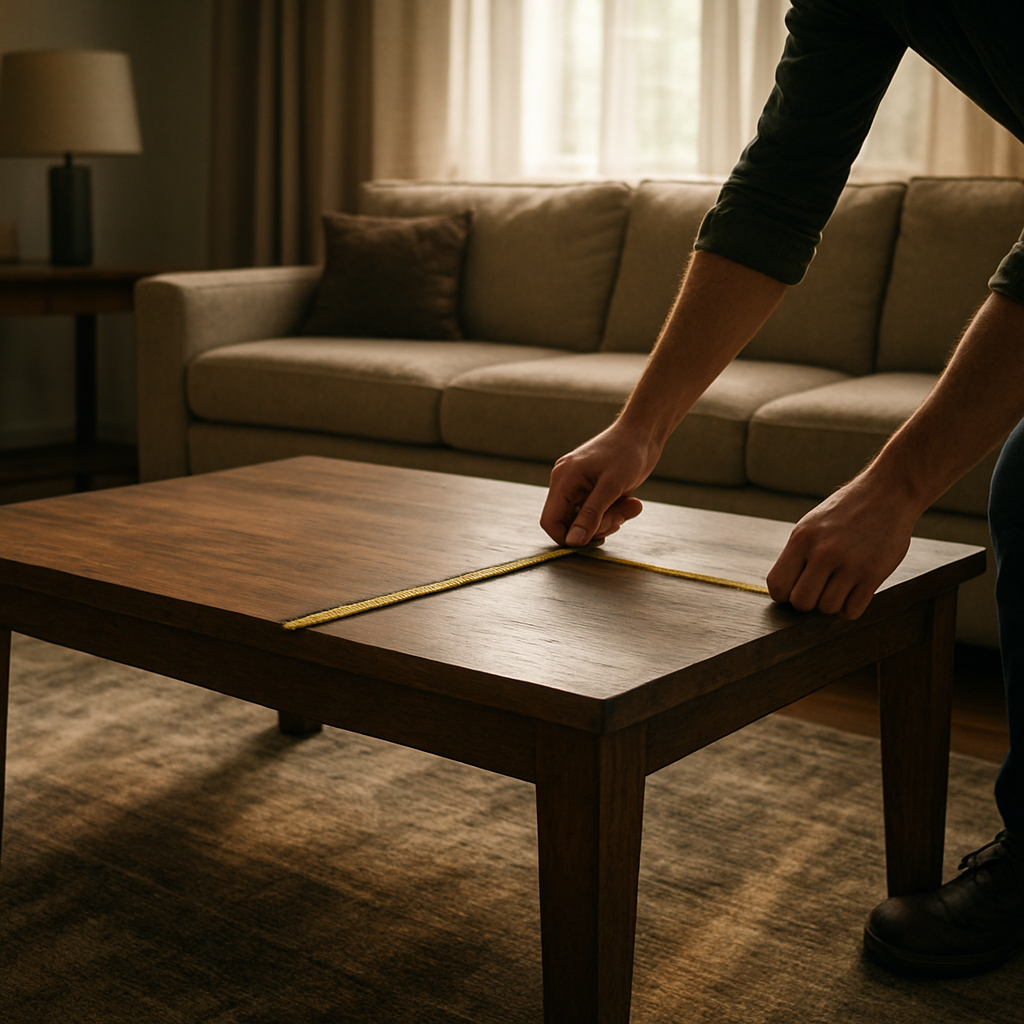
Start by measuring the floor area around your sofa and the walls that frame the coffee table. Grab a tape measure and note the length from the back of the sofa to the nearest wall, then the width between the armrests. As a rule of thumb, leave at least 45 cm (about 18 inches) of clearance on all sides so people can move freely without bumping into anything.
Next, think about the proportion of the table itself. A coffee table that’s too long will dominate the room, while one that’s too short can look lost. A good sweet spot is when the table’s length is roughly two‑thirds of the sofa’s length and the height sits comfortably between your knee and elbow when seated – typically 40‑45 cm.
Now that you have the dimensions, visualise the shape that will best suit the space. Rectangular tables work well in elongated rooms, while square or round tables soften a boxy layout. If you have a narrow lounge, a round table with a diameter of about 80‑90 cm can create flow without cutting off traffic paths.
At this stage it helps to see a real‑world example. Take a look at the Amaya Nordic Style Honey Caramel Coffee Table – its modest 110 cm length and gentle mango‑wood finish sit nicely in a mid‑size living room, giving you a concrete reference for scale and material feel.
If you’re still unsure whether the size feels right, grab a sheet of newspaper or a cheap rug and lay it on the floor where the table will sit. Step back and see how much of the floor remains visible. This quick trick mimics the footprint without buying anything, and it instantly shows you if the piece will overwhelm the room.
Once you’ve nailed the dimensions, think about how the table will interact with other furniture. Does the colour of the tabletop complement the sofa upholstery? Are the legs of the table in a similar finish to your side tables or TV stand? Matching these details creates a cohesive look that feels intentional rather than accidental.
A final tip is to consider the visual weight of the piece. Dark wood or metal can anchor a light‑filled room, while a light honey‑caramel surface adds warmth without pulling the eye down. Think about the lighting you have – a pendant or floor lamp can balance the table’s weight, making the whole arrangement feel airy.
When you’ve settled on size, bring in a piece of art to anchor the colour story. A vibrant abstract landscape can pull together the hues of your cushions, tray and accessories. For inspiration, check out the stunning abstract landscape paintings at Gratitude Studios – they offer pieces that add depth without competing with your table’s simplicity.
Take a quick photo of your measured space and overlay a transparent rectangle the size of your chosen table. This visual cheat‑sheet lets you see how the piece will sit in real time, and you can adjust the layout before any purchase. It’s a small step that saves a lot of back‑and‑forth with retailers.
Step 2: Choose a Style Theme
Now that you know the right size, it’s time to think about the vibe you want your coffee table to broadcast. Do you imagine a cosy, lived‑in feel or a sleek, gallery‑ready look? Picking a style theme is basically choosing the story your table will tell every time someone walks into the room.
Start with a colour palette
Look at the walls, the sofa upholstery and even the rug. If your sofa is a deep navy, a warm honey‑caramel table like the Amaya range creates a pleasant contrast without clashing. On the other hand, a black‑stained glass top pairs beautifully with a monochrome, modern scheme.
Pro tip: pull a swatch of your favourite pillow fabric and hold it next to the table top. If the tones feel harmonious, you’ve found a solid base.
Identify a design language
There are three go‑to languages most homeowners gravitate towards: Scandinavian minimalism, mid‑century modern, and classic luxury. Scandinavian is all about light wood, simple lines and a touch of nature – perfect for a breezy London flat. Mid‑century brings tapered legs, brass accents and a retro feel that works well in a refurbished Victorian terrace. Classic luxury leans on rich finishes, marble tops or intricate inlays for a statement‑making piece.
Imagine a newly‑moved‑in couple in Edinburgh who love the clean aesthetic of Nordic design. They chose a rectangular honey‑caramel coffee table, added a woven jute runner and a single silver vase. The result feels curated yet effortless – exactly the look they were after.
Mix textures for depth
Once you have colour and design language, layer texture. A smooth glass surface can be softened with a chunky ceramic bowl, while a matte wood top loves a glossy metal tray. Think of texture as the seasoning in a recipe; a pinch of contrast makes the whole dish pop.
One of our clients in Brighton layered a brushed‑copper tray, a stack of coffee‑table‑books and a small succulent in a hand‑painted pot. The table became the room’s focal point without feeling over‑styled.
Consider seasonal accents
Seasonal accessories keep the table feeling fresh. In spring, a pastel‑coloured linen runner and a vase of tulips add a light touch. Autumn calls for a woolen throw, a few amber candles and perhaps a small pumpkin. Rotating these items every few months gives you a new look without buying a new table.
Do you worry that swapping pieces will look chaotic? Keep a small “style box” on the side of the table with all the seasonal items. When the season changes, simply swap the contents – it’s a low‑effort way to keep the vibe aligned.
Expert tip: use a visual checklist
Before you commit, sketch a quick mood board. Include the table photo, swatches of fabric, a colour chip and a photo of the accessory you’re eyeing. If the board feels balanced, you’re good to go. If something feels off, adjust until the composition feels right.
For a visual walk‑through, check out this short video guide that walks you through picking a style theme and arranging accessories how‑to style a coffee table tutorial. It’s only a few minutes and gives you a clear visual reference.
Actionable checklist
- Identify the dominant colour in your room.
- Choose one of three design languages – Scandinavian, mid‑century, classic luxury.
- Pick two contrasting textures to pair with the table surface.
- Select three seasonal accessories you already own.
- Create a simple mood board and adjust until it feels cohesive.
- Place items on the table, step back, and tweak as needed.
When you follow these steps, you’ll move from “just a table” to “the heart of the living room”. And the best part? You can evolve the look over time without buying anything new – just a few thoughtful pieces and a clear style theme.
Step 3: Select Complementary Accessories
Alright, you’ve nailed the size and the style language, now it’s time to have a little fun. Selecting the right accessories is the secret sauce that turns a plain coffee table into a conversation starter.
Start with a statement piece
Think of the first thing you’d reach for when you walk into the room – a sculptural vase, a brass tray, or a chunky ceramic bowl. That piece should echo the colour or material you chose in Step 2, but it also needs a bit of personality. If your table is a warm honey‑caramel wood, a copper‑toned tray feels like a natural extension, while a matte black bowl adds a subtle contrast.
Do you ever find yourself staring at an empty surface and wondering “what’s missing?” That moment is the cue to pick something that feels a little unexpected, like a hand‑blown glass orb or an antique brass candlestick. It’s okay to be a little daring – the goal is to make the table feel lived‑in, not sterile.
Stack coffee‑table books for instant depth
Books aren’t just for reading; they’re visual weight. Choose two or three volumes that match your palette – perhaps a muted architecture book with a bold art monograph on top. The largest book goes on the bottom, creating a stable base, and the smallest sits on top like a tiny trophy.
For ideas on colour‑coordinated books, check out this guide on coffee table books as decor. It walks you through picking the right sizes and hues without making the stack look like a mini library.
Fill decorative bowls with texture
Bowls act like tiny stages for your accessories. Fill them with natural objects – dried berries, pinecones, or even a handful of polished stones – to add texture without clutter. The key is variety: mix smooth glass beads with rough wood slices for a tactile contrast.
If you need inspiration for bowl fillers, this article on what to use to style decorative bowls offers a treasure trove of ideas, from sea‑shells to antique buttons.
Now that you have a statement piece, a book stack, and a textured bowl, you might wonder how to make them feel cohesive. The trick is to think in “zones” – divide the tabletop into three visual sections and assign each accessory to a zone. Step back, take a photo, and see if your eye naturally travels from one zone to the next.
That short video shows exactly how to arrange those zones without over‑thinking it. Notice how the host leaves a bit of negative space – that breathing room is as important as the accessories themselves.
Introduce a splash of greenery
A single plant or a tiny succulent in a sleek pot can soften hard edges and inject life. Choose a low‑maintenance option like a snake plant or a small air‑plant, especially if you have kids or pets. Place it opposite your statement piece so the eye has a natural line to follow.
And don’t forget lighting. A slender candle or a battery‑operated LED in a glass holder adds a warm glow when the sun sets. It’s a tiny touch that makes the table feel inviting for evening chats.
Final quick‑check
- Did you pick a focal piece that reflects your style language?
- Are your book stacks sized appropriately and colour‑coordinated?
- Is your bowl filled with a mix of natural textures?
- Do you have a touch of greenery and subtle lighting?
- Step back – does the arrangement feel balanced without feeling crowded?
When you’ve answered “yes” to most of those, you’ve successfully mastered how to style a coffee table with complementary accessories. The best part? You can swap out any one element when the season changes, and the overall look stays fresh.
Step 4: Arrange Items for Balance and Add a Comparison Table
Why balance matters
When you step back from the coffee table, does your eye wander smoothly from one piece to the next, or does it get stuck on a clump that feels heavy? That little pause is the secret to a calm, curated look – you want the eye to glide, not stumble.
In our experience at Harvey Bruce Interiors, the sweet spot is achieved by thinking of the surface as a mini‑stage. Each prop has a role, and the spacing between them is just as important as the objects themselves.
Step‑by‑step arrangement process
1. Lay a neutral base. A low‑profile tray or a simple woven runner creates a visual anchor. It keeps the table from looking like a scatter of loose items.
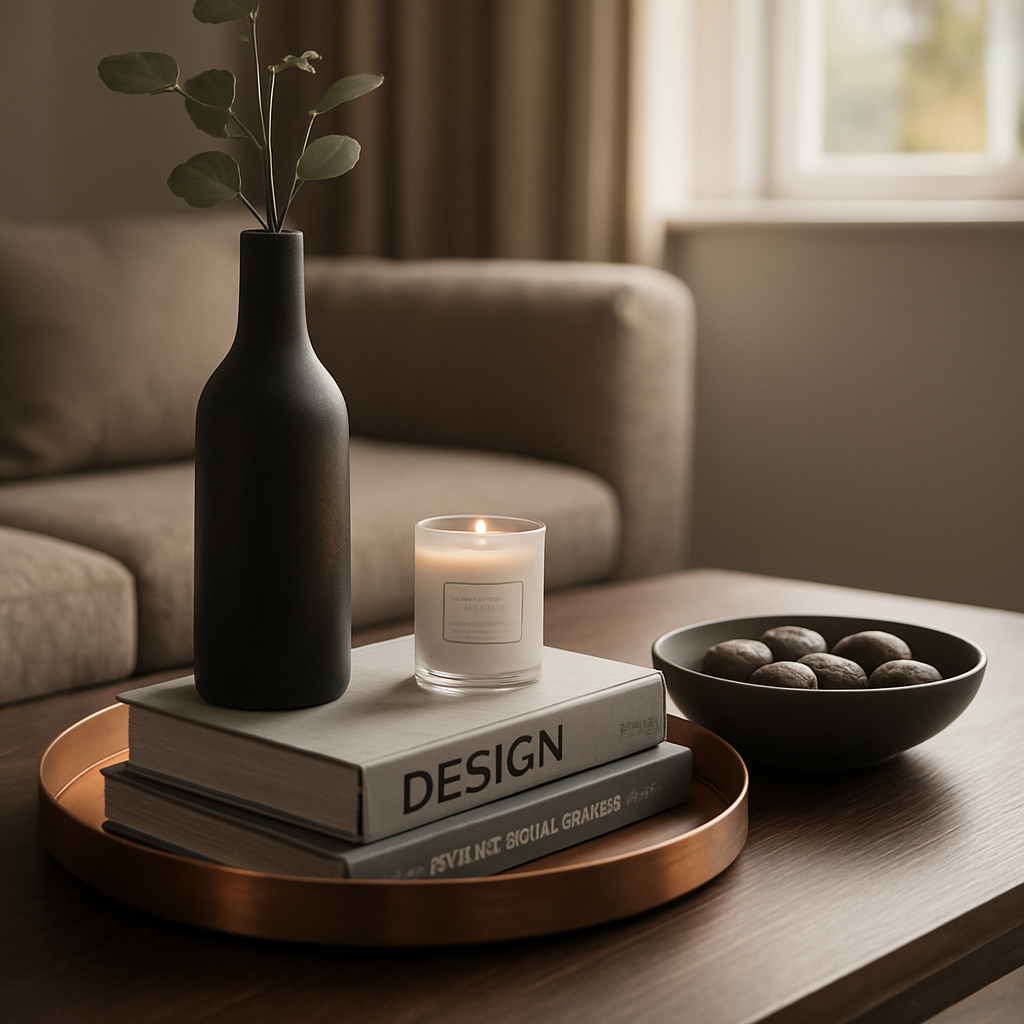
2. Place your statement piece. This could be a sculptural vase, a bold metal tray, or a hand‑blown glass bowl. Position it slightly off‑centre – think of a picture hanging askew on a gallery wall. That asymmetry feels intentional, not chaotic.
3. Build height. Stack two or three coffee‑table books, then crown the stack with a smaller object – perhaps a candle or a tiny succulent. The tallest element should be no higher than the table’s edge, so it doesn’t dominate conversation.
4. Introduce texture. A ceramic bowl filled with river stones, pine cones, or dried orange slices adds tactile interest. Keep the bowl on the opposite side of the statement piece to create a visual dialogue.
5. Leave breathing room. Step back and measure the gaps. Aim for about 5‑7 cm between each group; that’s roughly the width of a coffee mug. The negative space lets each item breathe and prevents the table from feeling cramped.
6. Test functionality. Slip your hand under the arrangement – can you still reach the remote? If not, pull something back or swap a decorative bowl for a slimmer tray.
Real‑world examples
Take the Smiths in Bath: they chose a brushed‑copper tray as their base, placed a tall, matte‑black ceramic vase on the left, and stacked a thick architecture book with a small scented candle on top on the right. A shallow bowl of polished river stones completed the look. The result felt luxe yet lived‑in, and they never had to move anything during family game night.
Meanwhile, a young couple in Manchester with a round oak coffee table used a light‑woven rattan basket as the base, a green succulents cluster as the focal point, and a stack of two oversized coffee‑table books topped with a copper‑tone candle. Because the round shape encourages a 360° view, they placed the items in a gentle triangle, which kept the eye moving.
Quick‑reference comparison table
| Styling Element | Typical Size | Key Benefit |
|---|---|---|
| Statement Piece (vase, bowl, tray) | 10‑15 cm high, 20‑30 cm wide | Creates focal interest and anchors the layout |
| Book Stack | 12‑20 cm tall, 15‑25 cm wide | Adds height, visual weight, and conversation starter |
| Textured Bowl | 8‑12 cm deep, 15‑20 cm diameter | Introduces tactile contrast and natural element |
Notice how each row gives you a clear size range – that’s the data‑driven part of the process. If you stay within those parameters, you’ll rarely end up with a piece that overpowers the others.
For more detailed guidance on mixing heights and finishes, check out this thorough article on styling coffee tables. It breaks down why contrasting materials – like a glossy vase on a matte wood top – keep the scene lively.
If you prefer a visual walkthrough, the video guide walks you through the exact placement steps, pausing at each decision point.
And finally, remember this: balance isn’t about perfect symmetry; it’s about a feeling of equilibrium that makes you want to linger. Once you’ve nailed the arrangement, you’ll notice guests naturally gravitate toward the table, picking up a book or lighting a candle without thinking twice.
Step 5: Add Seasonal Touches
Now that you’ve got the basics down, it’s time to let the calendar guide your coffee‑table story. Seasonal accents keep the surface feeling fresh without you having to buy a whole new table each year.
Spring refresh
Think of the first morning when the garden starts to bloom – you want that same lightness on your table. A pastel linen runner, a small bud vase filled with hyacinths, and a single pastel‑coloured candle do the trick. The runner adds colour without overwhelming, and the buds give a subtle scent that whispers spring.
Because you probably already own a few spring‑time pieces, create a “season box” on a shelf nearby. When March rolls around, pull the runner and the vase out, swap the candle for a fresh one, and you’ve got a new look in minutes.
Summer light
Summer is all about breezy, airy vibes. Replace heavy fabrics with a natural fibre mat – think jute or seagrass – and pair it with a clear glass bowl filled with smooth river stones. Add a citrus‑scented tealight and maybe a tiny terracotta pot with a trailing pothos.
Our favourite summer trick is to use a shallow tray of sand and a few smooth shells. It feels like a beach‑side coffee table without the sand in your shoes. The key is to keep the colour palette light: whites, soft blues, and muted greens.
Autumn warmth
When the leaves start turning, you’ll notice the room wants a bit of coziness. A woolen runner in burnt orange or deep mustard instantly adds warmth. Layer a couple of small pumpkins or gourds, and sprinkle a handful of dried pinecones in a low bowl.
Don’t forget scent – a cinnamon‑spiced candle or a small diffuser with clove oil makes the space feel inviting. If you have a spare wooden box, line it with a soft scarf and tuck in a few seasonal books – the texture of the fabric pairs nicely with the crisp autumn air.
Winter cheer
Winter is the perfect excuse to go a little more decorative without over‑doing it. A festive runner in subtle tartan, a few flameless evergreen candles, and a tiny silver candlestick set give a cosy glow without the fire hazard.
We love the idea of a miniature “tree” made from a small metal stand and a cluster of pine‑cone sprays – it’s a nod to the holidays but still sophisticated. The Antique Farmhouse guide lists a handful of these ideas, like the festive candlesticks and pinecone sprays that work beautifully on a coffee table.
Even if you’re not celebrating, a neutral silver bowl filled with white marble pebbles and a single gold‑tone candle adds a luxe winter sparkle.
Quick seasonal swap checklist
- Runner material – linen for spring, jute for summer, wool for autumn, tartan for winter.
- Focal piece – bud vase, glass bowl, pumpkin, candlestick.
- Texture add‑on – stones, shells, pinecones, sand.
- Scent – fresh cut grass, citrus, cinnamon, evergreen.
Keep each element in a dedicated drawer or a labelled basket. When the season changes, you simply pull out the next set and give your coffee table a brand‑new personality.
And here’s a tiny secret: the same seasonal pieces can double as tabletop décor for your dining table or console during gatherings. It’s a sustainable way to stretch your décor budget while keeping things cohesive across rooms.
If you need a visual cue for how these swaps look in real life, this short seasonal styling video walks you through each step, from runner placement to candle selection.
Remember, the goal isn’t to clutter but to echo the world outside your window. When you look at your coffee table and feel the season reflected back, you’ll know you’ve truly mastered how to style a coffee table for any time of year.
FAQ
How do I decide what size accessories work best when I’m learning how to style a coffee table?
Start by measuring the tabletop – you want your biggest piece to be no more than half the width of the surface. From there, think in “zones”: a statement piece on one side, a stack of books on the opposite, and a small bowl or plant in the middle. Keep the height of the tallest item under the table’s edge, so it doesn’t dominate conversation. A quick test is to walk around the table; if you can still reach the remote without stepping over anything, you’ve hit the sweet spot.
What seasonal accents can I swap in without making the look feel chaotic?
Pick a core runner that stays year‑round – linen works for spring, jute for summer, wool for autumn, and a subtle tartan for winter. Then keep a small “style box” with three items for each season: a runner‑compatible vase or bowl, a scent (citrus, cinnamon, evergreen), and a texture piece (shells, pinecones, sand). When the calendar flips, pull the box, swap the three items, and the table instantly feels fresh without a visual overload.
Can I use a coffee‑table book stack if I’m not a book lover?
Absolutely – the stack is really a visual weight, not a reading prompt. Choose books with covers that match your colour palette – maybe a muted architecture volume topped with a glossy design catalogue. If you don’t own any, a stack of decorative magazines or a framed print can do the trick. The key is to vary the sizes so the stack looks intentional, and to keep the total height under the table’s edge.
How often should I rearrange the items on my coffee table?
There’s no hard rule, but a good rhythm is to refresh with each season, or whenever you notice the arrangement feels stagnant. A quick way to test is to step back and ask yourself, “Does my eye travel smoothly across the surface?” If you spot a clump that feels heavy, shift it or replace it with a lighter element. Even a small tweak – like rotating a vase 90 degrees – can breathe new life into the set‑up.
What’s the best way to incorporate greenery without making a mess?
Pick low‑maintenance plants like a snake plant or a tiny air‑plant in a sealed glass container. Position the greenery opposite your statement piece so the eye has a natural line of sight. Keep the pot’s base small and use a tray or saucer to catch any water, protecting the table’s finish. If you have pets, opt for non‑toxic varieties – a succulent or a pothos works well and adds a fresh pop of colour.
Is it okay to mix metal finishes on the same table?
Yes, mixing metals can add depth, as long as you keep a common thread – think colour tone or texture. Pair a brushed‑copper tray with a matte‑black vase, for example, and let the neutral wood of the table act as the unifying backdrop. The trick is to avoid three or more competing finishes; stick to two and let the third be a subtle accent, like a gold‑tone candle holder.
How do I make sure my coffee table styling stays practical for daily life?
Functionality should be the silent partner of style. Keep a clear path for remote controls and coasters, and choose accessories that are easy to move – a lightweight tray instead of a heavy ceramic bowl. If you entertain often, consider a removable base (like a shallow tray) that you can lift when you need extra surface for drinks or snacks. By planning for both looks and logistics, the table remains a beautiful focal point without becoming a hindrance.
Conclusion
By now you’ve seen how to style a coffee table step by step – from measuring the perfect footprint to swapping seasonal accents that keep the space feeling fresh.
So, what does all this mean for you? It means you don’t need a designer’s budget to create a look that feels curated, cosy, and functional. A simple tray, a thoughtfully‑chosen book stack, and a splash of greenery can turn a plain surface into the room’s conversation starter.
In our experience at Harvey Bruce Interiors, the most rewarding transformations happen when homeowners let the table tell a story – a story that changes with the seasons, with a new plant, or with a different colour runner, yet always feels intentional.
Remember the three‑layer rule: base, focal point, finishing touch. Keep each element proportionate, leave breathing room, and test the layout with your everyday routine – can you still reach the remote without moving a vase?
Got a favourite piece you’re not sure where to fit? Try the “zone” method we mentioned earlier: divide the tabletop into thirds and assign one accessory to each zone. Step back, adjust, and let your eye guide you.
Now it’s your turn. Grab a tray, pick a statement piece, and start arranging. The perfect coffee‑table look is just a few thoughtful steps away – and the satisfaction of seeing it come together is worth every minute.
← Older Post Newer Post →