
Choosing Blackout Curtains for Nursery: A Practical Guide to Better Sleep and Style
Posted by lamb27671@gmail.com on
Ever stood in a nursery at dusk, watching the last sliver of daylight sneak through a window and wondering if your baby will get the rest they need?
We’ve all been there – the soft hum of a lullaby, the gentle sway of a mobile, and then that sudden glare that feels like a tiny alarm clock. That’s where blackout curtains for nursery step in, turning a bright afternoon into a cozy, sleep‑ready haven.
Imagine pulling a fabric that not only blocks out harsh light but also adds a touch of luxury to the room. At Harvey Bruce Interiors we treat each curtain like a bespoke piece of art, choosing fabrics that feel as soft as a cloud and colors that whisper calm.
So why does a blackout curtain matter more than a regular drape? First, it creates a consistent darkness that helps regulate your baby’s circadian rhythm, making naps and bedtime smoother. Second, it reduces outside noise, giving you a quieter sanctuary for those precious moments of rest.
Think about that one night when you finally get a full eight‑hour stretch because the streetlights can’t pierce the room. That’s the power of a well‑chosen curtain, and it’s not just about sleep—it’s about setting the tone for a peaceful environment that grows with your child.
But there’s more to consider than just light‑blocking. Fabric weight, lining, and safety are key. Heavy fabrics can feel oppressive, while a lightweight, double‑lined option offers darkness without the bulk. And of course, all hardware should be securely anchored to keep tiny hands safe.
Here’s a quick mental checklist: Does the fabric block at least 95% of light? Is the material breathable and easy to clean? Does the colour complement your nursery palette? If you can answer “yes” to these, you’re on the right track.
Ready to transform your nursery into a calm, stylish retreat? Let’s dive into the world of blackout curtains for nursery and discover how a simple, elegant choice can make bedtime a breeze.
TL;DR
Blackout curtains for nursery create a dark haven that steadies your baby’s sleep cycle and mutes outside noise.
Choose a double‑lined fabric that blocks at least 95% of light, you’ll enjoy bedtime routines, a look, and confidence that the room stays safe and comfortable while adding luxury to your home.
Step 1: Choose the Right Fabric for Nursery Blackout Curtains
Picture this: it’s 7 p.m., the sky’s turning that soft lilac, and you’re trying to lull a sleepy‑eye baby into dreamland. The last thing you need is a stray beam of streetlight cutting through the window like a tiny alarm. That’s where the right fabric steps in, turning a regular window into a cocoon of calm.
First thing’s first – light‑blocking power. Look for a double‑lined weave that promises at least 95% darkness. You’ll often see that figure on the label; it’s not a marketing gimmick, it’s the sweet spot where the room stays dark enough for naps without feeling like a bunker.
Weight vs. Breathability
Heavy drapes feel luxurious, but in a nursery they can trap heat and make the space feel stifling. A medium‑weight cotton‑blend with a blackout backing gives you the best of both worlds: solid light‑stop and a breathable feel that won’t make the room overheated.
And if you love a bit of texture, consider a subtle linen‑look fabric. It softens the room’s acoustics a little, which is a bonus when you’re trying to muffle traffic noise.
Safety and Cleaning
Remember, tiny hands will eventually tug at those curtains. Choose fabrics that are flame‑retardant (most UK fabrics meet BS 5867‑1 standards) and machine‑washable. You don’t want to be stuck hand‑washing a heavy blackout panel every time it gets a spill.
Here’s a tip: a removable, washable lining can be a lifesaver. You get the blackout performance, and if there’s a mess, you just unzip the liner and toss it in the wash.
So, how do you know you’ve picked the right width? Measure your window first – a snug fit avoids light leaks around the edges. A step‑by‑step measuring guide walks you through the exact process, from taking the width at the top, middle, and bottom to adding a little extra for a graceful puddle.
Once you’ve nailed the dimensions, think about the colour palette. Soft greys, muted blues, or buttery creams keep the room serene. If you love a pop of colour, go for a patterned border on the front of the curtain – the blackout backing stays hidden, so the pattern doesn’t compromise darkness.
And while you’re curating the nursery vibe, why not add a touch of handcrafted charm? Poppa's Wooden Creations offers beautiful wooden toys that pair perfectly with a luxe, understated curtain backdrop.
When you’re ready to bring everything together, our bespoke service can help you pick the exact fabric and finish. Custom Curtains and Shutters West Lothian lets you specify the blackout rating, lining, and even add a soft hem that feels gentle under a baby’s fingertips.
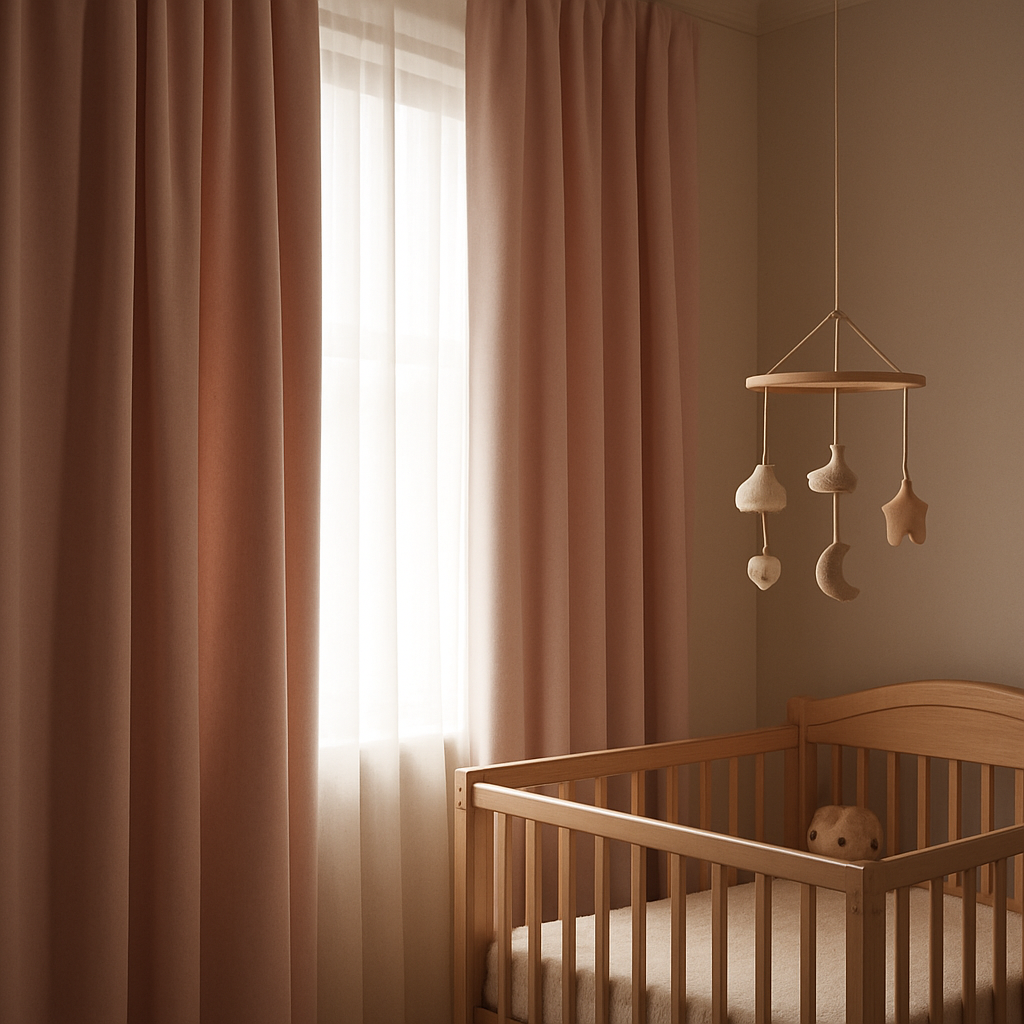
To recap, the perfect nursery blackout fabric checks these boxes: 95%+ light blockage, medium weight for breathability, flame‑retardant, machine‑washable, and a colour that soothes. Pair it with precise measurements and a little décor love, and you’ve got a sleep‑inducing sanctuary that looks as good as it works.
Step 2: Prioritize Child‑Safe Materials and Eco‑Friendly Options
Now that you’ve nailed the perfect fabric, the next thing to think about is what the curtain is actually made of. You want something that feels soft to little hands, won’t off‑gas nasty chemicals, and ideally gives you a warm‑fuzzy feeling that you’re doing something good for the planet.
Look for certified non‑toxic fabrics
One of the biggest red flags is a curtain that’s treated with flame‑retardant chemicals or synthetic dyes. Parents who have tested a popular kids’ blackout panel noticed the material is “thick, perfect for blackout, and safe for babies” – the kind of feedback you’ll see on product pages that actually list safety details from satisfied customers. If the label mentions OEKO‑TX, GOTS or another low‑VOC certification, you can breathe easy.
Eco‑friendly fibers make a difference
Organic cotton, bamboo, and linen blends are the go‑to choices for eco‑conscious nurseries. A boutique brand that specializes in plastic‑free, 100 % organic fabrics advertises that their blackout blinds improve sleep while keeping the air clean thanks to non‑toxic, plastic‑free materials. Those fibers breathe, so the room stays cool in summer and cosy in winter – a subtle but real comfort boost for a sleeping baby.
So, how do you actually verify a curtain is eco‑friendly? Start by checking the product description for words like “organic,” “bamboo,” or “plastic‑free.” Then, hunt for a third‑party seal – it’s the visual cue that an independent lab has checked the fabric for harmful residues.
Secure the hardware the right way
Even the safest fabric can become a hazard if the rod or brackets aren’t installed properly. Use sturdy metal or reinforced wood rods that can handle the weight without sagging. And always install a child‑proof cleat or safety bracket so curious fingers can’t yank the curtain off the rod.
Does the idea of bolting a bracket sound intimidating? Not really. A simple “U‑shaped” safety bracket slides onto the rod, then you snap the curtain’s grommets into place. The whole process takes five minutes, and you’ll have peace of mind knowing the curtain can’t be pulled down by a wiggling toddler.
Now that the material and hardware are sorted, it’s time for a quick checklist. Grab a pen, and run through these points before you click “add to cart.”
Child‑Safe Material Checklist
- Certified non‑toxic (OEKO‑TX, GOTS, low‑VOC)
- Organic or natural fiber (cotton, bamboo, linen)
- No added flame‑retardant chemicals
- Easy‑care fabric that won’t shrink or bleed
- Double‑lined construction for true blackout
Eco‑Friendly Installation Tips
- Choose metal or reinforced wood rods
- Install child‑proof brackets or cleats
- Use sustainable fasteners (e.g., recycled steel screws)
- Dispose of packaging responsibly – recycle or up‑cycle
And remember, the goal isn’t just a dark room; it’s a healthy, safe space where your little one can drift off without a single chemical whisper in the air. When you pair blackout curtains for nursery with thoughtful, green choices, you’re setting a tone that lasts far beyond bedtime.
Ready to shop? Take the checklist, compare a few options, and let the material speak for itself. You’ll know you’ve made the right call when the curtains feel as gentle as a lullaby and the installation feels as sturdy as a trusted crib.
Step 3: Measure Accurately for a Perfect Fit
You've finally chosen a non‑toxic, double‑lined fabric that feels like a soft lullaby. Great, right? But if the curtains are even a little short or narrow, a sliver of daylight will sneak in and ruin that perfect nursery darkness you’re chasing.
So, how do we make sure the curtains hug the window just right? It all starts with a few simple measurements – and a little habit of double‑checking.
Why precise measurements matter
Getting the width and length wrong does two things: it lets light leak around the edges, and it makes the whole look sloppy. A nursery should feel calm, not like a DIY project gone awry. When you oversize the panel just a bit, the extra fabric folds over the frame and blocks those sneaky light gaps.
Research from a dedicated blackout‑curtain guide notes that the width should be 1.5–2 times the window width, and the length 6–12 inches longer than the window opening to achieve full coverage.
Step‑by‑step measuring guide
Grab a steel measuring tape, a pencil, and a sturdy step ladder (if your window is high). Ready? Let’s go.
- Measure the window width. From inside edge to inside edge of the frame. Write that number down.
- Calculate the curtain width. Multiply the window width by 1.5–2. If your window is 40 in, aim for 60–80 in of fabric total (both panels combined). This extra width lets the curtains overlap the frame and eliminates side gaps.
- Measure the height. Decide where you want the curtain to end – usually the floor or a few inches above it for a clean break. Measure from the top of the rod (or where you’ll install it) down to that point.
- Add the extra drop. Add 6–12 inches to the height measurement so the fabric pools slightly or just kisses the floor. That extra length helps block light that would otherwise spill over the bottom edge.
- Check the rod width. If you already have a rod, measure its total span. If you’re installing a new one, plan for the rod to extend 3–6 in beyond each side of the frame. This gives the curtains room to gather and keeps light from leaking around the sides.
Once you’ve got those numbers, write them on a sticky note and keep it handy while you shop. Many online retailers list curtain dimensions in “width × length” per panel, so you can quickly see if a set matches your calculations.
One common mistake is assuming the “ready‑to‑hang” length includes the rod placement. A product description on a popular retailer explains that the curtain length should be measured from the rod to the window bottom, not from the floor to the bottom edge. Keep that in mind, and you’ll avoid a costly return.
Quick checklist before you click “add to cart”
- Window width recorded?
- Desired curtain width = 1.5–2 × window width.
- Height measured from rod to floor (or desired drop point).
- Extra 6–12 in added for a perfect floor‑kiss.
- Rod extension planned 3–6 in past each side.
- Double‑check product dimensions against your numbers.
If anything looks off, measure again – it’s faster than dealing with a return.
Now picture the moment you pull those freshly‑installed curtains, and the room goes from a soft glow to total darkness in an instant. Your baby’s nap will be undisturbed, and you’ll finally get that quiet, guilt‑free coffee break while the little one sleeps.
Need a little extra confidence? Take a piece of the fabric, hold it up to a bright lamp, and make sure no light sneaks through the edges. If you see a glow, you’ve either got a gap in the measurement or the fabric isn’t wide enough – adjust accordingly.
And remember, measuring isn’t a one‑time thing. If you change the rod height later, or swap out the panels for a new colour, run through the steps again. Consistency keeps the nursery dark, cozy, and stylish – exactly what you want for those precious sleep moments.
Step 4: Select Styles that Complement Nursery Décor
Now that you’ve nailed the fabric and measurements, the next magic ingredient is style. The right curtain look can tie the whole nursery together, making the space feel curated rather than just functional.
Think about the vibe you want when you walk into the room. Are you picturing a sleek, modern minimalist haven, a playful boho‑inspired nest, or maybe a classic black‑and‑white contrast? Your choice will dictate everything from the curtain’s pattern to the hardware finish.
Match the overall theme
Most parents start with a theme in mind – it could be “soft neutrals with natural textures” or “bold jewel tones for a pop‑of‑color.” Look at the walls, rug, and crib bedding first; the curtains should echo at least one of those elements.
For example, a modern minimalist nursery often leans on neutral tones, natural fibres like jute or wicker, and clean lines. Pepper Home explains that minimalist spaces thrive on muted colour schemes and eco‑friendly materials, so a plain linen‑blend blackout curtain in a warm ivory or soft gray will blend seamlessly while still delivering 100% darkness.
Play with pattern without sacrificing blackout
Patterns can add personality, but they shouldn’t compromise light‑blocking. Choose a subtle stripe, tiny star‑print, or tone‑on‑tone chevron on the front fabric, then pair it with a dark backing. Because the backing does the heavy lifting, even a lively print will still achieve the needed darkness.
Take the boho‑eclectic panel you can find on Walmart. Its bold geometric motif looks lively, yet the built‑in blackout lining keeps the room pitch‑dark. That product shows how a vibrant pattern can coexist with full light blockage. Pair it with a natural‑woven rug and a few macramé wall hangings for a cohesive boho feel.
Consider hardware finishes
Even the rod can reinforce the style story. Brushed nickel or matte black rods look great in industrial or modern rooms, while polished brass adds a touch of vintage elegance. If you’re going for a softer, cottage‑like vibe, choose a wooden rod with a natural stain.
Tip: install a child‑proof cleat that matches the rod finish – safety and style in one go.
Layer with complementary accessories
Don’t forget the little details. A simple trim of tassels, a delicate pom‑pom, or a thin piping in a coordinating colour can make the curtains feel custom‑made. Because you’re already ordering bespoke fabric from Harvey Bruce, ask them to add a subtle trim that mirrors your nursery’s accent colour.
When you’re pulling the curtains, you’ll notice how the soft rustle of a linen edge adds a sensory cue that signals bedtime to your baby.
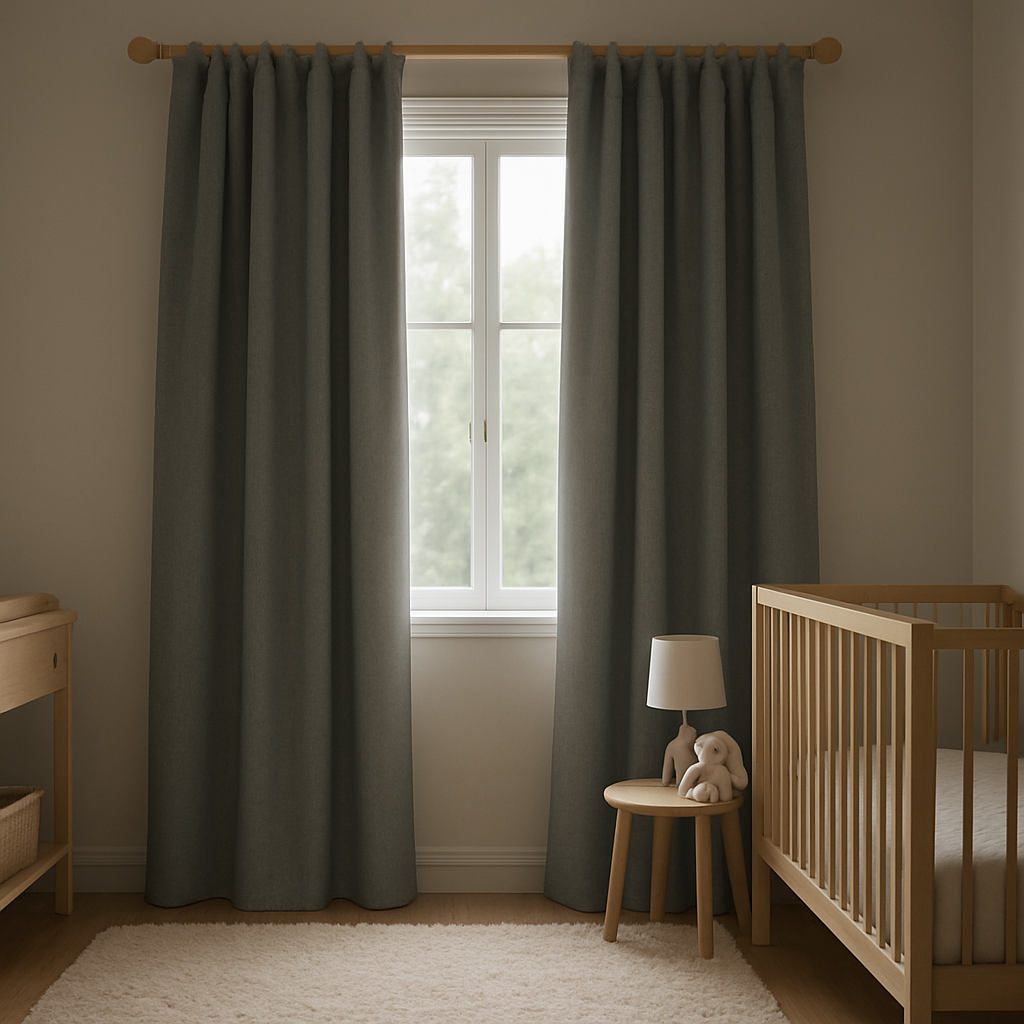
| Style | Typical Colour Palette | Key Accessory Hint |
|---|---|---|
| Modern Minimalist | Neutral greys, whites, soft beiges | Brushed‑nickel rod, linen‑trim |
| Boho Eclectic | Earthy greens, muted terracotta, bold patterns | Wooden rod, macramé tie‑back |
| Classic Black‑White | Sharp black front, white lining | Matte‑black hardware, simple tassel |
Once you’ve matched the style, take a step back and picture the room at dusk. Do the curtains feel like a natural extension of the space, or do they look like an after‑thought? If the former, you’ve nailed the look. If the latter, tweak one element – maybe swap the rod finish or add a coordinating throw pillow – and you’ll instantly feel that cohesive vibe.
Bottom line: selecting a style isn’t just about aesthetics; it’s about creating a visual rhythm that soothes both you and your baby. When the curtains blend with the décor, the room becomes a sanctuary, and every pull of the rod feels like a gentle cue to drift off.
Step 5: Install Safely with Child‑Proof Hardware
Alright, you’ve picked the perfect fabric, measured to a tee, and now it’s time to hang those blackout curtains for nursery without turning the room into a mini construction site.
Why child‑proof hardware matters
Babies love to explore, and a loose rod can become a pulling‑toy in seconds. A sturdy, child‑proof bracket keeps the curtain where it belongs – out of reach and fully functional.
Gather your tools (and keep it simple)
Here’s what you’ll need: a drill or screwdriver, wall anchors that match your wall type, a set of child‑proof brackets (U‑shaped or cleat style), a level, a pencil, and the curtain rod that came with your blackout panels.
Tip: If you’re nervous about drilling, the Kwik‑Hang guide shows how to install brackets without over‑complicating the process.
Step‑by‑step installation
1. Mark the height. Decide where the rod will sit – usually a few inches above the window frame so the curtain can pool on the floor. Use a level to draw a straight line with your pencil.
2. Find stud or use anchors. If you hit a stud, screw the bracket directly into it. If not, insert wall anchors appropriate for drywall or plaster. This gives the hardware the strength to hold the weight of blackout fabric.
3. Attach the child‑proof bracket. Snap the U‑shaped cleat onto the rod first, then slide the bracket onto the wall screw. Many brackets have a built‑in safety latch that prevents the rod from being lifted off.
4. Hang the curtains. Slip the grommets or rings onto the rod, then nest the rod into the bracket. Give the curtain a gentle tug to make sure it’s secure – you shouldn’t feel any wobble.
5. Test the safety lock. Pull on the fabric from the bottom; the rod should stay put. If it slides, tighten the bracket screws a notch or add an extra anchor.
Quick safety checklist
- Bracket screws are tightened at least 1/4 inch beyond the wall surface.
- Rod clearance is at least 2 inches from the window frame to avoid pinch points.
- No cords or dangling ties are within reach of a crawling baby.
- Hardware finish matches the curtain style for a cohesive look.
Does this feel a bit overwhelming? Take a breath – you’re basically building a tiny, safe rail for your baby’s nap routine.
Alternative: No‑drill options
If you rent or just hate holes, the portable blackout curtains from Petaholic’s adhesive‑backed system let you stick the rod brackets with strong velcro or putty. They’re designed to stay put for a few weeks, making them perfect for temporary setups or trial runs.
Just remember: adhesive isn’t a permanent solution for a growing child. When you’re ready for a long‑term install, swap the stick‑on brackets for the screwed‑in, child‑proof hardware we outlined above.
Final tip – make it a bonding moment
Invite your partner or a friend over while you install. Two hands mean fewer mis‑drilled holes, and the shared effort turns a chore into a mini‑project you can both be proud of. Plus, the finished look—sleek hardware holding perfectly dark curtains—will feel like a tiny victory every time you pull the rod.
Now you’ve got a safe, stylish setup that lets your baby drift off into darkness without any risky hardware in sight. Ready to enjoy a quiet, dark nursery? You’re just a few screws away.
Step 6: Care, Maintenance, and Longevity Tips
We’ve got the perfect blackout curtains for nursery hanging on the rod – now let’s make sure they stay gorgeous and effective for years to come. A little bit of TLC today saves you from a big headache tomorrow, and it keeps that soothing darkness you love for your baby.
Gentle cleaning routine
First thing’s first: check the care label. Most blackout panels, like the Turquoize teal set, are machine‑washable on a cold, gentle cycle. Use a mild, fragrance‑free detergent – no bleach or fabric softener, because those chemicals can break down the light‑blocking backing over time.
When the wash finishes, tumble dry on low heat or hang to air‑dry. A quick tumble on a cool setting helps the fabric stay soft without crushing the blackout layer.
Spot‑cleaning works well for the occasional spill. Grab a soft cloth, dab (don’t rub) with a mix of water and a drop of gentle soap, then let it air‑dry. Remember, rubbing can push moisture into the inner lining where it might create mold.
Protecting the blackout backing
The secret to true darkness lives in that thin, dark layer sandwiched between the decorative fabric and the lining. Over‑exposure to direct sunlight can fade it, so try to keep the curtains out of the sun’s harshest rays when the room isn’t in use. A short pull‑back in the daytime is fine, but leaving them fully drawn for hours on a sunny afternoon isn’t ideal.
If you notice the backing looking a bit dull, a quick vacuum with the brush attachment can lift surface dust without disturbing the weave. It’s a tiny step that adds up to years of consistent performance.
Hardware check‑ups
Child‑proof brackets and rods take a lot of pulling, especially when a curious toddler discovers the “pull‑the‑curtain” game. Every few months, give the brackets a once‑over. Tighten any loose screws, and make sure the cleat latch still clicks into place.
Look for signs of metal fatigue – a tiny crack or a wobble when you tug the rod. If anything feels off, replace the hardware before it becomes a safety issue. A sturdy rod not only keeps the curtains level but also prevents the fabric from sagging, which can create light gaps.
Rotate and refresh
Just like you rotate your mattress, give your curtains a seasonal shuffle. Flip the panels so the front fabric faces inward for a few weeks; this spreads wear evenly and keeps the outer side looking fresh.
When you’re swapping panels for a new colour or pattern, store the old ones rolled, not folded. Rolling avoids sharp creases that can stress the blackout layer and makes it easier to slide them back on later.
Dealing with pet hair and allergens
If you have a furry friend, a lint roller or a quick hand‑vacuum pass will keep pet hair from embedding in the fabric. Because the blackout backing is dense, it can trap allergens, so a weekly vacuum helps maintain a healthier nursery air quality.
For families concerned about VOCs, choose OEKO‑TX Standard 100 certified curtains – the Turquoize panels carry that badge, confirming the entire textile, including threads and trims, passed rigorous testing for harmful chemicals.OEKO‑TX certification details
Long‑term storage tips
When you move or change the room’s purpose, store the curtains in a breathable fabric bag rather than a plastic zip‑lock. Add a silica gel packet to keep moisture at bay, and keep them in a cool, dark closet. This prevents mildew and keeps the blackout backing from degrading.
Finally, give yourself a quick visual test every few months: pull the curtains closed and shine a flashlight through the fabric. If any light seeps around the edges, it might be time to re‑measure or add a small valance to seal the gap.
By treating your blackout curtains for nursery like a cherished piece of the room’s décor – washing gently, checking hardware, rotating panels, and storing smartly – you’ll enjoy uninterrupted darkness, lower energy bills, and a safe, stylish space for years to come.
FAQ
What makes blackout curtains for nursery different from regular curtains?
Regular curtains mainly add style or privacy, but blackout curtains are engineered with a dense backing that blocks at least 95% of visible light. That extra layer also adds a thin layer of insulation, keeping the room a few degrees cooler in summer and warmer in winter. For a nursery, the darkness helps stabilize your baby’s melatonin production, which translates to longer, more restful naps.
How do I know if a curtain truly blocks 95% of light?
Look for a specification on the product page – reputable brands will list a light‑blocking rating. If the number isn’t there, a quick home test works: close the curtains and shine a flashlight at the fabric from the inside of the room. If you can’t see a glow around the edges, the curtain is likely meeting the 95% threshold.
Are blackout curtains safe for a baby’s delicate skin?
Safety starts with the fabric itself. Choose curtains that carry certifications like OEKO‑TX Standard 100 or GOTS, which guarantee low‑VOC, non‑toxic dyes and finishes. These standards mean the material won’t off‑gas harmful chemicals, and the fabric feels soft enough for tiny hands to touch without irritation. Pair that with a gentle, fragrance‑free detergent when you wash, and you’ve got a skin‑friendly setup.
Can I install blackout curtains without drilling into walls?
Yes, especially if you’re renting or just testing a look first. Tension rods or adhesive‑backed brackets work well for lightweight, double‑lined curtains. Just make sure the rod is sturdy enough to hold the added weight of the blackout backing. For a long‑term solution, a few screws give you peace of mind that the hardware won’t wobble when a curious toddler gives the curtain a tug.
How often should I clean or vacuum my nursery blackout curtains?
Spot‑clean spills right away with a damp cloth and mild soap. For a deeper clean, most blackout panels tolerate a cold, gentle machine wash – check the care label first. After washing, tumble dry on low or air‑dry flat to preserve the backing. A quick hand‑vacuum or lint roller once a week keeps pet hair and dust from building up, which also helps maintain indoor air quality.
Do blackout curtains affect the room’s temperature?
Because the backing is dense, it adds a thin insulating layer. In winter, that layer traps a bit of heat, reducing the load on your heater. In summer, it reflects some of the sun’s warmth, keeping the nursery a shade cooler. The effect isn’t dramatic, but over a year it can shave a few dollars off your energy bill – and your baby stays comfortable.
What’s the best way to prevent light leaks around the edges?
Measure the window width and add extra fabric – aim for a curtain width 1.5 to 2 times the window opening. Mount the rod a few inches above the frame so the curtains can fall past the window’s top and bottom edges. If you still see a sliver of light, consider a simple valance or a magnetic tape strip along the sides to seal the gap.
Conclusion
After we’ve walked through fabric choices, measurements, style, installation, and care, the picture is clear: the right blackout curtains for nursery can turn a noisy, light‑filled room into a calm, sleep‑friendly haven.
Think about the night you finally heard your baby drift off without a single stray beam cutting through the window. That peace comes from a dense backing, a proper fit, and safe hardware – all things we’ve unpacked together.
Remember to verify certifications like OEKO‑TX, double‑line the panels for true darkness, and add a few extra inches on width so the curtains hug the frame. A quick hand‑vacuum each week keeps allergens at bay, and a gentle wash preserves the fabric’s softness.
So, what’s the next step? Grab your checklist, head to Harvey Bruce’s bespoke service, and let the experts cut, stitch, and finish the curtains exactly to your nursery’s dimensions.
When the final rod is in place and you pull the curtains closed, you’ll feel that instant shift from bright to blissful. That’s the moment you’ve earned – a quieter home, a happier baby, and a stylish touch that lasts.
Ready to make every nap a dream? Let’s bring those blackout curtains for nursery to life today.
Imagine the calm that fills the room every night.
← Older Post Newer Post →