
10 Inspiring Ways to Use an Art Canvas in Your Home
Posted by Admin on
Imagine walking into your living room and feeling like every wall is a canvas that tells a story.
When you’re hunting for that one piece that turns a plain space into something that feels truly yours, it’s the art canvas that often steals the show.
We’ve seen homeowners go from “meh” to “wow” after swapping a generic print for a hand‑painted canvas that echoes the colour palette of their sofa, rug and even the light coming in through the window. The trick is to choose a piece that speaks to you, not just the room.
Start by identifying the mood you want: cozy, dramatic, or playful. Then pick a canvas that mirrors that vibe—maybe a muted landscape for a calm lounge, or a vibrant abstract for a lively studio. When you layer textures—like a linen backdrop behind the frame—you instantly lift the whole room.
Here’s a quick three‑step guide to picking the perfect canvas: (1) Take a photo of the wall’s light and colour. (2) Match the dominant hue or contrast it intentionally. (3) Test a mock‑up by printing a small section to see how it sits in real life.
Once you’ve chosen, hang it at eye level—about 55‑60 cm from the floor for a standard living room. If you’re feeling bold, combine a couple of medium‑sized canvases for a gallery wall that becomes a statement piece.
Want more inspiration? Browse our Wall Canvas art collection to find pieces that fit your style and space.
And if you’re looking to transform an overlooked corner, check out Creative Garage Apartment Ideas for Every Budget for practical tips on using canvases to elevate any room.
TL;DR
Discover how a single art canvas can gently transform beautifully a room, turning everyday walls into storytelling canvases that reflect your mood and style. By aligning colour, texture, and size with your existing décor, you’ll create a cohesive, luxurious space that feels personal and inviting and no more bland surfaces.
Step 1: Picking the Perfect Canvas Size for Your Space
We all know that a great canvas can make a room feel brand‑new, but choosing the right size is where most folks trip up. If it’s too small, it’s a whisper in a shout‑out room; too big, and it swallows every other element. Let’s break it down so you can make that canvas the hero, not the side‑kick.
1️⃣ Start with the wall’s personality
Every wall has a vibe: a blank canvas, a wall with a fireplace, or a wall behind a big window. Grab a measuring tape, stretch a piece of painter’s tape the length you think feels right, and tape it straight up. Walk around the room and see how the tape looks at eye level. Does it feel balanced?
2️⃣ Follow the 60‑75% rule for furniture‑backed walls
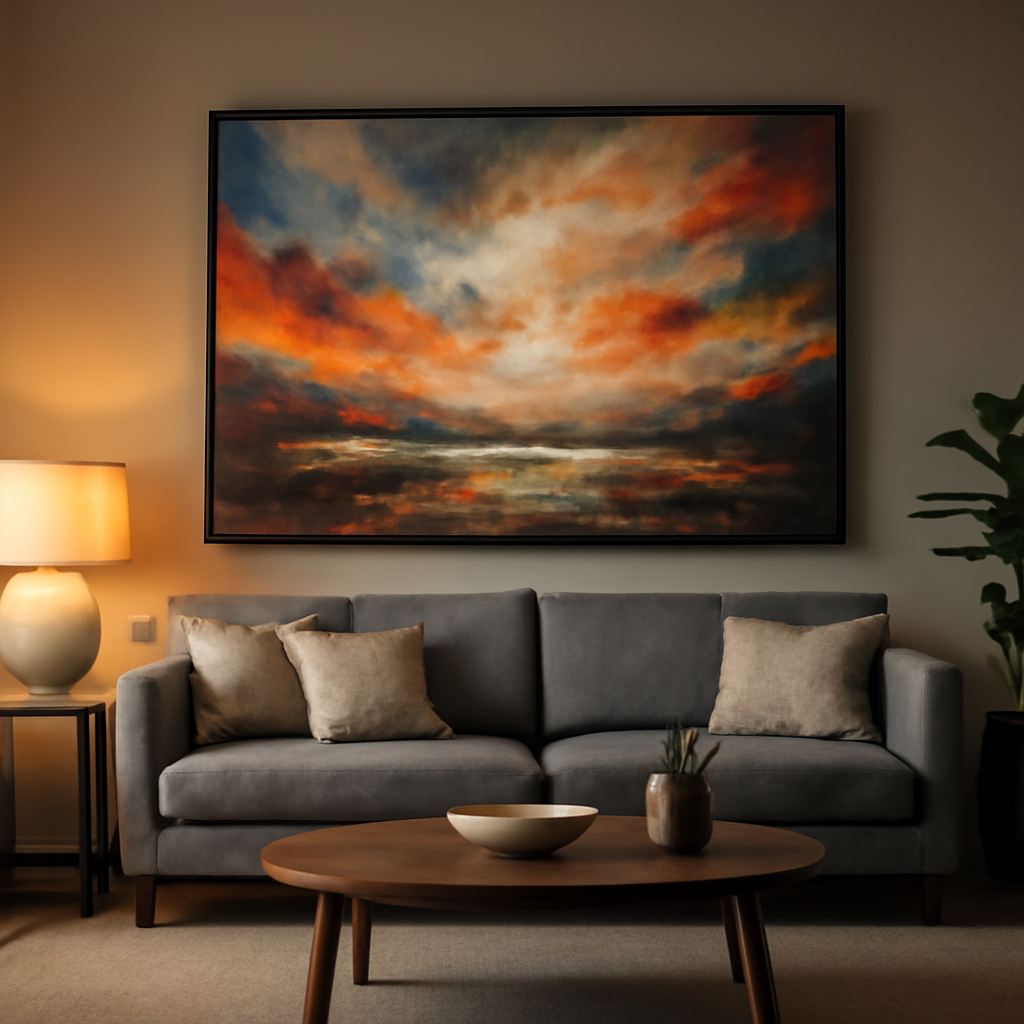
If you’re hanging over a sofa, the canvas width should be 60‑75% of the sofa’s width. A 5‑foot sofa (60 inches) would pair nicely with a 36‑to‑45‑inch wide canvas. For a dining table, keep the width a bit narrower to avoid a top‑heavy look. Think of the canvas as a frame that holds the furniture’s conversation.
3️⃣ Eye‑level matters: the 57‑inch rule
When there’s no furniture below, aim for the canvas centre to sit about 57 inches from the floor—roughly the height of an average eye. This simple anchor keeps the art from looking suspended or buried. If your ceiling is lower, shift it up a touch; if it’s higher, shift it down.
4️⃣ Use real‑life mock‑ups
Print a small square of the design you love. Tape it to the wall, walk past it at different times of day, and ask yourself, “Does it feel right?” If the mock‑up feels cramped or too bold, adjust the dimensions before you order. It’s a cheap and fast way to test the vibe.
5️⃣ Consider the room’s function and flow
In a cozy living room, a 4‑by‑6‑foot canvas can anchor the space without overpowering. In a modern loft, a 8‑by‑10‑foot piece can become a striking focal point. Think about how people move through the room—does the canvas invite conversation or block sightlines? Sometimes a pair of medium‑sized canvases side‑by‑side can create a balanced gallery feel while keeping the scale in check.
6️⃣ Size for the mood, not the trend
Trends like “oversized” art are great when they match the room’s scale. A tiny 2‑by‑3‑foot canvas will feel out of place in a 12‑by‑12‑foot living area. Don’t chase the trend if the numbers don’t fit; let the room dictate the size.
7️⃣ Pro tip: Keep the bottom edge 6‑10 inches above the furniture back
That gap feels natural, as if the canvas is hanging from the ceiling rather than floating. It also protects the wall from scuffs and gives a clean look. For a bedroom, place the centre of the canvas just above the bed headboard to keep the focus on the sleeper.
8️⃣ Don’t forget the frame’s impact
Even a perfect canvas size can feel off if the frame is too wide or too narrow. A slim frame (around 1‑inch) works with contemporary pieces, while a bulkier 2‑inch frame suits classic, textured canvases. The frame should enhance, not distract.
By following these steps, you’ll pick a canvas that feels right, looks stunning, and turns your wall into a conversation piece.
9️⃣ Common mistakes to avoid
Even seasoned decorators make a few slip‑ups when sizing canvas. The first is letting the wall size dictate the art size without considering the room’s scale. The second is ignoring the viewer’s perspective—art that sits too high feels disconnected. And many people forget to factor in the frame’s width, which can shrink the visible canvas by a foot or more. Spotting these before you buy saves time and money.
10️⃣ Final size‑check checklist
Before you hit buy, run through this quick checklist to be sure every dimension feels right.
- Measure wall width and height.
- Calculate 60‑75% of furniture width if applicable.
- Ensure centre is ~57 inches from floor for freestanding pieces.
- Add frame width to overall dimensions.
- Test with mock‑up or a printed outline.
- Double‑check proportions in natural light.
- Confirm the piece feels balanced with the rest of the décor.
Step 2: Transforming Your Wall with a DIY Art Canvas Hanging Guide
You’ve already nailed the perfect canvas, so now it’s time to put it on that wall and make it pop. Don’t stress – hanging art is a lot like putting a good pair of shoes on: you want it to feel right, not forced.
1️⃣ Pick the right wall type
First, shout out to the wall: drywall, plaster, brick, tile? Each surface plays a different game. If it’s fresh paint, give it 7–30 days to cure. A smooth wall is a happy wall.
2️⃣ Match weight to hardware
Small canvases (4–6 lb) are fine with a single nail or saw‑tooth hanger. Medium pieces (6–12 lb) call for two hooks or a sturdy wire loop. Anything over 12 lb? J‑hooks, wall anchors, or a stud is the safest route.
3️⃣ Check the frame’s back
Look for built‑in hardware: D‑rings, saw‑tooth, or a wire slot. If your piece lacks it, you can add a quick D‑ring set and screws – the kit that comes with many ready‑made canvases makes this a breeze. These step‑by‑step instructions walk you through that process.
4️⃣ Aim for eye‑level comfort
Center the canvas around 57–63 inches from the floor – that’s the sweet spot for most adults. If you’re hanging over a sofa, leave a 6–10 inch gap between the frame bottom and the sofa top. It feels less like the wall is holding up a weighty piece and more like a natural conversation starter.
5️⃣ Use a level and painter’s tape to map it
Mark a light line for the center point. Tape a small rectangle at that spot on the wall, then use a laser level or a simple bubble level to make sure it’s straight. The tape trick keeps your marks clean and gives you a reference when you go to attach the hardware.
6️⃣ Decide on the hang method
Here’s the quick cheat sheet: nail or saw‑tooth for small, wire with D‑rings for medium, J‑hooks or wall anchors for heavy. If you’re a renter or simply want a no‑drill solution, adhesive strips are a game‑changer. Mixtiles’ guide explains how to use their weight‑rated strips safely on any smooth surface.
Imagine sliding a canvas in with a few strips, then pulling the wall clean – no holes, no fuss.
7️⃣ Secure with bumpers
Once your canvas hangs, slap a felt bumper or a rubber pad on each corner. It keeps the frame from skidding and protects the paint. Think of it as a gentle cushion that keeps the art alive and the wall pristine.
8️⃣ Test the vibe
Step back, look at it from multiple angles, and walk through the space. Does it feel anchored? Does it blend with the light? If it feels a tad off, tweak the height or the distance from the wall – it’s all tweak‑and‑toss until you get that ‘just right’ feeling.
9️⃣ Build a gallery wall with confidence
When you’re ready for more than one canvas, start with one anchor piece at eye level. Then space the rest 2–3 inches apart on the floor. Lay the layout on paper, take a photo, and bring that image to the wall. It’s the same as a puzzle – you only need the right pieces in the right spot.
Remember, a gallery wall feels cohesive when each canvas sits at the same height and the spacing feels intentional. No one likes a crooked line of art.
Take a breath. You’ve now got a step‑by‑step roadmap that turns a plain wall into a polished, personalized statement piece.
What’s the one thing that will make your hanging process feel like a breeze? It’s usually the right hardware and a little patience.
Try the next canvas with these tricks, and watch your room transform. It’s that simple.
Step 3: Comparing Canvas Types for Your Home
We’ve already talked about picking the right size and how to hang it, but the material still holds the secret to how the piece feels in the room. Think of it like choosing between a soft sofa and a leather one: both sit on the same frame, but the experience changes.
Stretched Canvas: The Classic Choice
Stretched canvas is the traditional canvas you’ll find in galleries and on art prints. It’s canvas fabric stretched over a wooden or metal frame, giving it that taut, elastic surface that painters love. In the real world, a 5 × 7 stretched canvas can be a bold focal point in a living room, while a 4 × 6 pair works beautifully in a bedroom or study.
Why it matters: the tension keeps paint layers from sagging, so you get crisp details and a solid finish. That’s why many homeowners choose it for high‑traffic areas or pieces that will sit for years. Stretched vs canvas panel guide explains the construction and why the extra framing adds durability.
Canvas Panel: Lightweight and Practical
Canvas panels are canvas glued or pressed onto a rigid board—no frame, no stretching. They’re easier to transport, cheaper, and perfect for quick studies or budget projects. Picture a student’s sketchbook turned into a home display: a 3 × 4 canvas panel hanging above a desk.
Because the backing is rigid, the surface is flat but lacks the elasticity that stretched canvas offers. Thick impasto or layered oils might warp over time. But if you’re painting watercolours, acrylics, or doing a single‑layer design, canvas panels work just fine and can be framed later for a polished look.
Canvas Print: Ready‑to‑Hang Art
When you buy a printed canvas—those big, ready‑to‑hang pieces that come with a frame already glued to the back—you’re getting a pre‑stretched, pre‑finished canvas. The printer takes a high‑resolution image, stretches it, adds a protective coat, and mounts it on a wood frame.
It’s the quickest way to add a statement to a room, especially if you’re on a tight deadline or don’t want to deal with framing. These prints are ideal for living rooms, dining areas, or office walls where a dramatic image can tie the décor together.
Choosing the Right Canvas for Your Space
1. Room size and traffic. Large, high‑traffic rooms benefit from stretched canvas because of its durability. A kitchen or hallway with a canvas print is fine, but if you want long‑lasting protection, stretched is safer.
2. Artistic intent. Want to showcase oil layers or mixed media? Stretched canvas gives you the tension to support heavier paint. For simple watercolour studies or acrylic experiments, a canvas panel can be just fine.
3. Budget. Canvas panels are the most affordable, followed by canvas prints, with stretched canvas typically being the priciest due to framing and manufacturing.
4. Maintenance. Stretched canvases can be cleaned with a dry brush; canvas panels may require gentle wiping. Prints come with a protective varnish, but they can still fade if exposed to direct sunlight for extended periods—see canvas vs paper print durability guide for details.
Practical Decision‑Making Checklist
Use this quick table to compare the three options side‑by‑side and decide what fits your room, style, and budget.
| Feature | Stretched Canvas | Canvas Panel | Canvas Print |
|---|---|---|---|
| Surface tension | High – perfect for thick layers | Low – flat, no stretch | Moderate – pre‑stretched by printer |
| Durability in high traffic | Excellent – frame protects edges | Average – may warp under pressure | Good – protective varnish adds resilience |
| Cost per square foot | Highest – frame + canvas | Lowest – simple backing | Mid – frame included in print |
| Ideal use case | Large statement pieces, oil & acrylic | Sketches, studies, budget displays | Ready‑to‑hang décor, quick upgrades |
Final Tips for Homeowners
• Measure the wall space first; a 6 × 8 stretched canvas will feel lost on a 12‑foot wall, while a 4 × 6 print can pop in a smaller room.
• Test a mock‑up: tape a photo of the chosen canvas size to the wall. Walk around it at different times of day to see how the light hits the texture.
• Remember UV protection: if the piece sits near a window, choose a canvas with a UV‑resistant coating—many prints and stretched canvases now include this finish.
• If you’re a first‑time buyer, start with a canvas print. It’s the easiest way to experiment with style without the commitment of framing or stretching.
By weighing tension, durability, cost, and your personal style, you can pick a canvas that not only looks great but feels right in your space. Once you’ve made that choice, the next step—hanging—becomes a breeze.
Step 4: Integrating Art Canvas with Furniture and Accessories
We’ve nailed the canvas, now it’s time to make it feel at home with your furniture and accessories. Think of the piece as a new guest—make sure it fits, feels comfortable, and shows off its personality.
1️⃣ Harmonise Colour Palettes
If the walls are a soft beige, choose a canvas that plays with muted tones or a splash of colour that echoes the room’s hue. You want the artwork to feel like it belongs, not like it’s been dropped in.
So, what if your sofa is a deep navy? A canvas with subtle turquoise highlights can pull the sofa into conversation.
For a bold statement, let the canvas lead and let the furniture follow.
Learn how to pair canvas art prints with different styles of furniture for more colour‑matching hacks.
2️⃣ Match Texture and Finish
Fabric sofas have a soft touch; pair them with a canvas that feels smooth and sleek. If you’ve got a distressed wood coffee table, go for a canvas with a slightly weathered, earthy finish.
Remember: a matte canvas complements a glossy sofa; a glossy print can brighten a matte rug.
3️⃣ Use Scale to Anchor the Room
A large canvas can dwarf a small room, while a tiny print can get lost in a big space. Keep the artwork’s width at about 60‑75% of the furniture’s width below it.
Do you have a 6‑ft sofa? A canvas between 36‑45 inches wide will feel balanced.
4️⃣ Create a Focal Point
Place the canvas where the eye lands first—over a fireplace, behind a bed headboard, or under a pendant lamp. Let the room breathe around it.
Can you see the canvas catching the light? That’s your cue to move it higher or lower.
5️⃣ Layer with Complementary Accessories
Introduce throw pillows, rugs, or side tables that echo the canvas’s hues. It’s like bringing a conversation to the room—every item shares a common language.
Don’t forget a simple curtain panel in the same shade; it ties the look together.

6️⃣ Play with Lighting
Direct, natural light can wash out bright colours; use lamps or track lighting to bring depth. A spotlight can highlight the canvas’s details.
Have you tried a soft yellow lamp next to a bold, blue canvas? The contrast makes the artwork pop.
Want more ideas on matching paintings with décor? Check out these expert tips for aligning artwork with your room’s vibe.
7️⃣ Consider Room Function
In a home office, a serene landscape can calm the mind. In a playroom, a vibrant abstract invites energy.
Think about the room’s purpose before picking the art’s mood.
8️⃣ Embrace Contrast for Edge
If your furniture is minimalist, a bold, textured canvas can add personality. Conversely, a delicate print can soften a heavily carved sofa.
Contrast doesn’t mean clashing—think of complementary opposites that still speak together.
9️⃣ Keep the Frame in Mind
The frame should echo the room’s style. A sleek black frame suits modern décor; a carved wooden frame works with traditional pieces.
When you pick a frame, remember it’s part of the overall story.
10️⃣ Test with a Mock‑up
Print a small section of the canvas and tape it to the wall. Walk around at different times of day and see how light changes the mood.
Can you spot any oddness? Adjust the size or colour before you commit.
11️⃣ Don’t Over‑Accessorise
One strong piece is enough. Adding too many accessories can clutter the space and distract from the canvas.
Use a single statement lamp or a pair of matching cushions to support the artwork.
12️⃣ Trust Your Instincts
After all the rules, your gut feeling matters most. If it feels right, it probably is.
Remember, the canvas should feel like a natural part of the room, not an afterthought.
Follow these steps, and you’ll have an art canvas that not only looks great but feels at home.
FAQ
How do I know if an Art Canvas will fit my wall space?
First, grab a tape measure and mark the wall where you want the centre of the canvas. A good rule is to leave 6–10 inches between the bottom edge of the frame and any furniture below. Then check the width of the wall and make sure the canvas is no more than 70% of that span. If the canvas looks too large, try a smaller size or a gallery layout.
Can I hang a canvas without drilling into the wall?
Yes, there are adhesive solutions that work well for lightweight canvases. Look for wall‑safe strips rated for the weight of your piece; they usually leave no residue and can be removed cleanly. If the canvas is heavier, consider a picture‑hook system that anchors to a stud or use a tension rod if you’re hanging a canvas on a window frame.
What’s the best lighting to showcase an Art Canvas?
Natural light is great, but avoid direct sun that can fade pigments over time. Position the canvas so that a side lamp or a soft track light highlights its texture without glare. If you’re in a darker room, a small LED spotlight can bring depth to the colours. Experiment with angle, then settle on the spot that makes the canvas feel alive.
Is it okay to mix different canvas sizes in the same room?
Absolutely. Mixing sizes can create visual interest and balance, especially if the smaller works echo the larger canvas’s colour palette. Keep a consistent frame style or material so the collection feels cohesive. A small 12” square can look great next to a 48” statement piece when they share a common tone or finish.
How long does a canvas usually last, and can I touch up the paint?
Well‑made canvas prints can last decades if stored correctly. They’re usually coated with a protective varnish that resists dust and UV damage. Touching up the paint is tricky; it’s best to consult a professional conservator or replace the piece if the paint begins to peel. Regular dusting keeps the surface bright.
Should I choose a framed or unframed canvas?
Framed canvases give a polished look and protect the edges, making them ideal for high‑traffic areas. Unframed canvases feel more contemporary and can be easier to hang on textured walls. Think about the room’s style: a sleek black frame suits modern décor, while a wooden frame fits a rustic or traditional setting.
What if my wall has uneven paint or a slight slope?
First, use a level to find the true centre. If the wall is uneven, a small trimming of the frame’s top edge can level the canvas. Alternatively, you can use a picture‑rail that allows the canvas to rest without touching the wall directly, which also adds a subtle shadow for depth.
Conclusion
We’ve taken a whirlwind tour of the art canvas world, from picking the right size to hanging it like a pro. The takeaway? Your canvas is more than a picture; it’s a conversation starter that can lift the whole room.
First, remember the 60‑75% rule: match the canvas width to the furniture it sits above. A 4‑by‑6‑foot piece feels natural over a sofa, while a 2‑by‑3‑foot splash of colour can brighten a narrow hallway. Next, keep the centre about 57 inches off the floor unless you’re creating a gallery wall—then eyeball the layout in a mock‑up.
When choosing a material, think about the room’s traffic and light. Stretched canvases keep paint layers firm and handle high footfall, while canvas prints are the quickest way to test a look. Don’t forget UV‑resistant varnish if the piece hangs near a window.
Finally, pair the canvas with complementary décor. A sleek black frame suits modern spaces, whereas a rustic wood frame echoes a countryside vibe. Touch up the finish only with a professional conservator; otherwise, dusting is usually enough to keep it bright.
So, what’s the next step? Pick a canvas that speaks to you, test it with a mock‑up, and hang it with confidence. Your living room will feel fresh, personal, and unmistakably yours.
← Older Post Newer Post →