
Choosing the Perfect Blackout Curtains for Sliding Glass Doors to Enhance Your Home
Posted by Derek Lamb on
Ever stood in front of a sliding glass door at dusk, watching the last light spill in, only to realize the next morning the sun will flood the room like a spotlight?
That moment of frustration is all too familiar for homeowners who love the seamless view but crave a good night’s sleep or a private movie night.
In our experience, the simplest way to tame that glare is with blackout curtains for sliding glass doors – a solution that blends function with the luxe feel you expect from a bespoke interior.
But it’s not just about darkness. Think about the way a well‑chosen fabric can frame a view, add texture, and even raise the style quotient of a living‑room or patio area.
So, what should you look for? First, the curtain’s length matters. Because sliding doors sit low to the floor, a floor‑to‑ceiling panel that pools slightly creates a dramatic, hotel‑like vibe while ensuring no light seeps around the edges.
Second, the weight of the material. Heavier fabrics like velvet or a dense blackout lining not only block light but also help insulate the space, keeping summer heat out and winter chill at bay.
And don’t forget the hardware. A smooth‑glide track paired with discreet brackets lets you pull the curtains open with a single, effortless motion – perfect for those moments when you just want the outdoors in, without wrestling with clunky rods.
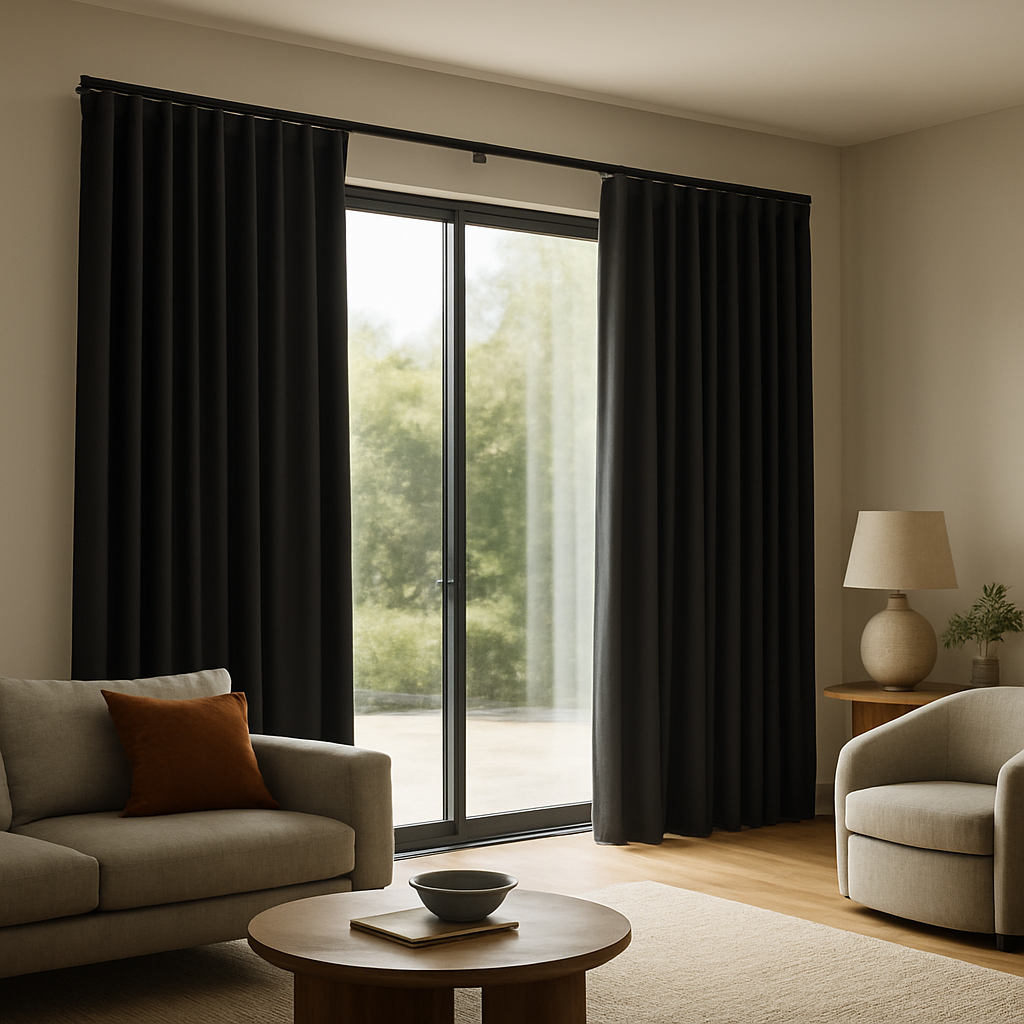
We’ve seen couples in their first home transform a modest balcony‑door into a cozy retreat by opting for custom‑made blackout panels in a muted charcoal that complements their neutral sofa.
Meanwhile, a family renovating a sun‑filled kitchen chose a soft, pastel‑hued blackout fabric that still lets a hint of daylight filter through when the panels are drawn halfway, giving them flexibility for breakfast or evening meals.
Does this sound like the kind of upgrade you’ve been dreaming of?
If you’re ready to blend privacy, light control, and upscale design, keep reading – we’ll walk through measuring, fabric selection, and installation tips that make the whole process feel as smooth as the sliding door itself.
TL;DR
If you want a sleek, hotel‑like vibe that blocks glare, keeps heat out, and adds luxurious texture, blackout curtains for sliding glass doors are the secret weapon every style‑savvy homeowner swears by.
In our experience, pairing heavyweight fabrics with smooth‑glide hardware lets you pull the panels effortlessly, giving you total privacy at night and a soft, filtered glow by day—so you can finally relax without fighting the sun.
Step 1: Measure Your Sliding Glass Doors Accurately
We’ve all stood there, eyeing a sliding door and wondering whether the curtains we’re dreaming of will actually fit. It’s that moment of “what if” that can turn a simple upgrade into a headache. Let’s take the guesswork out of it.
Gather Your Tools
All you need is a steel tape measure, a pencil, and a notepad. A level can help, but it’s not a must. If you’ve got a friend handy, enlist them – two sets of eyes catch mistakes faster.
Step‑by‑Step Measuring Process
1. Width – Open the door fully. Measure from the inside edge of the left frame to the inside edge of the right frame. Write that number down. Then, add 2‑4 inches on each side if you want the curtains to pool a little on the floor for that hotel‑like drama.
2. Height – Measure from the top of the track (or the highest point of the frame) down to the floor. If you prefer a floor‑to‑ceiling look, add a few extra inches so the fabric rests just above the rug.
3. Track Depth – Some sliding systems sit deep inside the wall. Measure the distance from the wall surface to the far side of the track. This tells you whether you need a pocket‑style blackout panel that slides inside the track or a surface‑mount bracket.
4. Clearance for Hardware – Most blackout curtains need a rod or a ceiling‑mount track. Measure the space above the door where the hardware will sit. You’ll want at least 3‑inches of clearance to avoid the curtain rubbing against the frame.
Tip: Write each measurement on a separate line and label it. When you’re done, double‑check by measuring the same spot a second time – it’s amazing how a small slip can add up.
Here’s a quick visual guide that walks you through each measurement step.
Once you have those numbers, you can start hunting for the perfect blackout panels. If you’re unsure about whether a pocket or surface mount will work best for your door, a quick chat with professional shutter specialists can clear things up. Monroe Plantation Shutter Pros often help homeowners pick the right mounting style based on door dimensions.
Now, let’s talk about a common pitfall: forgetting the “over‑lap.” Most sliding doors have a small gap where the two panels meet. To keep light from sneaking through, add an extra 2‑inches to the width of each curtain panel. That way the fabric overlaps the seam and creates a seamless darkness.
Another detail that trips people up is the “drop length.” If you measure to the floor but your carpet is thick, you might end up with a curtain that drags and pulls the track. Measure to the top of the carpet instead, or opt for a slight “hover” – the curtain stops a half‑inch above the floor, which looks intentional.
When you’re ready, sketch a quick diagram of your door, noting the measurements you just recorded. This visual reference makes it easier when you talk to a custom‑curtain maker or when you order online. It also helps you compare fabric options – a heavier velvet will sit differently than a lightweight linen blackout blend.

Finally, keep your notes somewhere handy – a digital note on your phone works great. When you place an order, copy‑paste the exact numbers so there’s no room for error. In our experience, that extra bit of preparation saves you time, money, and the frustration of having to return ill‑fitting panels.
Now that you’ve nailed the measurements, you’re ready for the next step: choosing the perfect fabric and hardware that match your style and performance needs.
Step 2: Select the Right Fabric and Opacity
Okay, you’ve got the measurements nailed down – now the fun part begins. Picking the perfect fabric is like choosing the right outfit for a night out; you want it to feel just right, look amazing, and do its job without you having to think about it.
Know the difference between sheer, light‑filter and true blackout
First, ask yourself how much darkness you actually need. A sheer voile will let the sunrise peek in, which is lovely for a breakfast nook, but it won’t stop a streetlamp from keeping you awake. Light‑filter fabrics dim the room without shutting it out completely – great for a home office where you still want a hint of daylight. True blackout fabrics are made with a dense, often triple‑woven weave or a dedicated blackout backing that blocks 95‑99% of light. That’s the sweet spot for a bedroom or a media room that doubles as a home‑theatre.
Here’s a quick cheat‑sheet:
- Sheer/voile – 30‑40% light transmission.
- Light‑filter – 40‑70%.
- Blackout – 5‑10%.
In our experience, a layered approach works best: pair a light‑filter panel behind a true blackout for those evenings when you want total darkness, then slide the blackout aside for daytime ambience.
Fabric families and what they bring to the table
Velvet feels like a hug – it’s heavy, plush, and naturally blocks light. It also adds a touch of luxury that pairs beautifully with a modern sliding door. If you’re after something a bit lighter but still substantial, look at polyester blends with a blackout liner – they’re easy to clean and resist fading from UV exposure.
Linen‑look fabrics give a relaxed, breezy vibe. Choose a linen‑style blackout that’s been treated with a blackout coating; you’ll get the texture you love without sacrificing darkness. A recent project for a West Lothian couple featured a soft, oatmeal‑coloured linen blackout that let the sunrise filter in when they pulled the panels half‑way, creating a gentle wake‑up glow.
Opacity matters for energy efficiency
Did you know that a well‑chosen blackout fabric can shave up to 10% off your heating bill? The extra insulation comes from the fabric’s air‑trapping pockets. A dense, insulated blackout drape acts like a second skin for your sliding door, keeping winter chill out and summer heat at bay. That’s why many of our clients see a noticeable dip in their energy costs after upgrading.
Step‑by‑step: How to pick the right fabric
1. Define the room’s purpose. Bedroom = true blackout. Living room = light‑filter or layered.
2. Test samples in natural light. Hold a swatch up to the window at noon; you’ll instantly see how much light sneaks through.
3. Check the fabric weight. Heavier than 300 gsm usually means better light block and insulation.
4. Consider maintenance. If you have kids or pets, pick a fabric that’s machine‑washable or easy to spot‑clean.
5. Confirm the opacity rating. Ask your supplier for a light‑transmission percentage; most reputable makers will provide that data.
Expert tips from Harvey Bruce
We often recommend ordering a small “sample kit” that includes a sheer, a light‑filter, and a blackout swatch. Lay them side‑by‑side on the floor and imagine each one pulled across your sliding door. It’s a tactile way to decide before you commit.
Another tip: think about the hardware finish. A matte black rod complements a charcoal velvet blackout, while brushed brass pairs nicely with a soft pastel linen.
When you’re ready to place an order, our Custom Curtains and Shutters West Lothian service can guide you through fabric selection, ensuring you get the exact opacity you need without any guesswork.
When you might need a professional touch
If your sliding door frame is warped or the track is sticky, it’s worth having a contractor tighten or replace the hardware before the curtains arrive. A smooth glide not only looks sleek but also prevents the fabric from snagging – a small detail that makes a huge difference in daily use.
For more on coordinating repairs with your curtain project, check out LGFMH Construction – they specialize in interior fixes that set the stage for flawless installations.
And if you’re in the market for a whole‑home upgrade, the Sunnycoast Homes guide offers great insight on buying a luxury property where bespoke curtains like ours truly shine.
Step 3: Choose the Ideal Mounting System
Alright, you’ve measured the opening and picked the perfect blackout fabric. Now comes the part that often trips people up: how do you actually hang those curtains so they look flawless and work like a dream?
Do you picture a sleek rod hidden behind the trim, or a bold track that runs across the ceiling? The answer depends on three things: the depth of your door frame, the aesthetic you’re after, and how much you want the curtains to disappear when you pull them aside.
Inside‑Mount vs. Outside‑Mount: When to Choose What
An inside‑mount sits snugly within the door frame. It gives a clean, built‑in look that’s perfect for minimalist interiors. The downside? Your frame needs at least 1½‑inches of depth to accommodate brackets and the curtain track. If the frame is shallow, the hardware might stick out and look clunky.
Outside‑mount, on the other hand, attaches to the wall or trim around the door. This adds a few extra inches of coverage, which is great for hiding gaps and making the opening feel larger. It also works when the frame depth is insufficient. The trade‑off is a slightly more pronounced hardware line, which some homeowners use as a design statement.
Ceiling‑Track Systems for Ultra‑Wide Openings
When you have a sliding door that spans ten feet or more, a ceiling‑track is often the most practical solution. The track runs across the ceiling, letting each fabric panel slide independently and stack neatly to either side. This arrangement keeps the floor clear and delivers a hotel‑like finish.
Real‑world example: a West Lothian family renovated a glass‑wall kitchen that opened onto their patio. They chose a ceiling‑track system because the wall didn’t have enough depth for an inside‑mount, and they loved the way the panels vanished into the ceiling when the door was fully open.
Step‑by‑Step Guide to Picking & Installing
1. Check frame depth. Measure from the inside of the jamb to the outer edge of the frame. If it’s 1½ inches or more, you can go inside‑mount. If not, plan for outside‑mount or a ceiling track.
2. Decide on aesthetic. Do you want the hardware to disappear (inside‑mount) or become a subtle accent (outside‑mount)? For a dramatic look, consider a matte‑black rod that contrasts with a charcoal velvet blackout.
3. Choose the mounting hardware. Inside‑mount typically uses a slim bracket set that slides into the frame. Outside‑mount uses wall brackets that you screw into studs; a level is crucial here.
4. Mark the drill points. Use a pencil and a spirit level. For inside‑mount, mark the exact spot where the bracket will sit – usually 3 inches above the frame top. For outside‑mount, position the brackets 2‑4 inches beyond each side of the frame to cover light leaks.
5. Pre‑drill and anchor. If you’re drilling into plaster, use a wall plug. For solid wood, a simple screw will hold. Double‑check that the brackets are level before tightening fully.
6. Hang the rod or track. Slide the rod onto the brackets, or snap the ceiling track into its mounting clips. Give the system a gentle tug to make sure it’s secure.
7. Test the curtains. Pull each panel across the door several times. Look for any snagging, uneven gaps, or wobble. Adjust the brackets a millimeter up or down if needed.
8. Seal the edges. A small strip of foam tape along the top edge of the frame can block any stray light that sneaks around the hardware. It’s a cheap trick that makes the blackout performance feel “studio‑grade.”
Does that sound like a lot? Think of it as a checklist you can print out and tick off as you go. Most homeowners finish the whole install in under two hours with just a drill, screwdriver, level, and tape measure.
Quick Comparison of Mounting Options
| Mount Type | Pros | Cons |
|---|---|---|
| Inside‑Mount | Clean look; hardware hidden; saves wall space. | Requires at least 1½‑in frame depth; limited to standard widths. |
| Outside‑Mount | Hides frame gaps; works with shallow frames; adds visual weight. | Hardware visible; needs studs or anchors; may reduce usable width. |
| Ceiling‑Track | Ideal for ultra‑wide doors; panels stack out of the way; floor stays clear. | More hardware; requires sturdy ceiling joists; higher installation skill. |
Pro tip: if you have pets that love to jump on the couch, a ceiling‑track eliminates the low‑lying rod that can become a playground.
And there you have it – a full roadmap for choosing the mounting system that will let your blackout curtains for sliding glass doors look custom, work smoothly, and keep the light exactly where you want it.
Step 4: Install Your Blackout Curtains Seamlessly
Okay, you’ve got the right mounting system and the perfect fabric – now it’s time to turn those plans into a real‑world result. In our experience, the moment you see the panels glide across the sliding door you’ll feel that instant “wow, it works” feeling.
Gather Your Tools and Prep the Space
First things first: pull out a drill, a screwdriver, a level, a pencil, and a tape measure. If you’re using a ceiling‑track, you’ll also need a stud finder and some sturdy wall plugs. Lay the curtain panels flat on the floor so you can check the length and make sure they’re not catching on anything.
Give the area a quick clean – dust or cobwebs on the frame can cause the brackets to wobble later. A quick wipe with a damp cloth does the trick.
Mark and Install the Brackets
Now, grab your mounting diagram (the one that came with the hardware) and hold the first bracket where you want it. Most of us like to place the bracket about 3 inches above the top of the frame for an inside‑mount, or 2–4 inches beyond the frame edge for an outside‑mount.
Use a pencil to mark the screw holes, then double‑check with a level. A crooked bracket is the fastest way to end up with a curtain that drags on the floor or looks askew.
Pre‑drill the holes, pop in the wall plugs if you’re into drywall, and screw the bracket in place. Repeat for the second side, making sure the distance between brackets matches the rod length you measured earlier.
Slide the Rod or Track Into Place
If you’re working with a simple rod, simply rest it on the brackets and give it a gentle wiggle. It should sit snugly without any play.
For a ceiling‑track, snap the track into its ceiling clips and then lock the rod into the track’s carriage.
Give the rod a test pull. It should glide smoothly, and the curtains should sit flat against the frame. If you hear any squeak, tighten the bracket a notch or two – most of the time it’s just a loose screw.
Hang the Curtain Panels
Slide the first panel onto the rod, then the second. If you’re using a double‑panel system, make sure the seams line up in the middle so you get an even look when the curtains are closed.
Step back and look at the drop. The bottom edge should kiss the floor, or just barely hover if you prefer a “floating” effect. If the curtain is a few millimetres short, you can add a small weighted hem or a decorative tie‑back.
Seal Light Leaks and Add the Finishing Touches
Remember that foam tape trick we mentioned earlier? Run a thin strip of blackout foam tape along the top edge of the frame. It seals the tiny gap where light loves to sneak through, turning your setup into a near‑studio‑grade blackout zone.
Finally, check the alignment one more time. Use your level to confirm the rod is perfectly horizontal, then pull the curtains fully open and closed a few times. Adjust any bracket that seems to tilt, and you’re good to go.
And there you have it – a straightforward, no‑stress install that turns a plain sliding glass door into a private, cozy sanctuary. The next time you’re sipping morning coffee or settling in for a movie night, you’ll know you did it yourself, with a touch of luxury that only a bespoke solution can provide.
Step 5: Style and Accessorize for a Bespoke Look
Now that your blackout curtains for sliding glass doors are hanging like a dream, it’s time to make them feel truly yours. A sleek panel can be functional, but with a few thoughtful touches it becomes a statement piece that ties the whole room together.
Pick a hardware finish that sings with your décor
Think about the little details you see every day – the knob on your kitchen faucet, the brushed‑gold lamp, the matte‑black coffee table. Matching the curtain rod or track finish to one of those elements creates visual harmony without screaming “I’m trying too hard.” If you love the industrial vibe of matte black, a black‑coated rod will make a charcoal velvet panel look even richer. For a softer, more traditional feel, brushed brass adds a warm glow that pairs beautifully with linen‑look blackout fabrics.
Layer with a decorative valance or pelmet
Even though you’ve already achieved a floor‑to‑ceiling drop, a thin valance can add texture and hide any tiny gaps at the top. A simple double‑pleated valance in a complementary hue adds depth, while a custom‑built wooden pelmet can become a focal point in a minimalist space. The trick is to keep the extra layer light – you don’t want to sacrifice the blackout performance you’ve worked so hard to achieve.
Use tie‑backs and hold‑backs for drama
When the curtains are pulled aside, you’ve got a perfect opportunity to showcase the view. A pair of sleek metal tie‑backs lets the fabric gather in an elegant “S” shape, and they double as a design accent. For a more relaxed vibe, consider rope‑styled hold‑backs in natural jute – they add a hint of texture that balances the heaviness of the blackout material.
Mix textures in the surrounding room
Because blackout curtains are often heavyweight, counterbalance them with lighter elements. A plush sheepskin rug, a set of woven throw pillows, or a glass coffee table can prevent the space from feeling too closed‑in. We’ve seen couples in West Lothian pair deep‑navy velvet curtains with a pale oak sideboard and a handful of copper‑toned accessories – the contrast makes the room feel curated, not cramped.
Play with colour without losing darkness
Don’t be afraid to experiment with subtle colour shifts. A charcoal base with a faint teal undertone can still block 95 % of light while giving the room a splash of personality. If you’re nervous about colour, try a reversible curtain: one side is pure blackout, the other a soft, filtered fabric you can flip for daytime elegance.
Add functional décor – the hidden benefits
Consider attaching a discreet pocket inside the curtain for remote controls or a small tablet. It keeps your tech out of sight while you’re watching a movie, and it’s especially handy for families with kids who tend to misplace things. A thin, magnetic strip along the bottom edge can also hold a lightweight curtain tie‑back, eliminating the need for extra hardware.
Final checklist before you call it a day
- Hardware finish matches at least one existing piece in the room.
- Valance or pelmet is no more than 2‑3 inches deep to preserve blackout efficiency.
- Tie‑backs are securely anchored and don’t interfere with the sliding track.
- Surrounding textures balance the weight of the curtains.
- Colour choice maintains the 90 %+ light‑block rating.
- Any added pockets or magnets are thin enough not to bulge the fabric.
Take a step back, pull the curtains closed, and ask yourself: does the space feel like a boutique hotel lounge, or does it still look like a plain window covering? If the answer is the former, you’ve nailed the bespoke look. And if you’re still on the fence, remember that small tweaks – a new rod finish, a simple valance, a stylish tie‑back – can transform a functional blackout solution into a design feature you’ll love showing off.
When you’re ready to explore fabric options that already come with coordinated hardware, our team at Harvey Bruce Interiors can guide you through the bespoke process, ensuring every element fits together like a puzzle you didn’t even know you were missing.
FAQ
How thick should blackout curtains be for sliding glass doors to block light effectively?
In practice, you want a fabric that’s at least 300 gsm (grams per square metre) or a triple‑woven blackout material with a dedicated backing. That weight usually blocks 95‑99 % of incoming light and adds a nice insulating layer. If you’re after a softer feel, look for a heavyweight velvet or a polyester blend with a dense liner – it’ll still give you that hotel‑level darkness without sagging.
Can I install blackout curtains on a sliding door that already has a track?
Absolutely. Most of the time you’ll add a discreet rod or a thin ceiling‑track that runs parallel to the existing glide system. The key is to mount the new hardware a few inches above the frame so the curtains stack neatly when you pull them aside. We’ve seen homeowners keep the original track for the glass panels and simply overlay a rod that slides on its own brackets – no need to rip out the whole mechanism.
What maintenance routine keeps heavyweight blackout fabrics looking fresh?
Because the material is dense, it tends to trap dust, so a gentle vacuum with a upholstery attachment once a month does the trick. Spot‑clean any spills with a mild detergent and a soft cloth; avoid saturating the fabric. If the care label allows, give the curtains a cold‑water tumble‑dry on a low‑spin cycle and tumble‑dry on the cool setting – that helps retain the blackout coating.
Will blackout curtains improve my home’s energy efficiency?
Yes, they act as a second skin for your sliding doors. The extra air pockets in a heavyweight fabric cut heat loss in winter by up to 10 % and keep solar gain down in summer, which can translate into a modest drop on your heating and cooling bills. Pairing the curtains with a thin strip of foam tape along the top edge seals any lingering leaks for maximum performance.
How do I prevent gaps and light leaks around the edges?
Start by measuring a few inches beyond the actual frame width and add extra rod length – that gives the fabric room to gather without covering the track. Then attach a slim valance or a piece of blackout foam tape along the top and side edges. Finally, make sure the curtain panel is long enough to kiss the floor; even a half‑inch gap can let light seep in.
Are there child‑ or pet‑friendly blackout curtain options?
Look for fabrics that are machine‑washable and have a tightly woven backing – they’re less likely to snag on claws or tear from little hands. Some manufacturers offer a PVC‑free blackout liner that’s both hypoallergenic and easy to wipe down. Adding discreet magnetic tie‑backs means you can keep the panels out of reach without bulky hardware that pets love to chew.
What’s the best way to coordinate curtain hardware with my interior style?
Pick a finish that echoes another fixture in the room – matte black for industrial lofts, brushed brass for classic elegance, or polished nickel for a sleek modern vibe. Because sliding doors often sit low, a slim‑profile bracket keeps the look streamlined. When you match the hardware to a lamp base or a kitchen faucet, the whole space feels intentional, not pieced together.
Conclusion
So you’ve measured, picked fabric, installed the hardware and stepped back to admire the result. If the room now feels like a private retreat, you’ve nailed the essential steps.
Remember, the magic of blackout curtains for sliding glass doors isn’t just about blocking light – it’s about shaping how you experience a space, from morning coffee to late‑night movie marathons.
A quick final checklist: are the rods level, do the panels kiss the floor, have you sealed any top‑edge gaps with foam tape, and are the tie‑backs positioned so they don’t snag the sliding track?
If you spot a tiny light leak, a slim valance or an extra strip of blackout tape works wonders – no need to replace the whole panel.
And when you’re ready for the next upgrade, think about pairing your curtains with coordinated hardware finishes or a plush rug to balance the weight of the fabric – small touches that elevate the whole room.
So go ahead, pull those panels closed, soak in the darkness, and enjoy the quiet you’ve created. Need a hand fine‑tuning the finish? Our team at Harvey Bruce Interiors loves helping homeowners turn a simple upgrade into a lasting design statement today.
← Older Post Newer Post →