
Choosing Light Filtering Curtains for Living Room: A Creative Guide to Bespoke Home Styling
Posted by Derek Lamb on
Ever walked into your living room and felt the glare of the afternoon sun, but still wanted that soft, inviting glow?
That moment is exactly why we love light filtering curtains for living room spaces – they tame harsh light while keeping the room bright enough to showcase your décor.
In our experience, the right curtain can feel like a gentle sigh, letting sunlight spill through just enough to highlight a plush sofa or a piece of art without washing it out.
But here’s the thing - not all fabrics are created equal. A sheer voile might look airy, yet it can let in too much UV, while a heavyweight blackout will block the view you love.
What we’ve seen work best for homeowners looking to elevate their living room is a medium weight linen blend that filters light, adds texture, and drapes gracefully.
Imagine curling up with a book on a rainy afternoon; the curtains soften the outside world, creating a cozy backdrop that still feels open.
And if you’re worried about privacy, choose a hue that complements your walls - a soft dove gray or muted teal can hide the view while adding a subtle splash of colour.
We love helping couples in their first home find that balance, because a well-chosen curtain set becomes part of the story you’ll tell for years.
So, how do you pick the perfect pair? Start by measuring your window width and drop length, think about the room’s colour palette, and consider the amount of daylight you want.
From there, you can explore fabric swatches, test how they filter light at different times of day, and trust a specialist who can customise the curtains to fit your exact dimensions.
When you finally hang those light filtering curtains for living room, you’ll notice the difference instantly, a room that feels brighter without the harsh glare, more intimate yet still open.
Ready to start the journey? Let’s dive into the details of fabric choices, mounting options, and maintenance tips so you can enjoy your new curtains for years to come.
TL;DR
Choosing the right light filtering curtains for living room lets you soften glare, keep the space bright, and add a touch of tailored luxury. Measure your windows, pick a breathable linen blend in a hue, and let Harvey Bruce’s bespoke service turn that simple choice into a lasting, cozy statement.
Why Choose Light Filtering Curtains for Your Living Room
Ever notice how a sunny afternoon can feel both inviting and harsh at the same time? You’re sitting on the sofa, coffee in hand, and the glare hits the TV screen like a spotlight. That’s the exact moment we realize why light‑filtering curtains aren’t just a pretty detail – they’re a mood‑setter.
In our experience at Harvey Bruce Interiors, the right curtain does more than soften light. It creates a subtle backdrop that lets the colours of your décor breathe without the room looking washed out. Think of it as a gentle sigh for your windows.
So, why pick light‑filtering curtains for the living room specifically? First, they keep the space bright enough for reading, playing games, or just watching the world go by, while still offering a degree of privacy. A medium‑weight linen blend drapes elegantly, letting the sunrise filter through in a warm, diffused glow.
Balancing Light and Privacy
Imagine a family movie night. You want the room dim enough for the screen, yet you don’t want to feel boxed in. Light‑filtering curtains let you pull the fabric just enough to dim the glare without plunging the room into darkness. It’s the sweet spot between blackout curtains and sheer voile.
And if you’re worried about neighbours peeking in, the trick is choosing a hue that matches your walls. A dove‑gray or muted teal not only camouflages the view but also adds a layer of colour that ties the whole room together.
Energy Efficiency Meets Aesthetic Appeal
Here’s a little secret: those same curtains can help regulate temperature. By filtering intense afternoon sun, they reduce heat gain, meaning your air‑conditioner doesn’t have to work as hard. It’s a subtle sustainability win that aligns with our commitment to eco‑friendly solutions.
But don’t just take our word for it – many homeowners report a noticeable dip in their energy bills after swapping heavy blinds for light‑filtering fabrics. It’s a win‑win: you get a cozier ambience and a lighter carbon footprint.
Customization Without Compromise
Every living room tells a different story. Some have towering windows, others have cozy bay windows that need a tailored approach. Our bespoke service lets you pick the exact drop length, heading style, and fabric weight so the curtains feel like they were made for that exact space.
We’ve seen couples in their first home fall in love with the way a custom‑made curtain panel frames a piece of art or a family photo. The result? A room that feels curated, not cookie‑cutter.
And because life isn’t always predictable, having a curtain that adapts to changing light conditions feels like a small, reliable comfort.
Watching the video above gives you a quick visual of how light‑filtering curtains move throughout the day, turning a harsh sunbeam into a soft, ambient wash of light.
When you’re ready to pick the perfect set, start by measuring your window width and deciding how much of the wall you want to cover. A good rule of thumb is to add an extra 4‑6 inches on each side for a fuller look.
Next, think about the fabric’s weave. A tightly woven linen blend filters UV rays while still allowing a gentle glow. If you love texture, a subtle linen‑cotton blend adds depth without feeling heavy.
Finally, consider the hardware. Brackets that sit inside the window frame give a sleek, built‑in look, while decorative rods add a touch of classic elegance. Whichever you choose, make sure the finish complements your other metal accents – think brass knobs or matte black handles.
By answering these simple questions, you’ll end up with curtains that not only look stunning but also serve practical purposes – from glare reduction to energy savings.
Ready to transform your living room into a light‑filled haven? Start the conversation with a specialist who understands both style and function.

Step 1: Measure Your Windows Accurately
Before you even think about picking a fabric, you need to know exactly how much window real‑estate you have to work with. It sounds simple, but most homeowners either guess or use the wrong reference point and end up with curtains that look either too short or leave a gap big enough for a cat to slip through.
Why precise measurements matter
Light‑filtering curtains for living room thrive on the balance between diffusion and coverage. If the panel is a few inches short, daylight streams around the edges, defeating the whole purpose. If it’s too long, you’ll see that dreaded “puddling” on the floor, and cleaning becomes a nightmare.
In our experience, a correctly measured curtain can improve perceived room brightness by up to 30 % because the fabric hangs flat and catches light evenly. That little boost makes a big difference on a cloudy Scottish afternoon.
Tools you’ll need
Grab a steel tape measure, a pencil, a notepad, and – if you can – a friend to hold the rod while you measure. A level isn’t mandatory, but it helps keep your final hanging straight.
And don’t forget a piece of cardboard or a scrap of paper – you’ll use it to mark the exact drop length later.
Step‑by‑step measuring process
1. Measure the width. Place the tape across the window frame from inside edge to inside edge. Most designers recommend adding 10 % extra width for a “full‑wrap” look that hides the frame. For a 120 cm window, add 12 cm, giving you 132 cm of fabric.
2. Decide on the heading style. Whether you go for a hidden pocket, a traverse rod, or a decorative pinch‑pleat, each adds a few centimetres to the total width. If you’re unsure, check out our friendly measuring guide for visual examples.
3. Measure the drop (length). Start from the top of the rod (or the point where the rod will sit) down to the floor. Most living‑room curtains sit 4–6 inches (10–15 cm) above the floor for a graceful break. If you have a radiator, measure to the top of it instead.
Tip: Use the cardboard trick – place the cardboard on the floor where you want the curtain to end, then measure from the rod to the top of the board. This eliminates the guesswork of “just a few inches off”.
4. Double‑check both dimensions. Write them down, step away, and then come back for a second look. A quick sanity check is to compare the width to the height; most living‑room panels look balanced when the width is roughly 1.5‑2 times the drop.
Real‑world examples
Emma, a first‑time homeowner in West Lothian, measured her bay window at 180 cm wide. She added the 10 % extra and ordered a 198 cm panel. When it arrived, the extra fabric folded neatly into soft pleats, giving her living room a tailored, boutique feel.
Mark and Lisa, a couple renovating a Victorian terraced house, had unusually tall ceilings (285 cm). They measured the drop to the floor, then subtracted 12 cm to allow a gentle puddle. Their new light‑filtering curtains now cascade just enough to create a luxurious drape without tripping the cat.
Common pitfalls and how to avoid them
Don’t measure the window opening itself if you plan to mount the rod outside the frame – you’ll end up with a visible gap. Also, avoid using a flexible cloth tape; it stretches and gives you a false reading.
If you have decorative mouldings, measure to the outermost edge you want the curtain to cover, not just the glass.
What to do with your measurements
Once you have width and drop, jot them down in a simple table and keep the note handy when you order fabric samples. Most bespoke curtain makers, including Harvey Bruce, will ask for these exact numbers before cutting.
And remember, the effort you put into measuring now saves you time, money, and a lot of frustration later – plus you’ll get that perfect light‑filtering glow you’ve been dreaming about.
If you’re already planning a full‑room refresh, you might also explore a farmhouse bathroom renovation guide to keep the style language consistent throughout the house.
Or, if you’re a new buyer looking to stage your property, a quick read of the property buying guide for Estepona can give you ideas on how light‑filtering curtains boost interior appeal during viewings.
Step 2: Select the Right Fabric and Style
Alright, you’ve got those exact measurements in hand – now the fun part begins. Picking the perfect fabric is like choosing a partner for your living room: you want chemistry, support, and a look that makes you smile every time you walk by.
What actually makes a fabric “light filtering”?
In plain English, light‑filtering curtains are semi‑opaque. They let a soft glow slip through while keeping prying eyes at bay. That’s why they’re tighter than sheer panels but still breezy enough to avoid a blackout feel. If you need a quick definition, the light filtering curtains vs sheer curtains comparison breaks it down nicely.
But what does that mean for you, the homeowner who wants both style and practicality?
Weight matters – but not the way you think
We often hear “go heavy for luxury”. Sure, a heavyweight drape looks grand, but in a living room you usually want something in the 200‑300 gsm range. That weight is enough to hold shape, hide a bit of glare, and still move easily when you pull the rod.
Think about it like a good coffee: too light and it won’t wake you up; too strong and it feels harsh. The sweet spot gives you that smooth, consistent diffusion.
Fabric families you’ll love
- Linen‑poly blends: Breathable, natural texture, great for a relaxed yet upscale vibe.
- Cotton voile: Light‑weight with a whisper‑thin feel; perfect if your windows face north and need a brightness boost.
- Silk‑tweed blends: Adds a touch of sheen without turning the room into a showroom.
Each of these plays differently with sunlight. Linen‑poly will soften harsh afternoon sun, cotton voile lets more light in for darker rooms, and silk‑tweed gives you a subtle sparkle for evenings.
Colour, pattern, and the mood you’re chasing
Neutral tones – dove gray, warm ivory, muted teal – act like a silent partner. They hide the view when you need privacy but don’t fight the wall colour. If you’re feeling adventurous, a soft geometric print can become a quiet focal point without overwhelming the space.
And remember, the colour you pick will affect how much light feels “warm”. Darker hues absorb a bit more, giving a cozier feel; lighter shades reflect, keeping the room bright.
Heading styles – the silhouette that sells
Pinch‑pleat, hidden pocket, or grommet? Each adds a few centimetres to width and changes the way the fabric hangs. Pinch‑pleat offers that tailored, hotel‑lobby look we love for living rooms. Hidden pocket gives a sleek, minimal vibe, while grommets are super‑easy for DIY hangs.
When in doubt, ask yourself: do I want the curtains to be the star or the supporting actor? If the rest of the room is already bold, go hidden pocket. If the room is more neutral, a pinch‑pleat adds that dash of elegance.
Quick decision table
| Feature | Fabric Option | Notes |
|---|---|---|
| Weight | 200‑300 gsm linen‑poly blend | Ideal for most living rooms; drapes nicely, filters glare. |
| Colour | Muted teal or dove gray | Provides privacy while complementing wall palettes. |
| Heading style | Pinch‑pleat | Creates a tailored look; adds a few cm to width. |
So, how do you put all this together?
Step‑by‑step fabric selection checklist
- Identify the room’s light exposure (north, south, east, west).
- Choose a weight that matches that exposure – lighter for low‑light rooms, medium for sun‑bathed spaces.
- Pick a colour that either blends with or subtly accentuates your walls.
- Decide on a heading style that matches your existing hardware and desired look.
- Order a swatch, hold it up at three times of day, and watch how the light diffuses.
- Confirm the final measurements, add 10 % extra for a full‑wrap look, and place your order.
In our experience at Harvey Bruce Interiors, a homeowner in West Lothian chose a linen‑poly blend in muted teal, paired it with pinch‑pleat headings, and now enjoys a living room that feels both airy and private – all without the constant fight against glare.
Give those steps a try, and you’ll find the perfect fabric and style that turns your window into a quiet hero of the room.
Step 3: Customize with Bespoke Details and Accessories
Why the little things matter
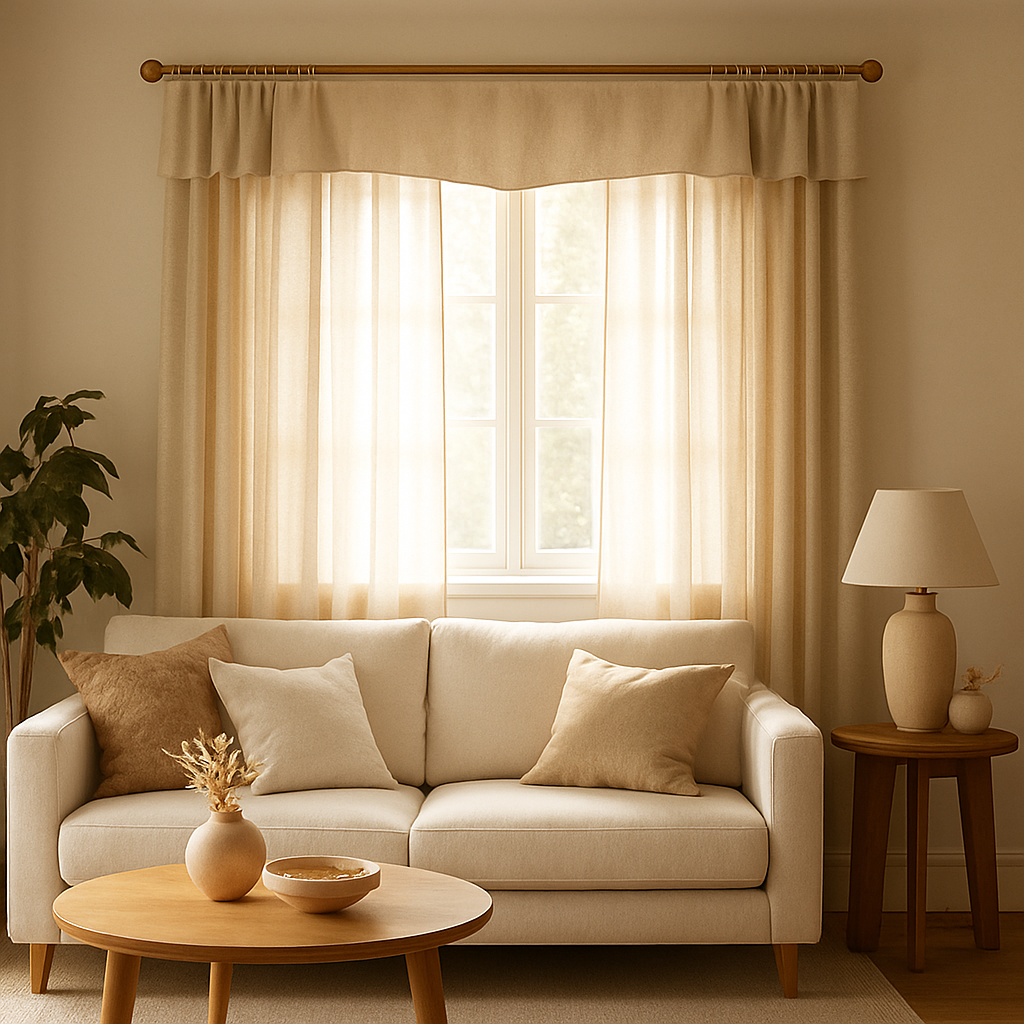
You've got the right fabric and heading – now the magic really starts when you layer the details. A well‑chosen tie‑back, a polished finial, or a soft valance can turn a plain set of light filtering curtains for living room into a statement that feels curated just for you.
Think about the moment you pull the curtains aside and a splash of colour from a decorative fringe catches the eye. That instant "wow" is all about the accessories you pick.
Choose hardware that sings with your room
Start with the curtain rod. A brushed‑gold rod adds a warm glow to a dove‑gray linen, while a matte‑black finish leans into a modern, minimalist vibe. For couples who love a hint of drama, consider a double‑track system – one track for the light‑filtering panel, another for a sheer overlay you can draw for extra privacy.
Finials are tiny but mighty. A sculpted glass finial can echo a chandelier you already have, creating visual continuity. Or go for a hand‑carved wooden knob if your living room leans into natural textures.
Layering for depth and function
Adding a sheer under‑layer gives you three lighting options: full daylight, filtered glow, or near‑darkness when you pull the sheer closed. It also adds a subtle texture that makes the room feel more lived‑in.
Valances are another easy‑to‑install layer. A soft linen valance that mirrors the curtain colour frames the window without stealing the spotlight. If you love a hint of pattern, pick a valance in a muted geometric print – it will peek through the light‑filtering fabric and add interest without overwhelming the space.
Accessorise with purpose
Tie‑backs do more than hold fabric back; they become decorative hooks for your personality. Leather‑capped cords work beautifully with a rugged linen‑poly blend, while silk tassels pair nicely with a muted teal panel.
Don't forget the practical side: curtain clips, magnetic tabs, or hidden pockets for cordless operation. These small upgrades keep the look sleek and make daily use a breeze.
Match the accessories to your lifestyle
If you have a pet that likes to perch on the windowsill, opt for sturdy metal hooks that can withstand a playful paw. For families with young children, choose rounded finials and soft‑close mechanisms to avoid accidental pinches.
Couples renovating a period home often love to incorporate historic touches – think brass grommets that echo Victorian ironwork, or a reclaimed wood rod that tells its own story.
Quick custom‑detail checklist
- Pick a rod finish that complements your existing metalwork or woodwork.
- Select finials that either match or deliberately contrast for visual interest.
- Decide whether a double‑track system will give you extra light control.
- Add a sheer overlay if you want three‑stage lighting.
- Choose a valance that mirrors the curtain colour or introduces a subtle pattern.
- Pick tie‑backs that reflect your material palette – leather, silk, or woven rope.
- Consider safety features for kids or pets – rounded hardware, soft‑close tracks.
When you line up these decisions, you’ll notice how each piece reinforces the others, creating a cohesive, luxury feel that feels like it was made just for your home.
Need a burst of inspiration? The living‑room galleries at House & Garden showcase countless ways designers layer curtains, valances and hardware for maximum impact. Scan a few images, note the hardware finishes you love, and bring that vision to your bespoke order.
Finally, give yourself a moment to imagine the daily ritual – a lazy Sunday morning, coffee in hand, the soft filtered light spilling over the sofa, the tie‑back gently holding the curtains back as you glance at the garden. That's the lived‑in luxury you’re creating.
Step 4: Installation Tips for a Flawless Look
Now that you’ve picked the perfect fabric and hardware, it’s time to turn those decisions into a real‑world transformation. Installing light filtering curtains for living room doesn’t have to feel like a DIY nightmare – a few mindful steps can give you a runway‑ready finish without a second‑guess.
1. Choose the right mounting height
Hang the rod a few inches higher than the window frame. That extra height creates an illusion of taller ceilings and lets the curtains drape gracefully. In most living rooms, 4‑6 inches (10‑15 cm) above the top of the frame works beautifully. If you love a dramatic look, push it up to the ceiling line – just remember to keep the rod sturdy enough to support the weight.
2. Measure twice, drill once
Grab a sturdy tape, a level, and a pencil. Mark the exact spot for each bracket, double‑checking that both sides are level. A quick “mirror test” works: hold a piece of paper at the marked height; if the edges line up on both sides, you’re good to go. This simple habit saves you from a crooked rod that throws off the whole room.
3. Use the right hardware for the fabric weight
Light‑filtering curtains are usually medium‑weight, but a linen‑poly blend can still add a few kilograms. Choose brackets rated for at least 5 kg per side, and consider a centre support for spans over 150 cm. A centre support not only prevents sagging but also keeps the fabric looking crisp when you pull the panels apart.
4. Install a hidden pocket or traverse system
If you want a sleek, minimalist profile, a hidden pocket rod slides the fabric into a concealed channel. It’s perfect for modern living rooms where the hardware should disappear. For families that love to adjust light throughout the day, a traverse system with corded pullers offers effortless control without reaching for the fabric.
5. Seal the edges
Even the best curtains can let light sneak in at the top or sides. Add a small valance or use a “pocket return” – a short strip of fabric that tucks behind the rod – to block those gaps. A quick brush of a decorative finial at each end also helps guide the light away from the edges.
6. Test the look before you finalize
Before you tighten every screw, lower the curtains and step back. Look at the room from multiple angles – the couch, the coffee table, even the doorway. Does the fabric hang evenly? Is there any pooling on the floor? If something feels off, adjust the rod height or bracket placement now; it’s far easier than re‑drilling later.
7. Safety first, especially with kids and pets
Round off any exposed metal corners and opt for soft‑close tracks if you have curious little hands or paws. Cordless options eliminate the strangulation risk entirely, and a simple spring‑loaded pin can keep the panels from snapping back too quickly.
8. Final polish
Once the rod is secure, give the curtains a gentle shake to let any dust fall out. Use a lint roller on the fabric to catch stray fibers, then step back and admire the diffusion you’ve just created. The room should feel brighter, softer, and undeniably tailored to your style.
And there you have it – a straightforward, step‑by‑step plan that turns a box of fabric into a statement piece. With careful mounting, the right hardware, and a little patience, your light filtering curtains for living room will look flawless for years to come.
Conclusion
So you’ve walked through measuring, picking fabric, choosing hardware, and the final install – and now the room is bathed in that gentle, filtered glow we all crave.
In our experience, the little details – a 10 % extra width, a soft‑close track, or a muted teal linen‑poly blend – are what turn a functional window treatment into a statement piece that feels lived‑in.
Think about the first morning you pull the curtains aside: coffee in hand, sunlight spilling over the sofa, and the whole space feeling both brighter and cozier. That’s the everyday luxury light filtering curtains for living room deliver.
If you’re still on the fence, try the simple “paper towel test” at sunrise and sunset. If the towel shows a soft halo instead of a harsh glare, you’ve found the sweet spot.
Remember, a well‑made set will not only soften glare but also protect your furnishings from UV fade and help keep energy bills down.
Ready to make that transformation permanent? Harvey Bruce Interiors can fine‑tune the fit, fabric, and finish so the result looks custom‑made for your home.
Take the next step today – measure one more time, order a swatch, and imagine how those light‑filtering curtains will frame your living room for years to come.
FAQ
What are light filtering curtains for living room and how do they differ from sheer or blackout options?
Light filtering curtains for living room are semi‑opaque panels that let a soft, diffused glow into the space while still providing privacy. Unlike sheer curtains, they block more glare and UV rays, and unlike blackout curtains, they retain a view to the outside and keep the room bright. The fabric typically has a medium weight (around 200‑300 gsm) that balances light diffusion with a gentle drape.
How much extra fabric should I order to achieve a full‑wrap look on my living‑room windows?
We recommend adding about 10 % to the measured width of each window. This extra width lets the curtains gather in soft pleats and hide the rod, creating a luxurious, full‑wrap appearance. For a 120 cm window, order roughly 132 cm of fabric. The same principle applies to the drop length if you prefer a slight puddle on the floor – add 2‑3 cm for that elegant break.
Can light filtering curtains help lower my energy bills?
Yes, they can. By reducing direct glare, the curtains lower the need for artificial lighting during the day, and the fabric’s insulating properties keep heat from escaping in winter and prevent excess solar gain in summer. Homeowners have reported up to a 10 % reduction in heating or cooling costs after installing medium‑weight, light‑filtering panels in their living rooms.
What colour palettes work best for a living‑room setting?
Neutral tones such as dove gray, warm ivory, or muted teal blend seamlessly with most wall colours and furniture styles. If you want a subtle pop, choose a soft geometric print that echoes your rug or artwork. Darker hues add a cozier atmosphere, while lighter shades keep the room feeling airy. The key is to pick a colour that complements, not competes with, the room’s existing palette.
How do I test a fabric’s light‑filtering performance before I buy?
Order a swatch and hold it up to the window at three times of day – sunrise, midday, and sunset. If the fabric creates a gentle halo on a white towel rather than a harsh glare, it’s doing its job. You can also perform the “paper towel test”: place a white towel behind the swatch; the towel should show a soft, even glow.
Is it safe to use corded tracks around pets and children?
Traditional corded systems can pose a strangulation risk, so we suggest cordless or soft‑close tracks for families with kids or curious pets. If you must use cords, install a cord cleat out of reach and keep the cords short. Many modern traverse rods come with built‑in tension devices that keep the cords taut and away from little hands or paws.
How often should I clean my light filtering curtains for living room to keep them looking fresh?
Vacuum the panels with a low‑speed brush attachment every 4‑6 weeks to remove dust. Spot‑clean any spills with a diluted mild detergent, testing on an inconspicuous area first. For deeper cleaning, most linen‑poly blends tolerate a gentle machine wash on a cold, delicate cycle – just be sure to follow the care label. Regular care preserves the fabric’s colour and its ability to filter light effectively.
← Older Post Newer Post →