
Creative Lighting Ideas to Inspire Your Home Interiors
Posted by Admin on
Picture this: you walk into your living room, the evening light fading, and the space suddenly feels flat, like a stage without a spotlight.
We’ve all been there, staring at a bare ceiling and wondering why the room doesn’t feel as inviting as the photos in magazines.
The truth is, lighting is the silent hero of interior design – it sets mood, highlights textures, and can even make a modest sofa look plush.
But figuring out which lamps, bulbs, or fixtures work best can feel overwhelming, especially when you’re juggling a renovation budget and a desire for that luxe feel.
Here’s what we’ve learned at Harvey Bruce: start with the three‑point lighting rule – ambient, task, and accent – and then layer them to create depth.
Ambient lighting is your room’s backbone – think ceiling fixtures or recessed LEDs that bathe the whole space in a gentle glow.
Task lighting steps in where you need focus, like a sleek floor lamp beside a reading chair or under‑cabinet lights in the kitchen.
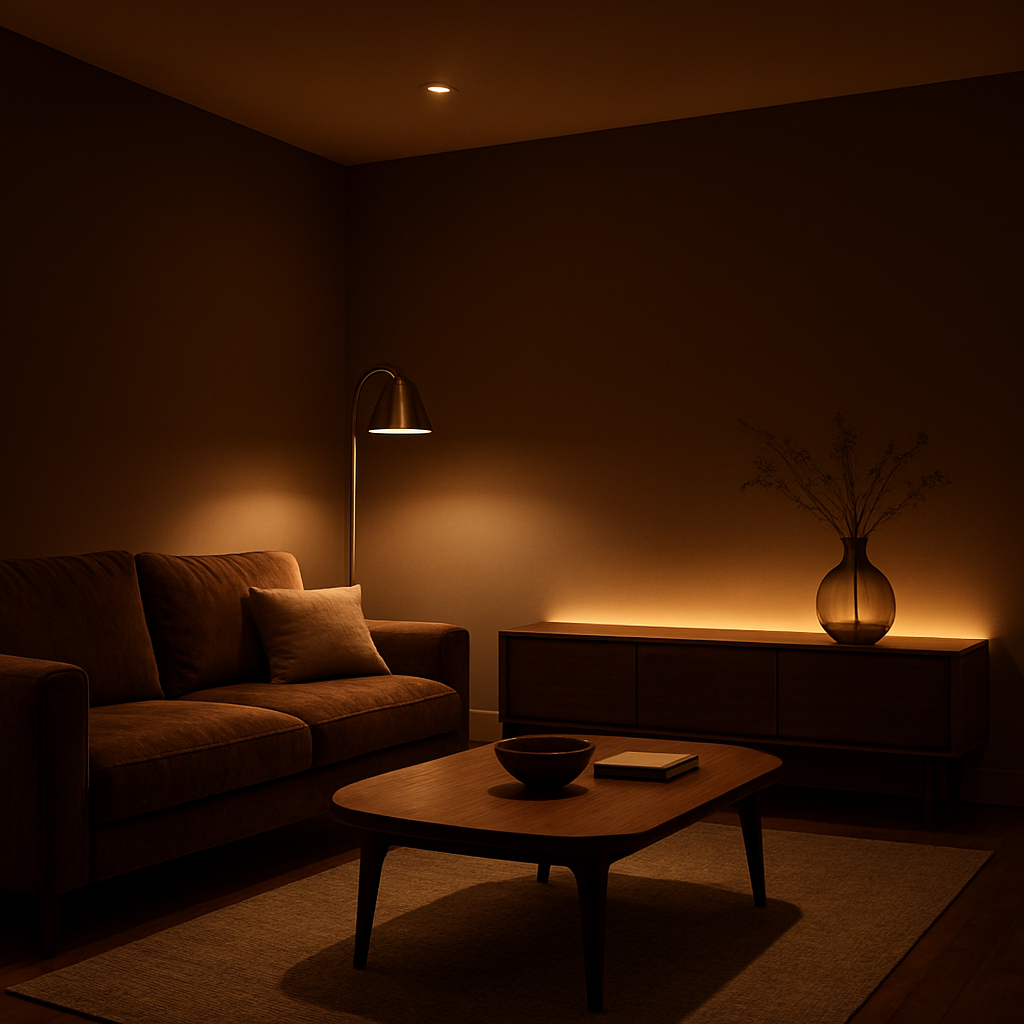
Accent lighting is the fun part – spotlights on artwork, LED strips behind shelving, or a decorative lantern that adds a dash of personality.
When you mix these layers, you’ll notice shadows recede, colours pop, and even that vintage mirror you love starts to shine.
A quick tip: choose bulbs with a colour temperature around 2700‑3000K for a warm, inviting feel that works well with our curated collection of brass and glass accessories.
And don’t forget the power of dimmers – they let you dial the ambience up for a dinner party or down for a cosy movie night with just a flick.
So, as you plan your next lighting makeover, think of it as storytelling with light: each layer adds a chapter, and together they turn a house into a home.
Ready to let lighting transform your space? Let’s start shining.
TL;DR
Mastering lighting transforms any room into a warm, inviting haven—mix ambient, task, and accent layers, choose 2700‑3000K bulbs, and add dimmers for mood control.
With these simple tricks you’ll see shadows disappear, colours pop, and your home feel instantly more luxurious, plus you’ll enjoy energy‑efficient ambiance that lasts everyday effortlessly.
Step 1: Assess Your Space and Lighting Needs
Before you pick a lamp or a strip of LED, you need to know exactly what the room is asking for. Think about the way you move through the space, the activities you do there, and the mood you want to create. That little bit of self‑questioning is the foundation of any successful lighting plan.
Measure the room, then visualise the light zones
Grab a tape measure and note the length, width, and ceiling height. A 12‑ft by 15‑ft living room with 2.7‑metre ceilings will need a different balance of ambient versus task light than a cosy 8‑ft bedroom.
Next, sketch a simple floor plan on paper or a phone app. Mark where the sofa sits, where you read, and where you might display artwork. Those marks become your “light zones”: ambient (overall glow), task (focused work), and accent (highlighted features).
Consider the room’s natural light
Look at the windows at different times of day. Does the east‑facing window flood the space with sunrise amber, or does a north‑facing room stay cool and diffused? Note the peak sunlight hours – that tells you where you can rely on daylight and where you’ll need artificial boost.
For example, a kitchen with large south‑facing windows may only need pendant lights over the island for evenings, while a hallway with no windows will need a ceiling‑mounted fixture to prevent shadows.
Identify the primary activities
Ask yourself: are you cooking, reading, entertaining, or simply lounging? Each activity has a lighting requirement. A dining table benefits from a dimmable chandelier that sits 30‑inches above the surface, whereas a home office needs a desk lamp with a colour temperature around 4000‑5000K for focus.
Picture a couple in their first home, turning a spare bedroom into a shared workspace. They’ll likely need an adjustable arm lamp for each desk, plus soft ambient strips to keep the room from feeling clinical.
Take inventory of existing fixtures
Walk around with a notebook and list every light source you already have – ceiling spots, floor lamps, table lamps, LED strips, even candle holders. Note the bulb type (LED, halogen, incandescent) and the colour temperature if you can read it.
Many homeowners discover they’re over‑lit in one corner and under‑lit in another. That mismatch is often solved by swapping a 3000K bulb for a 2700K warm one, or adding a low‑profile LED strip under cabinets.
Set a lighting budget and sustainability goals
Harvey Bruce believes in sustainable solutions, so consider energy‑efficient LEDs. A typical 60W incandescent replaced by a 9W LED saves roughly 80% on electricity – a concrete number you can quote when justifying the spend.
If you’re renovating on a budget, start with the essentials: a good ambient source and a versatile task lamp. Accent pieces like decorative lanterns can be added later as the space evolves.
Actionable checklist
- Measure room dimensions and ceiling height.
- Sketch a floor plan and mark light zones.
- Observe natural light at sunrise, midday, and sunset.
- List existing fixtures, bulb types, and colour temperatures.
- Identify main activities and the lighting each requires.
- Decide on a budget and prioritize LED upgrades.
Once you’ve gathered these details, you’ll have a clear roadmap for choosing the right fixtures, bulbs, and placement. It’s like having a map before you set out on a road trip – you know where to turn, where to stop, and which scenic routes to enjoy.
And remember, lighting isn’t a one‑size‑fits‑all. As your lifestyle shifts – maybe you start a home‑based hobby, or the kids grow out of the nursery – you can revisit this assessment and tweak the layers.
So, grab that tape measure, grab a coffee, and start mapping out how light will dance in each corner of your home.

Step 2: Choose the Right Light Fixtures for Each Room
Now that you’ve mapped out how light moves through your home, it’s time to pick the actual pieces that will bring those zones to life.
Start with the room’s purpose
Think about the main activity in each space. In a kitchen you’ll want bright, shadow‑free illumination over work surfaces, whereas a bedroom craves a softer, more relaxed glow.
So, ask yourself: “What do I spend the most time doing here?” If the answer is cooking, a pair of pendant lights or recessed LED downlights set at 4000‑5000K will help you see the colour of your vegetables clearly. If you’re winding down with a book, a low‑profile floor lamp with a warm 2700K bulb will feel cosy.
Match fixture style to the room’s vibe
Luxury living rooms often benefit from a statement chandelier or a sculptural brass pendant that doubles as an art piece. A minimalist home office, on the other hand, works best with a sleek desk lamp that has an adjustable arm – think clean lines and a matte black finish.
We’ve seen couples in their first home choose a single oversized pendant over the dining table; it instantly upgrades the space without crowding the floor plan.
Consider scale and ceiling height
A 2.7‑metre ceiling can comfortably accommodate a chandelier with a 30‑inch drop. Anything larger will dominate the room and could make the space feel cramped.
In contrast, a low‑ceiling hallway needs a low‑profile flush‑mount or a slim LED track that runs parallel to the wall. The rule of thumb is: the fixture’s overall height should be no more than one‑third of the ceiling height.
Layer fixtures for flexibility
Don’t rely on a single light source. Combine ambient ceiling fixtures with task lights and a few accent pieces. For example, in a living room you might install recessed LEDs for even ambient light, add a floor lamp next to the sofa for reading, and finish with a small brass sconce that highlights a favourite artwork.
Because dimmers are cheap to add, you can pull the ambient layer down and let the task lamp take centre stage when you’re watching a film.
Pick the right bulb technology
LEDs are now the standard for both energy efficiency and colour consistency. A 9‑watt LED can replace a 60‑watt incandescent while delivering the same lumens. Look for a colour rendering index (CRI) of 80 or higher – that ensures fabrics and wood tones look true‑to‑life.
When you need a spotlight effect, opt for a directional LED track with adjustable heads. It lets you aim light exactly where you want without installing multiple fixtures.
Actionable checklist for each room
- Write down the primary activity (e.g., cooking, reading, entertaining).
- Choose a fixture type that supports that activity (pendant, flush‑mount, floor lamp, sconce).
- Measure ceiling height and calculate appropriate fixture drop.
- Select a bulb colour temperature that matches the mood (warm 2700‑3000K for relaxation, cool 4000‑5000K for focus).
- Confirm the fixture’s CRI is 80+ and the wattage is LED‑equivalent.
- Plan for a dimmer or separate switch so you can blend layers easily.
Picture this: you’re hosting a dinner party in a dining room with a dimmable brass chandelier, under‑cabinet LED strips, and a discreet wall‑mounted reading lamp for the side board. As the evening fades, you simply turn the chandelier down and let the strip glow, creating a warm, inviting ambience that feels both luxurious and functional.
By following these steps, you’ll end up with a suite of fixtures that not only look beautiful but also work hard for every moment in your home. And the best part? Because you’ve matched each fixture to a specific need, you’ll never have a space that feels either too bright or too dim again.
Step 3: Layer Your Lighting – Ambient, Task, and Accent
So you’ve measured, you’ve picked fixtures – now it’s time to think about how those lights work together. Layering isn’t just a designer buzzword; it’s the secret sauce that turns a flat room into a space that feels alive.
First, picture the three layers as a simple sandwich. The bottom slice is ambient light – the gentle glow that fills the whole room. On top of that you add task lighting, the focused beams that let you read, cook, or work without squinting. Finally, sprinkle accent lights like herbs on a dish, highlighting artwork or a favourite piece of furniture.
Ambient – the foundation
Ambient lighting should be soft enough to walk through the room without glare, yet bright enough to see the overall layout. Ceiling‑mounted LEDs, recessed downlights or a modest chandelier work beautifully for most British homes with 2.4‑2.7 m ceilings.
Tip: choose a colour temperature between 2700‑3000K for a cosy vibe, or 3500‑4000K if the space doubles as a home office. A dimmer switch lets you dial the ambience up for a dinner party and down for a movie night.
Task – the workhorse
Task lights are all about function. Think of a floor lamp beside your favourite armchair, an under‑cabinet strip in the kitchen, or a sleek desk lamp with an adjustable arm. The goal is to provide 300‑500 lux directly on the activity surface.
When you pick a task lamp, look for a CRI of 80+ so colours appear true. A warm 2700K bulb is perfect for reading in the living room, while a cooler 4000K LED helps you see the true colour of ingredients on the countertop.
Accent – the drama
Accent lighting is where you get to have fun. Spotlights on a statement mirror, LED strips behind shelving, or a decorative lantern on a sideboard add depth and personality.
Even a simple picture‑light can draw the eye and make a piece feel museum‑grade. If you have a high ceiling, consider vertical layering: a chandelier for ambience, wall sconces for accent, and a floor lamp for task.
For inspiration on how to combine these layers, check out this guide from Seus Lighting. It walks through real‑world examples that match the style we love at Harvey Bruce.
Now that you’ve seen the theory in action, let’s bring it home. Grab a notebook and sketch a quick three‑column chart: Ambient, Task, Accent. List the rooms, then jot down which fixture type belongs in each column.
Putting the layers together
Start with ambient. Install recessed LEDs in the living room ceiling, set them to 30 % dimmer for everyday use. Next, add a floor lamp with a 2700K bulb next to the sofa for evening reading – that’s your task layer. Finally, place a brass sconce on the wall opposite the sofa to highlight a gallery wall – that’s the accent.
Repeat the process in the kitchen: ambient downlights, task pendant lights over the island, and a thin LED strip under the cabinets for that subtle glow when the oven’s off.
Don’t forget the practical side. Make sure each layer is on its own switch or dimmer circuit. That way you can pull the ambient down while keeping the task bright, or switch on the accent for a special occasion.
And a little pro tip: if you’re working with limited wiring, LED strip lights are low‑voltage and can be powered from a single transformer, giving you depth without a major electrical overhaul.
When the layers are balanced, you’ll notice the room feels larger, the colours pop, and everyday tasks become more pleasant. It’s the difference between a space that merely functions and one that truly welcomes you home.
Step 4: Integrate Lighting with Bespoke Homeware and Furniture
So you’ve got your ambient, task and accent layers sorted – great start. Now the fun part begins: weaving those layers into the pieces you already love, or the bespoke pieces you’re about to bring home. Think of lighting as the invisible thread that ties a room’s story together, highlighting the texture of a velvet sofa or the sheen of a hand‑crafted marble side table.
First, walk around your space with a notebook. Jot down the focal points – perhaps a reclaimed‑wood coffee table, a statement armchair, or a custom‑built shelving unit. For each piece, ask yourself: "What mood does this object deserve?" A warm, low‑key glow will make a plush armchair feel cosy, while a crisp, brighter wash can accentuate the grain of a wooden table.
1. Pair ambient light with large furniture
Large, grounding pieces like a sofa set or a media console benefit from an even, diffused glow. Recessed LEDs or a soft‑edge ceiling fixture work well here. In a recent client project, we installed a dimmable 2700K recessed system above a deep‑green Chesterfield sofa. By pulling the dimmer down to 40 % during an evening lounge, the sofa’s tufting popped without harsh shadows.
Pro tip: If you have a high‑backed sofa, consider a Harvey Bruce lighting collection that includes floor lamps with adjustable heads – they can be angled to skim the backrest, creating a subtle halo that reads like a portrait.
2. Use task lighting to highlight functional pieces
Task lighting isn’t just for desks. A well‑placed reading lamp can become a decorative accent on a side table. For example, a brass table lamp next to a glass‑top coffee table not only illuminates your evening book but also reflects the table’s surface, adding sparkle.
When you choose a lamp, match the bulb’s colour temperature to the surrounding décor. A 3000K bulb complements warm wood, while a 4000K LED keeps modern metal pieces looking sleek. In a London townhouse, we paired a matte‑black LED desk lamp with a lacquered walnut desk – the contrast made the workspace feel both functional and stylish.
3. Accent lighting for decorative accessories
Now for the details that make a room feel lived‑in: vases, sculptures, and bespoke wall art. Spotlights or narrow‑beam LED strips are perfect for these. A client loved a hand‑blown glass vase on a console. We added a thin, 12‑mm LED strip hidden behind the console’s lip, casting a gentle wash that turned the vase into a nightly centerpiece.
Back‑lighting can also dramatise shelving units. Install a low‑profile LED strip along the underside of a floating shelf; the light will bounce off the wall, giving the illusion of floating objects – a technique often seen in boutique hotels (lighting and furniture integration guide).
4. Blend lighting with textiles and soft furnishings
Textures love light. A plush rug, a knitted throw, or a silk curtain will change character under different intensities. Try a dimmer‑controlled wall sconce that shines down onto a woven rug – the shadows will highlight the weave pattern, adding depth without extra décor.
In a coastal cottage, we used a warm 2700K LED strip along the headboard of a bedroom, pairing it with a linen duvet. The soft glow made the linen look buttery, and the bedside tables needed only a single pendant each for reading.
5. Practical checklist for integration
- Identify the key furniture pieces you want to accentuate.
- Choose a lighting type (ambient, task, accent) that serves each piece.
- Match bulb colour temperature to the material’s undertone.
- Install separate switches or dimmers for each layer.
- Test the arrangement at different times of day – natural light will shift the effect.
Does this feel overwhelming? Not really. Break it down room by room, and you’ll see a pattern emerge – the sofa gets ambient, the side table gets task, the artwork gets accent. One step at a time, and the whole home starts to feel cohesive.
And if you ever find yourself tangled in cables or unsure which strip to buy, you can always learn how to untangle a necklace chain – the same careful approach works for wiring too.
Remember, lighting isn’t just about illumination; it’s about storytelling. When you integrate it with your bespoke furniture and homeware, you’re giving each piece a voice. The next time you sit on that sofa, you’ll notice how the light cradles you, how the lamp beside the armchair whispers “read me”, and how the subtle glow behind the shelf says “look at this”. That’s the magic of thoughtful lighting.
Step 5: Smart Lighting Solutions and Energy Efficiency
Ever walked into a room and wished the lights could just know what you need? You’re not alone – the whole point of smart lighting is to take that guesswork out of the equation.
What if you could dim the ambient glow for a dinner, then boost the task light for a late‑night recipe without getting up? That’s where the magic of smart controls meets energy‑saving LED tech.
Why go smart?
First off, LEDs already use up to 75% less electricity than old incandescent bulbs, and they last about 25 times longer — a fact backed by the U.S. Department of Energy.Energy.gov explains the savings. Pair that with a dimmer that learns your daily rhythm, and you’re cutting the bill while keeping the mood just right.
And let’s be honest, nobody wants a stack of switches on the wall. A single keypad or voice command that handles all the layers feels like a small piece of future‑home luxury.
Choosing the right smart system
Not every home needs a full‑blown whole‑house setup, but there are three tiers that suit most budgets:
- DIY‑friendly dimmers – Lutron Caséta is a favourite for homeowners because it snaps into place and works with Alexa or Google.Lutron’s residential line shows the options.
- Mid‑range wireless networks – RadioRA 3 adds more zones and can tie in shades, so your curtains and lights respond together.
- Ultimate integration – HomeWorks gives you a bespoke, whole‑home experience with hundreds of devices, perfect for larger properties.
Pick the tier that matches your renovation scope, then layer the technology step by step.
Step‑by‑step: Installing smart lighting
1. Start with the basics – LED upgrades
Swap every incandescent you can see for an ENERGY STAR‑rated LED. Note the wattage equivalence (a 9W LED replaces a 60W bulb) and keep the colour temperature in the 2700‑3000K range for a cosy feel.
2. Add a smart dimmer in high‑traffic zones
Choose a room where you change moods often – the living room or dining area. Install a Caséta dimmer on the main ambient circuit, then pair it with a wall‑mounted keypad. You’ll be able to set “movie”, “dinner” or “relax” scenes with a single tap.
3. Expand to task and accent layers
Plug a smart plug‑in module into a floor lamp beside your favourite reading chair. Program it to turn on when the ambient dimmer drops below 30%. For accent, run a low‑voltage LED strip behind a shelving unit and link it to the same control group – the strip will glow just enough to showcase your décor without wasting power.
4. Automate with sensors (optional)
If you love the idea of lights reacting to motion, add a passive infrared sensor to a hallway. It’ll switch on at 10 lux and turn off after a minute of no movement, trimming energy use you might not even notice.
Does this feel like a lot? Take it one room at a time. The biggest payoff comes when each layer talks to the next.
Energy‑efficiency checklist
- Confirm all bulbs are LED and rated ≥75% energy reduction.
- Install dimmers that support daylight‑sensor integration.
- Group lights by function (ambient, task, accent) on separate control channels.
- Set schedules or use occupancy sensors for rarely used spaces.
- Review your electricity bill after a month – you should see a noticeable dip.
Seeing the numbers drop is half the satisfaction; the other half is that the house feels more responsive.
Quick comparison
| Feature | Option | Notes |
|---|---|---|
| Control simplicity | Caséta dimmer | DIY install, works with voice assistants. |
| Zone flexibility | RadioRA 3 | Wireless, handles multiple rooms and shades. |
| Full‑home integration | HomeWorks | Custom‑engineered, supports hundreds of devices. |
Pick the level that feels comfortable now, then upgrade as your needs evolve. Smart lighting isn’t a one‑off purchase; it’s a growing ecosystem that pays you back in comfort and lower bills.
Ready to make your home both brighter and smarter? Start with the LED swap, then let a single dimmer do the heavy lifting. Before you know it, the whole house will be humming in perfect, energy‑savvy harmony.
Step 6: Compare Traditional vs. Smart Lighting Options
Traditional lighting – the familiar baseline
When you think of the lights that have lit British homes for generations, you picture incandescent, halogen or fluorescent fixtures. They work on a simple principle – electricity heats a filament or excites gas, and you get light.
That simplicity feels reassuring, but there’s a hidden cost. Only about 10% of the energy in an incandescent bulb becomes light; the rest is heat. Fluorescents are better – they waste roughly 65% less energy – yet they still rely on mercury vapour and can flicker.
Because the bulbs are cheap upfront (often under £2), many homeowners assume they’re the budget‑friendly choice. In reality, the frequent replacements and higher electricity bill add up fast.
Smart lighting – the modern contender
Smart lighting swaps the old filament for LED technology and layers it with connectivity. LEDs convert around 80% of electricity into light, so you see dramatically lower power draw. Add a Wi‑Fi or Zig‑Bee hub, and each lamp can be dimmed, scheduled, or even react to motion.
Beyond energy savings, smart fixtures give you control you never had before – voice commands, colour temperature tweaks, and remote access from a phone. Those features aren’t just luxuries; they can shave minutes off your daily routine and help you unwind by dimming automatically at sunset.
For a concise breakdown of how LEDs work and why they’re efficient, check out the guide from MySmartHome. It walks you through the physics without the jargon.
Cost and energy – the numbers that matter
Let’s get honest: the initial price tag on a smart bulb can be £30‑£40, while a standard LED costs about £5. That gap can feel daunting, especially if you’re retrofitting an entire floor.
But look at the long‑term picture. A traditional 60‑watt incandescent draws roughly 0.06 kWh per hour. Swap it for a 9‑watt LED and you save 0.051 kWh each hour it’s on. Over a year, that’s dozens of pounds saved on your electricity bill.
Smart bulbs also let you set schedules so lights turn off when you’re not home, and many report their own energy consumption. Those tiny savings compound – a study cited by CNET notes that smart lighting can cut overall lighting energy use by up to 30% when you take advantage of automation.
Maintenance is another hidden cost. Traditional bulbs often need replacement every year or two. LEDs, whether smart or not, can last 20‑25 years. Fewer trips to the hardware store means less hassle and less waste.
Choosing the right fit for your home
Ask yourself three quick questions:
- Do you want granular control over colour and brightness? If yes, smart LEDs give you that flexibility.
- Is your budget tighter right now? Start with high‑traffic rooms – replace incandescent with plain LEDs first, then layer smart switches or plugs where you need automation.
- Do you have existing dimmer switches that might clash with smart bulbs? In that case, a smart switch (which controls any bulb) could be the smoother path.
Many homeowners find a hybrid approach works best: LED bulbs everywhere for efficiency, and smart switches or plugs in the living room, hallway and bedroom where schedules and voice control add real value.
Practical checklist – step by step
1. Audit every fixture – note type (incandescent, halogen, fluorescent) and location.
2. Prioritise replacements: start with high‑usage rooms (kitchen, living area) and swap to LED bulbs.
3. Decide on control: if you love app‑based scenes, pick smart bulbs for those rooms. If you prefer keeping your favourite classic fixtures, install a smart switch instead.
4. Test a single zone. Program a sunset schedule and watch the energy meter dip – that quick win builds confidence.
5. Expand gradually. Add motion sensors in hallways, or a smart plug for a floor lamp you love, and let the ecosystem grow at a comfortable pace.
Remember, the goal isn’t to overhaul everything overnight, but to build a lighting system that feels intuitive, saves money, and matches the luxurious feel you’re after at Harvey Bruce. When each layer talks to the next – ambient LEDs humming quietly, task lights responding to your voice, accent strips highlighting a favourite sculpture – you’ve turned lighting from a utility into an experience.
FAQ
How do I choose the right lighting colour temperature for each room?
Think about the mood you want to set. Warm 2700‑3000K feels cosy in bedrooms and living areas – perfect for winding down with a book or a glass of wine. Cooler 4000‑5000K mimics daylight and works well in kitchens or home offices where you need clarity for cooking or focussing on a screen. A quick trick is to test a bulb in the space at dusk; if it feels inviting, you’ve hit the sweet spot.
Can I mix smart bulbs with traditional switches without rewiring?
Absolutely. Keep the existing wall switch in the “on” position and let the smart bulb handle dimming or scheduling via its app. If you prefer a manual override, a smart switch can replace a standard toggle – it talks to any bulb, smart or not, so you don’t have to rip out wiring. Just remember to label the switch so everyone knows it’s a hybrid control.
What's the best way to layer ambient, task, and accent lighting in a small living room?
Start with a low‑profile LED ceiling fixture for ambient glow – think 30 % dimmer for everyday use. Add a floor lamp or table lamp on the side where you read; that becomes your task light, aimed right at the arm‑chair. Finally, slip a narrow LED strip behind a floating shelf or highlight a piece of art with a small spotlight. Each layer should sit on its own switch or dimmer so you can pull one back while the others stay bright.
How much can I expect to save on my electricity bill by switching to LED lighting?
In our experience, swapping a 60W incandescent for a 9W LED cuts the bulb’s energy draw by roughly 85 %. If you replace eight bulbs in a typical three‑bedroom home, you could shave £30‑£40 off an annual electricity bill – and the LEDs will last 20‑25 years, meaning you’ll also save on replacement costs. The numbers add up faster than you might think.
Are there any lighting tips that work especially well for homes with high ceilings?
High ceilings love vertical interest. Hang a chandelier or pendant that hangs about one‑third of the ceiling height – it creates a focal point without overwhelming the space. Pair it with recessed LEDs that wash the room in soft ambient light, then add wall‑mounted sconces or LED strips under a coving moulding for subtle accent. Dimmer controls become essential; they let you pull the light down for intimacy without losing the sense of height.
What maintenance routine should I follow to keep my luxury lighting looking its best?
Dust the lenses or glass shades once a week with a soft microfiber cloth – a quick swipe prevents a film that dulls colour. Check connections every few months; a loose bulb can flicker and waste energy. For LED strips, wipe the exposed surface with a dry cloth; avoid liquids that could seep into the housing. Lastly, schedule a yearly visual check for any colour‑shift or dimming issues, especially on dimmable fixtures.
Conclusion
We've walked through everything from picking the right fixture to layering ambient, task and accent light, and even adding a dash of smart control. By now you can picture the glow you want in each room, and you have a simple checklist to turn that vision into reality.
So, what's the next step? Grab a tape measure, note your ceiling height, and pick a warm‑tuned LED that matches the mood you’re after. Then add a dimmer—it's the cheapest way to make any fixture feel custom‑made.
Remember, lighting isn’t just about illumination; it’s the backdrop to the moments you cherish— a quiet read in the bedroom, a lively dinner in the dining room, or a cozy movie night on the sofa. When the layers work together, the space feels larger, the colours pop, and you save on energy bills.
If you ever feel stuck, think back to the simple rule we used throughout: match light to activity, keep the scale right, and let each layer have its own switch. That habit turns a daunting project into a series of tiny wins.
Ready to let your home shine? Start with one room, test the layers, and watch how a few thoughtful tweaks transform the whole house. Happy lighting!
← Older Post Newer Post →