
Timeless Clocks Review: Elevate Your Home Interiors with Bespoke Style
Posted by Admin on
Ever walked into a room and felt something was missing, even though the furniture seemed perfectly placed? That tiny, almost invisible gap is often filled by a piece that does more than tell time – a clock that doubles as art.
We’ve all been there: you’re arranging a new sofa, picking out a rug, and suddenly you notice the bare wall staring back at you. It’s not just empty space; it’s an opportunity to set the rhythm of your home. A well‑chosen clock can anchor a colour palette, echo a texture, or become the conversation starter at a dinner party.
In our experience at Harvey Bruce Interiors, we’ve seen couples transform a simple hallway into a gallery‑like passage simply by hanging a decorative wall clock that reflects their style – whether that’s a sleek modern design or a vintage brass piece. It’s a small change with a surprisingly big impact, because time, literally, becomes part of the décor.
So, what should you look for when you start scouting for the perfect clock? First, think about scale: a large statement piece works beautifully above a mantle or behind a sofa, while a slimmer, minimalist model suits a kitchen backsplash. Next, consider the material – wood can warm up a contemporary space, metal adds industrial edge, and mirrored faces play with light.
Imagine walking into your living room after a long day and instantly feeling a sense of calm because the clock’s ticking blends with the soft lighting you chose. That subtle harmony is exactly what we aim to help homeowners create – a space where function meets personality without shouting.
Here’s a quick step you can take right now: measure the wall area you want to fill, then browse our collection of decorative wall clocks to find a piece that matches the height of your furniture and the mood you’re after. Once you’ve picked one, hang it at eye level for the most pleasing visual balance, and watch how the room instantly feels more complete.
TL;DR
Choosing the right clock turns a blank wall into a focal point that reflects taste and sets the rhythm of your home.
Measure your space, pick a scale and material that complements your décor, and hang it at eye level for visual balance – a simple step that elevates any room.
Step 1: Assess Your Space and Design Aesthetic
Ever stood in front of a blank wall and felt that something was just... missing? That's the moment your eye is begging for a clock that does more than tell time – it becomes a piece of art that speaks the language of your room.
Before you start scrolling through endless options, pause and take a breath. The first step is all about understanding the space you’re working with and the vibe you want to create. Think of it as a mini‑audit, like the one we run for our clients at Harvey Bruce when they’re planning a new living room.
Got the video? Great. Let’s break the audit down into bite‑size actions you can actually do right now.
Measure the wall area
Grab a tape measure and note the width and height of the wall you want to fill. Write it down – we’ve seen homeowners buy a massive statement clock only to realise it dwarfs the sofa. A good rule of thumb is to keep the clock’s width roughly one‑third to one‑half of the wall’s width.
Don’t forget the furniture beneath. If the clock will sit above a mantle or a console, leave about 6‑8 inches of breathing room so the piece feels grounded, not cramped.
Identify your design aesthetic
Ask yourself: what story does this room already tell? Is it a sleek, modern sanctuary with chrome accents, or a cosy, vintage‑inspired nook with reclaimed wood? Your clock should echo that narrative.
Take a quick photo of the room and look at the dominant colours, textures, and shapes. If you see a lot of matte black and glass, a minimalist metal clock will blend naturally. If warm honey tones dominate, a wooden frame will add harmony.
Consider materials and finishes
Materials aren’t just about looks; they affect how a clock interacts with light. Mirrored faces bounce daylight and can make a narrow hallway feel wider. Brass or copper adds a touch of luxe, perfect for a dining area you want to feel special.
Remember sustainability – many of our bespoke clocks use responsibly sourced wood or recycled metal, aligning with Harvey Bruce’s commitment to eco‑friendly interiors.
Visualise scale and proportion
Picture the clock at eye level – about 57‑60 inches from the floor for most people. Stand there in your mind and ask, “Does it feel balanced?” If you’re unsure, sketch a simple rectangle on a piece of paper the same size as the wall and tape it up. Step back and see how it feels.
Another quick trick: hold a sheet of newspaper against the wall. If the paper looks too small, you probably need a larger clock; if it overwhelms the space, scale back.
Now, think about the room’s traffic flow. A kitchen clock should be easy to glance at, so a clear dial and bold numerals work best. A living‑room piece can be more decorative, maybe even a sculptural form that doubles as a conversation starter.
Finally, make a shortlist. Jot down three styles that tick all the boxes – size, material, and mood. This short list will make the shopping part painless.
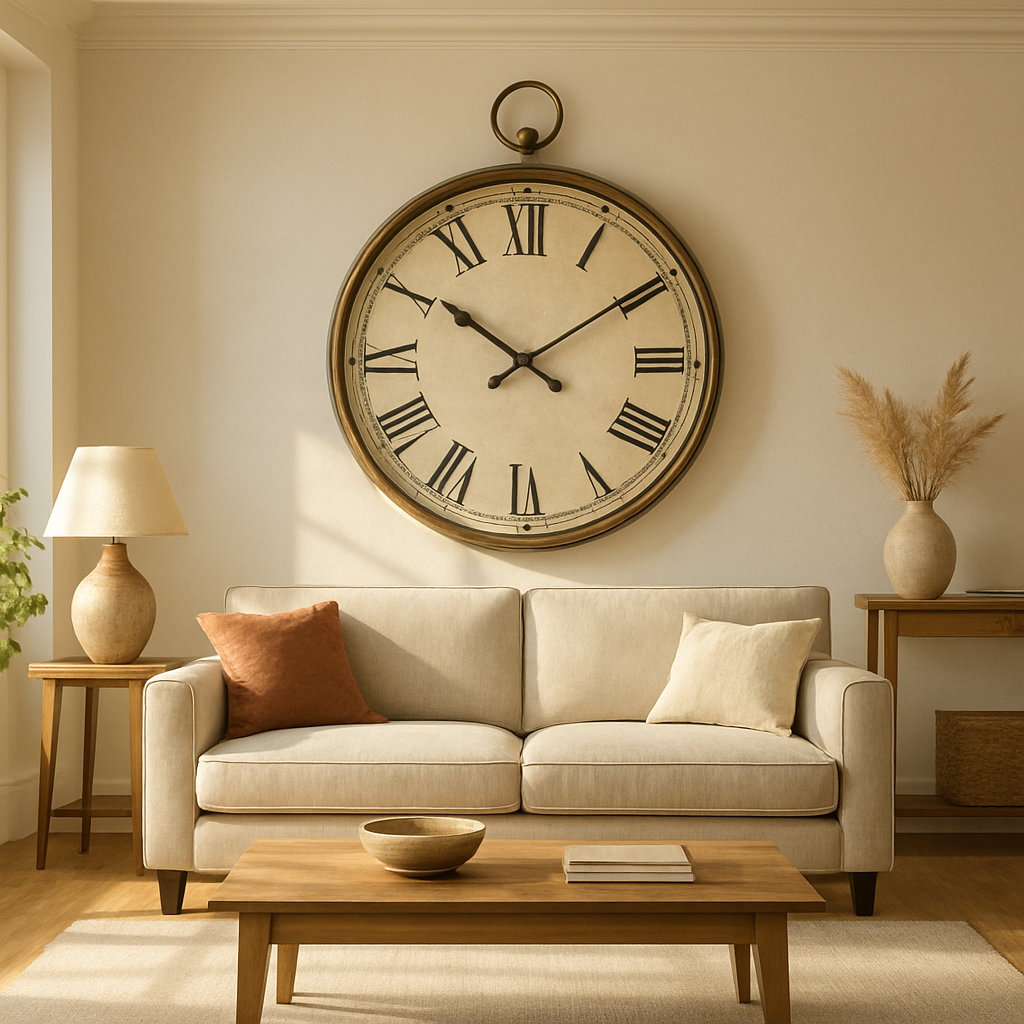
When you’ve narrowed it down, take another photo of the wall with the taped outline or newspaper in place. Compare it side‑by‑side with the clock images online – you’ll instantly see which option fits like a glove.
That’s step one done. You’ve measured, you’ve matched style, and you’ve visualised scale. The next step will guide you through picking the perfect clock from our curated collection.
Step 2: Explore Clock Styles that Complement Bespoke Furniture
Now that you’ve got the size and placement sorted, it’s time to think about personality. The clock you choose should feel like a natural extension of the bespoke pieces you’ve already curated, not an after‑thought slapped on the wall.
Match the material language
If your dining‑room table is hand‑crafted walnut, a clock with a warm wood frame or brass accents will echo those tones. Picture a sleek walnut sideboard beside a Stunning Decorative Wall Clocks for Every Style that features a thin oak veneer – the subtle grain ties the room together without shouting.
Conversely, a modern kitchen with matte black cabinets and stainless‑steel appliances looks crisp with a minimal black metal clock. The uniform finish reinforces the contemporary vibe and keeps the visual noise low.
Play with style eras
Think about the era your furniture evokes. A Victorian settee with tufted upholstery pairs beautifully with an antique‑look brass clock – the patina adds a sense of history. For a mid‑century modern sofa, a retro‑inspired sunburst clock brings that ’60s optimism back to life.
One of our recent clients in Bath mixed a reclaimed teak coffee table with a sleek, art‑deco geometric clock. The contrast of organic wood and sharp chrome created a conversation starter that felt intentional, not chaotic.
Colour‑co‑ordination without matching
Don’t feel forced to match colours exactly. Instead, look for a hue that complements the dominant palette. A deep navy sofa can handle a muted teal clock – the colours sit next to each other on the colour wheel, giving the room a subtle harmony.
When you’re unsure, pull out a swatch from your favourite cushion or rug and hold it up to a clock image on your screen. If the undertones feel friendly, you’re probably on the right track.
Scale it right
Even the most gorgeous design falls flat if the clock overwhelms or disappears behind your furniture. Use the “one‑third rule”: the clock’s height should be roughly one‑third the height of the wall area you’ve measured, but also no taller than the back of the tallest piece of furniture it sits above.
Try this quick test: tape a rectangle the same dimensions as the clock onto the wall. Step back, sip your tea, and see if it feels balanced with the surrounding pieces. If it looks cramped, scale down; if it looks like a speck, go bigger.
Actionable checklist
Grab a notebook and run through these steps:
- Identify the dominant material of your bespoke furniture (wood, metal, glass).
- Choose a clock finish that either mirrors or elegantly contrasts that material.
- Pick a colour that harmonises with your existing palette – use fabric swatches for reference.
- Measure the wall and apply the one‑third rule for height.
- Print or screenshot the clock, tape a mock‑up, and live‑test for a day.
When you’ve ticked each box, you’ll have a clear visual of how the clock will sit alongside your bespoke pieces.
Expert tip: layer texture
Adding a clock with a different texture can add depth without clutter. A smooth glass clock above a chunky wooden credenza creates a light‑dark dialogue that feels curated.
And, just for fun, if you ever need a quick distraction while you’re deciding, check out this quirky guide on how to use an AI article writer. It won’t pick your clock, but the mental break can spark a fresh perspective.
Finally, a little luxury inspiration: a friend of ours who recently moved into a historic townhouse in Edinburgh paired a bespoke marble mantel with a sleek silver‑frame clock they discovered while reading a Boston chauffeur service guide. The story may sound odd, but the takeaway is clear – inspiration can come from anywhere, and the right clock can tie together even the most eclectic collections.
Take these steps, experiment a bit, and you’ll end up with a clock that feels as intentional as the bespoke furniture you love.
Step 3: Size and Placement – Getting the Right Proportion
Okay, you’ve measured, you’ve matched style – now the real question is how big should that clock be and where exactly does it belong? It feels like a tiny puzzle, but getting the proportion right can turn a good wall into a great one.
Start with the eye‑level rule
Most of us naturally glance around 57‑60 inches from the floor – that’s where the eye meets the wall. Hang your clock so the centre sits around that height and you’ll create a visual anchor that feels effortless. If you’re dealing with a low sofa or a tall mantle, you can shift a few inches up or down, but keep the centre roughly at eye level for the primary users of the room.
Does this sound too rigid? Not really. Think of it as a gentle guide rather than a hard law. If you have kids who love to look up, a slightly higher placement can add a playful touch without breaking harmony.
Use the one‑third rule (again)
Remember the wall‑width rule from step one? Apply it to height, too. The clock’s height should be about one‑third of the total wall space you’re filling. For a wall that’s 9 feet tall, a clock around 3 feet high feels balanced. Anything larger risks overwhelming the room; anything smaller can get lost amid other décor.
Picture this: a sleek, 30‑inch clock above a modest console in a hallway. The clock occupies just enough vertical space to command attention without stealing the spotlight from the console’s brass handles.
Mind the furniture’s “breathing room”
Leave at least 6‑8 inches of clear space between the top of the furniture and the bottom of the clock. That gap acts like a visual pause, preventing the pieces from feeling cramped. It also makes future swapping easier – you can swap a clock out without having to move the whole console.
When you stand back, ask yourself: does the clock seem to be “sitting” on the furniture, or does it hover awkwardly? A little gap usually does the trick.
Consider the room’s focal point hierarchy
If the room already has a dominant feature – say a fireplace or a large artwork – let the clock complement rather than compete. Position the clock on a side wall or opposite the focal point to create a visual rhythm. In a dining room with a striking chandelier, a medium‑sized clock placed on the wall behind the sideboard can echo the chandelier’s geometry without stealing its thunder.
On the flip side, if the wall is blank, the clock can become the hero. In that case, you can push the size a touch larger (up to one‑half the wall width) and centre it for maximum impact.
Test with paper or cardboard
Before you drill any holes, grab a piece of cardboard or a large sheet of newspaper and tape it to the wall at the exact dimensions you’re considering. Step back, sip your tea, and see how the mock‑up feels alongside the surrounding pieces. If it looks off‑centre, trim a little; if it feels too tiny, go bigger.
Even better, try the mock‑up at different times of day. Natural light can change how the clock’s size reads – a bright morning can make a large clock feel airy, while evening shadows may shrink its perceived mass.
Quick checklist
- Centre the clock at eye level (≈57‑60" from floor).
- Clock height ≈ one‑third of wall height.
- Leave 6‑8" of space above furniture.
- Ensure the clock doesn’t clash with an existing focal point.
- Mock‑up with paper before committing.
Take a moment now: picture your favourite room, imagine the clock in that exact spot, and ask yourself if the proportions feel right. If something feels “off”, tweak the dimensions in your mind or on paper before you commit.
When you finally hang the clock, step back and let your eyes wander. If the piece feels like a natural extension of the room – not an afterthought – you’ve nailed the proportion. And that, my friend, is how a well‑placed clock can quietly elevate a space without shouting for attention.
Step 4: Materials & Finishes – Matching Homeware Trends
Now that you’ve nailed the scale, let’s talk about the stuff that actually makes a clock feel like it belongs in your home. Materials and finishes aren’t just aesthetic fluff – they’re the silent language that whispers “this belongs here.”
Choosing the right material
Wood feels warm, metal feels crisp, glass feels airy. If your living room is anchored by a reclaimed oak coffee table, a clock with a natural wood frame will echo that grain and keep the vibe cohesive. On the other hand, a sleek stainless‑steel kitchen backsplash begs for a brushed‑nickel clock that mirrors the appliances.
What about sustainability? Many of our Bespoke collections use FSC‑certified timber or recycled aluminium, so you can stay on‑trend without compromising the planet.
Finishes that echo current homeware trends
We’ve seen three finish families dominate UK interiors in 2024:
- Matte brass – soft gold that catches light without glare.
- Soft‑touch matte black – perfect for industrial‑modern spaces.
- Muted pastel acrylic – a nod to the “soft colour” movement.
Pick a finish that either mirrors a dominant element (like a matte brass lamp) or provides a subtle contrast (a pastel clock against dark walnut shelves).
Mix‑and‑match with your existing homeware
Take a quick inventory: what textures are already in the room? Velvet cushions? Rough stone tiles? Your clock can become a bridge. A brushed‑nickel clock paired with a concrete sideboard adds a tactile dialogue – the metal reflects the stone’s coolness, while the clock’s dial adds visual interest.
Here’s a mini‑exercise: place a swatch of your favourite rug next to a clock image on your screen. If the undertones feel friendly, you’ve probably found a match.
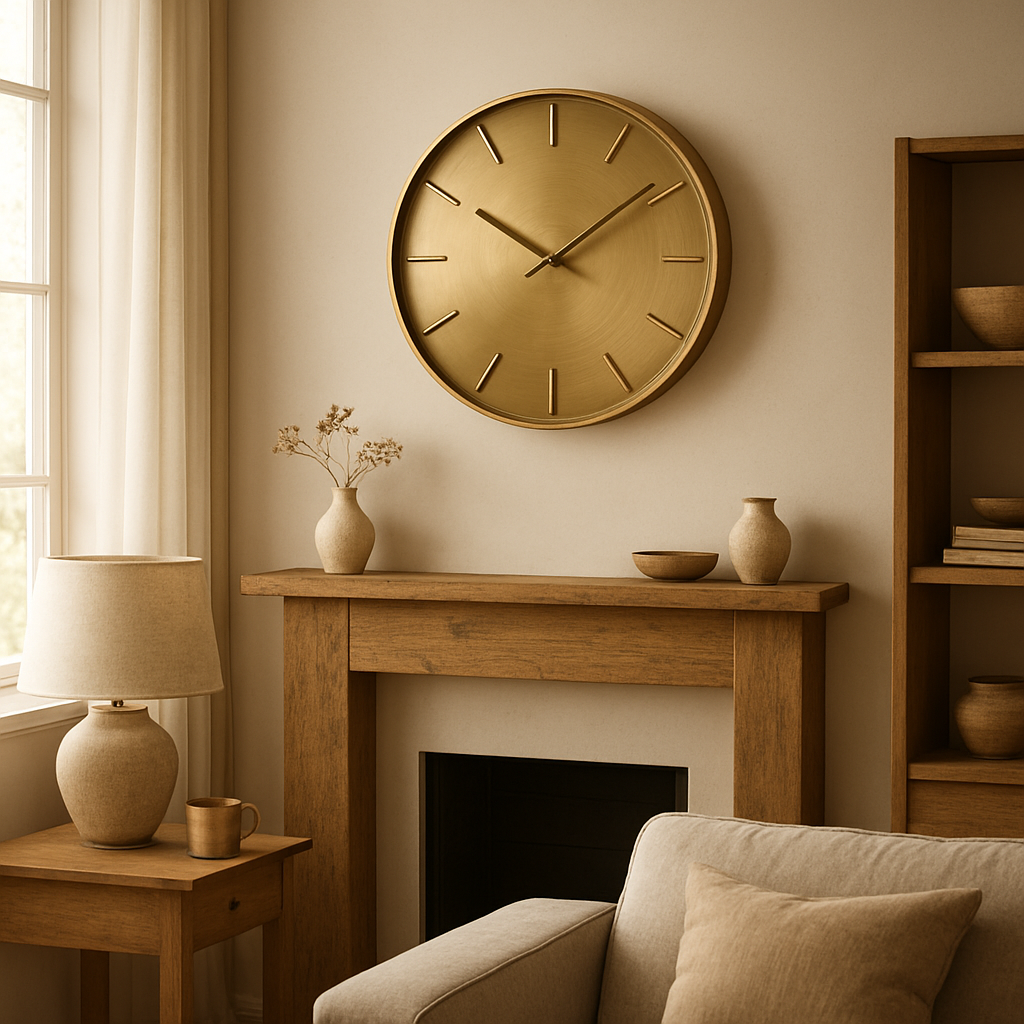
Colour trends and how finishes play together
2024’s colour palette leans toward muted earth tones – sage, warm taupe, and soft terracotta. A clock finished in brushed gold will pick up the warm undertones of a terracotta sofa, while a matte black piece will ground a sage‑green accent wall. The trick is to let the clock echo one hue from your palette without trying to match it exactly – think of it as a subtle accent note in a musical composition.
Quick decision table
| Material | Finish | Best‑fit Homeware Trend |
|---|---|---|
| Reclaimed wood | Matte oil‑worn | Scandinavian warm minimalism |
| Brushed aluminium | Matte black | Industrial chic |
| Clear glass | Pastel acrylic | Soft colour palette |
So, what should you do next? Grab a sample of your favourite finish – whether it’s a brass leaf or a matte black paint chip – and hold it up to the wall where the clock will live. If the reflection feels right, you’ve got a winner.
Caring for your chosen material
Different materials need different love. Wood clocks benefit from occasional dusting with a soft cloth and a light wax coat every six months to keep the grain alive. Metal frames should be wiped with a microfiber rag to avoid fingerprints; a quick spray of a non‑abrasive polish keeps the sheen fresh. Glass faces are best cleaned with a vinegar‑water solution and a lint‑free cloth to prevent streaks. Taking a minute each month to tend to these details means your clock stays a focal point, not a forgotten afterthought.
- Wood: dust, wax quarterly.
- Metal: microfiber wipe, polish as needed.
- Glass: vinegar‑water spray, lint‑free cloth.
Finally, remember that trends come and go, but the material you love will stay with you. Choose something that makes you smile every time you glance at the time, and your clock will become a lasting piece of your interior story.
Step 5: Smart vs Traditional Clocks – Benefits for Modern Homes
Ever glanced at the wall and thought, "What if my clock could do more than just tick?" That little moment of curiosity is the spark behind today’s blend of smart and traditional timepieces.
Why a smart clock feels right in a modern home
First off, a smart clock talks to the rest of your home. Imagine the kitchen lights dimming automatically when the timer on your clock hits zero, or your thermostat nudging the temperature up just as the morning alarm goes off. It’s not sci‑fi – it’s the kind of subtle convenience that makes a busy household feel smoother.
For couples who share a calendar, a smart clock can display both of your appointments on the same face. No more hunting for the family whiteboard or scrolling through phones while you’re pouring coffee. The clock becomes a quiet liaison, keeping everyone on the same page.
Traditional clocks still have a place
Don’t count the classic analogue out just because it lacks Wi‑Fi. A well‑crafted wooden or metal clock adds texture, a sense of permanence, and a visual anchor that tech‑heavy rooms sometimes miss. The steady sweep of a second hand can be oddly soothing – a reminder that even in a hyper‑connected world, time still moves at its own pace.
Traditional clocks also avoid the occasional hiccup of software updates or battery swaps. If you’re in a heritage property where you prefer fewer gadgets, a timeless piece can blend seamlessly with period details without clashing with the décor.
How to decide which fits your space
Ask yourself three quick questions: Do you want your clock to be a hub or a statement? Is battery‑free convenience a priority, or do you cherish the tactile feel of a hand‑crafted case? Finally, consider the room’s personality – is it a tech‑savvy office nook or a cosy sitting room?
If the answer leans toward integration, a smart clock with voice control (think Alexa or Google Assistant built‑in) can become the unofficial command centre. Place it where you already glance for the time – above the kitchen worktop or beside the bedside lamp – and let it handle reminders, weather updates, and even music playlists.
If you’re leaning toward ambience, choose a traditional piece that mirrors the material palette you’ve already chosen – perhaps a matte brass finish that echoes the lighting fixtures you love, or a reclaimed‑oak frame that ties in with your dining table.
Practical set‑up tips
1. Pick a spot with power nearby. Most smart clocks need a wall outlet or a USB‑C charger. If you’re in a historic home, use a discreet power strip to keep cords hidden.
2. Connect to your home Wi‑Fi on a 2.4 GHz band – it’s more reliable for low‑bandwidth devices like clocks.
3. Sync the clock with your existing calendar apps. A quick scan of the QR code on the back usually does the trick.
4. For a traditional clock, hang it at eye level (about 57‑60 inches from the floor). Use a level and a stud finder to ensure it feels secure – you don’t want a sudden wobble during dinner parties.
Blending the two for the ultimate vibe
Many homeowners end up with a hybrid approach: a smart clock in the kitchen for its utility, and a classic statement piece in the living room for visual weight. The key is consistency – match the finish, colour, or material language so the two don’t fight for attention.
Picture a sleek brushed‑nickel smart clock displaying the day’s agenda, paired with a large, matte‑black traditional clock that doubles as a sculptural wall feature. Together they tell time, but each tells a different part of your home’s story.
So, what should you do next? Walk through each room, jot down the vibe you want, and then pick the clock type that best supports that mood. Whether you go fully digital or stay analog, the right clock will anchor your design and make daily routines feel a little more effortless.
Step 6: Maintenance, Care, and Long‑Term Styling Tips
Regular cleaning routine
Now that your clock is proudly hanging, the real work begins – keeping it looking fresh for years to come.
First thing's first: dust. A soft microfiber cloth every week does wonders, and it won’t scratch the finish.
If you have a wooden frame, a light dab of furniture wax once a quarter revives the grain without turning it glossy.
Metal‑cased clocks love a quick wipe with a dry cloth; for stubborn fingerprints, a touch of non‑abrasive polish restores that showroom shine.
Glass faces are the easiest but also the most visible when smudged. Mix equal parts distilled water and white vinegar, spray lightly, and buff with a lint‑free cloth for a streak‑free finish.
Mechanism and battery care
What about the mechanism? For battery‑operated models, replace the cell before the indicator starts flashing – most modern clocks use AA or AAA, and you can pop the cover off in seconds.
If you’ve invested in a smart clock, keep the firmware up to date via the manufacturer’s app; a simple weekly check prevents connectivity hiccups.
Placement for longevity
Now think about placement longevity. Sunlight can fade paints and warp wood, so aim for a spot that gets indirect light or use UV‑filtering window film.
Humidity is another silent enemy. In a bathroom or near a kitchen range, choose a clock with sealed backs or keep the room ventilated to avoid warping or rust.
Styling and refresh ideas
Styling tip: rotate your clock’s backdrop every six months. A subtle change in the wall colour or a new piece of art can give the same clock a fresh personality without any extra cost.
For a cohesive look, match the clock’s finish with other hardware in the room – think brass lamp bases, copper pendant lights, or matte‑black door handles. This tiny visual cue ties the whole space together.
If you love the idea of a statement piece, consider swapping the clock’s face with a seasonal overlay – think a delicate gold‑leaf design for holidays or a pastel splash for spring. Most decorative clocks have removable faces that click on and off easily.
When families grow, you might need to protect the clock from curious little hands. Clear acrylic protectors are inexpensive and virtually invisible, yet they keep accidental knocks at bay.
Protection and moving
A quick quarterly checklist can save you headaches: 1) Dust surface, 2) Wipe glass, 3) Check battery or power source, 4) Inspect mounting brackets for looseness, 5) Evaluate lighting exposure.
Speaking of brackets, use picture‑hanging hooks rated for the clock’s weight. A loose hook can cause a wobble that not only looks off‑kilter but also stresses the movement.
And if you ever decide to move house, wrap the clock in bubble wrap and place it upright in a sturdy box – never lay it flat, as the hands can bend under pressure.
Final thoughts
Finally, remember that a well‑maintained clock becomes a family heirloom. The more you care for it, the more stories it gathers – from birthday cheers to quiet evenings with a book.
So, what’s your next move? Grab that cloth, check the battery, and give your clock a little love today. In a few minutes you’ll have a timeless piece that continues to elevate your home for years to come.
FAQ
How often should I clean my decorative wall clock?
Give it a quick dusting every week with a soft microfiber cloth – that keeps surface grime from building up. For the glass face, a light mist of diluted vinegar‑water and a lint‑free wipe works wonders, but only do it when you notice smudges, not daily. A quarterly deeper clean – removing the clock face if possible, wiping the back and checking the mechanism – ensures the movement stays smooth and the finish stays bright.
What’s the best way to hang a heavy clock securely?
Start by locating the studs behind your wall – a stud finder makes this painless. Choose a picture‑hanging hook that’s rated for at least double the clock’s weight, then screw it directly into the stud. If you can’t hit a stud, use a heavy‑duty wall anchor designed for masonry or plaster. Level the clock with a bubble level before you nail in the final screws, and give it a gentle tug to confirm it’s solid.
Can I use a battery‑operated clock in a humid kitchen?
Battery‑powered clocks will survive occasional steam, but prolonged humidity can corrode the contacts and warp wooden backs. Place the clock on a wall that stays away from the direct line of the cooker’s exhaust, or use a clear acrylic shield to deflect moisture. Swapping to alkaline cells every 12‑18 months and wiping the battery compartment with a dry cloth helps keep the power reliable.
How do I choose the right size clock for a hallway?
The hallway rule of thumb is the one‑third rule: the clock’s height should be about a third of the wall’s total height. Measure the space, then tape a paper rectangle the same dimensions and step back – does it feel balanced with the door and any artwork? Also keep the clock at eye level, roughly 57‑60 inches from the floor, so you can glance without craning your neck.
Are smart clocks compatible with UK Wi‑Fi?
Most smart clocks in the UK run on a 2.4 GHz Wi‑Fi band, which offers better range through walls than the newer 5 GHz. Before you buy, check the spec sheet for “UK power plug” and “2.4 GHz compatible”. Pair the clock with your home network using the companion app, and you’ll get time syncing, weather, and calendar alerts without any extra hardware.
What maintenance does a wooden clock need to stay looking fresh?
Wooden clocks thrive on gentle care. Dust the surface weekly with a dry microfiber cloth; avoid harsh chemicals that strip the finish. Every three to four months, apply a thin coat of natural furniture wax or oil to replenish the grain and protect against humidity. Keep the clock out of direct sunlight, or use UV‑filtering film on nearby windows to prevent fading over the years.
How can I protect my clock during a move?
Before you box up a clock, wrap it in a soft blanket or bubble‑wrap and then slip it into a sturdy cardboard tube that’s slightly larger than the clock’s face. Keep the clock upright – never lay it flat – because the hands can bend under pressure. Label the box “Fragile – Clock” and place it on top of other items to avoid crushing.
Conclusion
We've walked through everything from sizing your wall to picking the perfect material, so you now have a clear roadmap for choosing clocks that actually feel like part of your home.
Remember the one‑third rule, the eye‑level tip, and the little breathing room above furniture – those simple checks keep a clock from looking either lost or overpowering.
Whether you lean toward a sleek smart piece that syncs with your calendar or a timeless wooden design that adds warmth, the key is consistency: match the finish, echo the texture, and let the clock speak the same design language as your bespoke pieces.
Maintenance doesn't have to be a chore. A weekly dust, a quarterly wax for wood, and an occasional battery swap will keep your clock ticking beautifully for years.
Next steps
Take a fresh look at the walls you've measured, pull up a few favourite clock images, and tape a paper mock‑up to see how it feels in real time. If it clicks, you're ready to bring the piece home.
And when you're ready, Harvey Bruce Interiors has a curated selection of luxury clocks that align with the guidelines we've covered – just a click away when you feel confident in your choice.
← Older Post Newer Post →