
How to Choose and Style a Large Arched Wall Mirror for Your Home
Posted by Derek Lamb on
Picture this: you’ve just moved into a new place, and there’s a blank wall that feels… empty, like a canvas waiting for its first brushstroke.
We’ve all been there – that moment when you stand in front of a plain surface and wonder how to give it personality without overcrowding the room. A large arched wall mirror can be that silent hero, reflecting light, adding depth, and instantly elevating the vibe.
Think about the way sunlight pours through a window and bounces off a sleek surface. Suddenly, a modest sitting area feels airy, a hallway looks longer, and even a compact bedroom gets a sense of spaciousness. That’s the magic of a big, gracefully curved mirror.
But why choose an arched shape over a plain rectangle? The gentle curve softens sharp edges, creating a subtle flow that complements both classic and contemporary interiors. It’s like adding a smile to a room – warm, inviting, and unexpectedly elegant.
If you’re a homeowner who loves luxury touches, you’ll appreciate how a large arched wall mirror becomes a statement piece without shouting. Pair it above a mantel, lean it against a console, or let it anchor a gallery wall. The arch frames whatever sits behind it, turning a simple vase or a piece of art into a focal point.
And for couples renovating together, the mirror can act as a design compromise: it adds drama for the design‑savvy partner while staying functional for the practical one who just wants more light.
In our experience at Harvey Bruce Interiors, we’ve seen clients transform drab entryways into welcoming welcomes with a single, well‑placed mirror. The result? A space that feels larger, brighter, and more thoughtfully curated.
So, what’s the next step? Start by measuring the wall you want to dress, consider the scale of the arch, and imagine how it will reflect your favorite pieces. When you pick the right size, you’ll notice the room instantly breathing a little easier.
Ready to let a large arched wall mirror become the quiet star of your home? Let’s explore how to choose the perfect one for your style and space.
TL;DR
A large arched wall mirror instantly brightens a room, adds elegant depth, and becomes a statement piece that reflects your personal style. Measure your wall, pick a scale that perfectly complements your furniture, and position the arch to beautifully frame favorite décor for a luxe, cohesive look in any room.
Choosing the Perfect Size and Style for Your Large Arched Wall Mirror
Alright, let’s talk about finding that sweet spot for a large arched wall mirror. It’s not just about picking the biggest piece you can find – it’s about harmony, proportion, and that quiet “wow” moment when you step back and see the room breathe.
1. Measure the wall, not the mirror
First thing’s first: grab a tape measure and jot down the width and height of the wall you want to dress. A good rule of thumb is to leave at least 2‑4 inches of breathing room on either side, so the mirror feels anchored but not cramped. If the wall is a focal point, you can let the mirror claim up to two‑thirds of the width; for a side wall, aim for a third.
And don’t forget ceiling height. A tall arch that stretches toward the ceiling can elongate a low‑ceiling room, while a wider, lower arch adds balance in a space with high ceilings.
2. Think about the arch’s proportion
The curve itself is a design character. A shallow arch (think gentle smile) works well over a fireplace mantel or a sideboard, while a deep, sweeping arch can become a statement over a hallway or entryway. Picture the arch framing a piece of art or a vase – the curve should echo the shape of what sits behind it, not fight it.
When you stand in front of the wall, imagine a line from the floor to the top of the arch. If that line feels too tall, scale the mirror down a notch; if it feels too short, go a touch larger.
3. Match style to your room’s vibe
Large arched wall mirrors come in everything from sleek frameless glass to ornate wood or metal frames. If your décor leans modern, a minimalist frame or even a frameless option keeps the look airy. For a classic or traditional space, a brushed brass or carved wood frame adds that touch of elegance without overwhelming the room.
We’ve seen couples who love a mix of old‑world charm and contemporary sleekness pair a brushed gold frame with a minimalist sofa – the mirror ties the two eras together.
4. Test the scale with paper templates
Before you order, cut out a piece of kraft paper the size of your intended mirror. Tape it to the wall at eye level. Step back. Does the paper feel too dominant or too shy? Adjust the dimensions on your phone or a sketch app, then re‑cut. This cheap hack saves you from a costly mis‑fit.
And if you’re juggling a hallway with multiple doors, try two smaller arches side‑by‑side – the visual rhythm can be more dynamic than a single monolithic piece.
Once you’ve nailed the size, think about placement height. A mirror’s center should sit roughly at eye level – about 57‑65 inches from the floor for most people. If you’re hanging it above a console, leave 4‑6 inches of clearance so the arch doesn’t look squeezed.
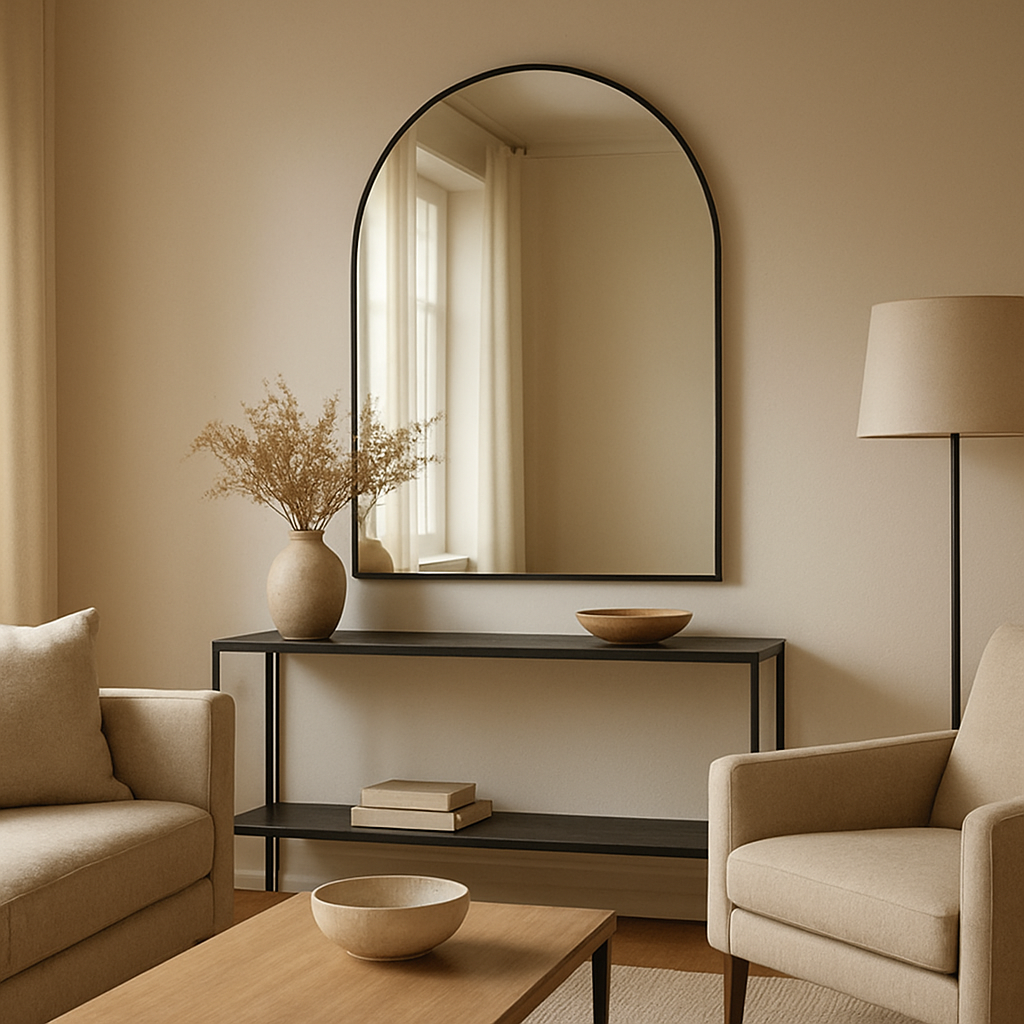
Final tip: consider lighting. A wall‑mounted sconce on either side of the arch adds drama and reduces glare. If you love a more natural feel, let a nearby window cast soft shadows across the curve – the mirror will amplify that glow.
Now you’ve got a roadmap: measure, gauge the arch’s depth, align style, test with paper, and fine‑tune height and lighting. With those steps, your large arched wall mirror will feel like it was custom‑designed for the space, turning an empty wall into a polished centerpiece.
Material Matters: Glass Types and Frame Finishes
When you’ve picked the right size and arch, the next decision feels a bit like choosing the perfect outfit for a night out – the fabric and accessories will either elevate the look or let it fall flat.
Clear vs. Tinted Glass
Most large arched wall mirrors come with crystal‑clear glass, which maximises bounce‑back of natural light. That’s the go‑to for bright living rooms or entryways where you want the space to feel airy. But if your wall gets harsh, direct sun, a subtle tint can soften glare without sacrificing the reflective power. Think of it as sunglasses for your wall; the room stays bright, but the eyes get a break.
Another option some shoppers love is a beveled edge. The angled facets catch light and create a sparkling fringe that adds a touch of drama. We’ve seen the effect in a Chende “beveled edge” model that instantly turned a modest hallway into a mini‑gallery corridor with its sleek, reflective edge.
Choosing the Right Glass Thickness
For a large arched piece, you’ll typically see 6 mm to 10 mm thickness. Thicker glass feels sturdier and reduces the risk of flexing, especially if the mirror spans a wide arch. If you’re hanging it above a console, lean toward the heavier side – it reassures you that the mirror won’t bow under its own weight.
Safety‑tempered glass is another smart pick. It’s designed to crumble into small, blunt pieces if it ever breaks, protecting you and any pets from sharp shards. Most reputable brands, including those we carry, default to tempered for larger formats.
Frame Materials – What Fits Your Lifestyle?
Wood frames bring warmth. A dimpled walnut or oak finish can echo other pieces in the room – think a coffee table or sideboard – and creates a cohesive vibe. If you love a touch of glamour, a gold‑leaf or brass frame adds a luxe sparkle that mirrors the arch’s curve.
Metal frames are the cool‑kid on the block. Black powder‑coated steel offers a sleek, modern edge that pairs well with minimal‑ist décor. For a softer look, brushed nickel or matte chrome can blend with contemporary hardware without stealing the spotlight.
And don’t forget about mixed‑material frames. A wood‑core with a metal overlay can give you the best of both worlds – the warmth of timber plus the durability of metal. This combo works especially well in homes where you’ve mixed vintage finds with modern pieces.
Finishes and Maintenance Tips
Glossy finishes amplify light, making the mirror a true focal point. Matte or satin frames, on the other hand, absorb a bit of light, which can tone down a high‑contrast room. Decide whether you want the mirror to be the star or a supportive actor.
Cleaning is simple but crucial. A soft microfiber cloth with a mild glass cleaner keeps the surface clear. Avoid abrasive chemicals – they can etch the glass or dull a metal finish. For wooden frames, a dab of furniture polish every few months maintains the luster and prevents drying.
Putting It All Together
Start by matching the glass type to your lighting conditions. Pair clear glass with a bold frame if the room needs a statement, or choose a tinted or beveled edge when you want subtle sparkle. Then, align the frame material with the rest of your décor – wood for classic warmth, metal for modern edge, or a hybrid for eclectic style.
Finally, test the look. Hold a sample board or a digital mock‑up on the wall before committing. Walk around at different times of day; notice how the glass catches morning sun versus evening lamp light. Small adjustments now save you a costly redo later.
With the right glass and frame, your large arched wall mirror becomes more than a reflective surface – it turns into a design anchor that ties the room together while amplifying light and style.
Installation Essentials: Mounting Your Large Arched Wall Mirror Safely
Gather the right tools before you start
First thing’s first: you’ll need a drill, a good quality stud finder, a level, a tape measure, and a set of #8–10 wood screws (or the appropriate anchors if you’re hitting drywall). A screwdriver with a comfortable grip and a pencil for marking are lifesavers. If you’re leaning the mirror rather than mounting it flush, grab a pair of heavy‑duty furniture straps – the same ones parents use to baby‑proof bookshelves.
Find solid backing – studs are your friends
Run the stud finder across the wall where the arch will sit. Mark the centers of two studs about 12–18 inches apart – that’s usually the width of a typical arched mirror frame. When you hit a stud, you’ll hear a faint click and see a solid line of wood behind the plaster. If you can’t locate studs, use toggle bolts or metal anchors rated for at least 30 lb per anchor; the mirror’s weight can easily exceed 50 lb once the frame is on.
Choose the mounting method that matches your lifestyle
There are two popular routes:
- Full‑wall mounting. This is the cleanest look. Attach a French cleat or two D‑ring brackets directly into the studs, then hang the mirror by sliding the cleat into place. The cleat distributes weight evenly and makes future removal a breeze.
- Leaning with safety straps. If you love the casual “lean‑against‑the‑wall” vibe, you can still keep it secure. The DIY Playbook shows how to thread furniture straps through the back slots of the mirror frame and anchor the other ends into studs – a method that feels like a safety net while preserving the relaxed aesthetic (step‑by‑step guide).
Step‑by‑step: Mounting a full‑wall arched mirror
1. Measure and mark. Measure the width of the arch at its widest point. Center that measurement on your wall, then use a level to draw a light pencil line where the top edge will sit – usually 150 mm (6 in) below the ceiling or mantle.
2. Drill pilot holes. Place the mounting brackets on the stud marks, align them with the pencil line, and drill pilot holes slightly smaller than your screws. This prevents the wood from splitting.
3. Secure the brackets. Drive the screws into the studs until the bracket sits flush against the wall. Double‑check with a level.
4. Hang the mirror. With a friend’s help, lift the mirror and slide the French cleat or D‑rings onto the brackets. The weight should settle into the brackets without wobbling.
5. Test stability. Gently push the mirror a few inches forward and back. If there’s any movement, tighten the screws or add a second set of brackets lower on the frame.
Step‑by‑step: Leaning a large arched mirror safely
1. Position the mirror. Place the mirror where you want it, tilt it back about 5–10 degrees, and mark the top corners on the wall.
2. Install the straps. Thread each strap through the back slots of the frame, then pull the loose ends to the wall. Use a stud finder to locate the nearest studs and drive the supplied anchors or screws into them.
3. Tighten and trim. Pull the straps tight enough that the mirror feels snug but not forced. Cut off any excess strap with a utility knife.
4. Final check. Walk past the mirror a few times. If you hear any creaking, re‑tighten the straps. The goal is a mirror that stays put even if a child or pet brushes against it.
Safety and maintenance tips you can’t ignore
Never hang a large arched wall mirror above a bathtub or directly over a heat source – the combination of moisture and temperature swings can stress the glass over time. Use wall anchors that are rated for the exact weight of your mirror; a common mistake is relying on plastic drywall plugs that can pull out under load.
After installation, give the mirror a quick wipe with a microfiber cloth to remove any dust from the mounting hardware. Check the screws every six months, especially if you live in an area with frequent vibrations (think near a busy street or a home with a laundry room above).
Real‑world example: a couple’s first‑home makeover
Emma and Jake just bought their first townhouse. They chose a 6‑foot‑wide large arched wall mirror from Harvey Bruce’s luxury collection to sit above their entryway console. Because the wall was plaster over wooden studs, they went with the French‑cleat method. After drilling pilot holes and anchoring the cleat, the mirror hung perfectly, instantly reflecting the chandelier and making the narrow hallway feel twice as wide. Six months later, a routine check showed the screws still tight – proof that a solid mount really does pay off.
Quick checklist before you step back
- Studs located and marked?
- Appropriate hardware (brackets, cleats, or straps) ready?
- Screws or anchors rated for the mirror’s weight?
- Level used for top edge and bracket alignment?
- Final stability test completed?
Take a step back, admire the reflection, and breathe. Your large arched wall mirror is now securely mounted, ready to amplify light and style for years to come.
Design Impact: How a Large Arched Wall Mirror Transforms Your Space
Picture the moment you step into a room and the light seems to double, the walls stretch a little farther, and you catch a glimpse of your own smile reflected back – that’s the quiet power of a large arched wall mirror.
Because the glass bounces both natural daylight and artificial glow, a well‑placed arch can turn a dim hallway into a sun‑lit corridor without swapping a single bulb. The curve gathers light from all angles and sends it swirling across the room, softening shadows and making corners feel less cramped.
So, what does that actually look like in everyday life?
From a design standpoint, the arch’s shape adds depth the way a window does, but without the cost or construction hassle. When you hang a 6‑foot‑wide mirror above a console, the reflected ceiling and floor lines create an illusion of extra square footage – a trick designers have used for decades.
Take Maya’s loft in Manchester: she installed a large arched mirror opposite a frosted glass door, and the space feels three feet wider on each side. The trick? Positioning the mirror at eye level so the arch frames the view, letting the eye travel beyond the actual walls.
Does this work in smaller rooms too?
Absolutely. In a compact bedroom, the mirror can act like a visual magnifying glass. By reflecting the bed’s headboard and a piece of artwork, the arch pulls those elements forward, giving the impression that the room’s focal points occupy more space than they really do.
Another subtle benefit is mood shaping. Light that bounces off a reflective surface picks up the hue of surrounding décor – a warm lamp becomes a soft amber wash, while a cool pendant casts a gentle blue glaze. The arch’s gentle curve diffuses that color, creating a more inviting atmosphere than a flat panel would.
For example, a dining area with a copper chandelier and a large arched mirror above the sideboard will see the copper tones amplified, turning an ordinary meal into a cozy, restaurant‑like experience.
Ever wonder how a mirror can become the room’s centerpiece without stealing the show?
The answer lies in framing. The arch naturally draws the eye upward, making it perfect for highlighting a fireplace, a piece of art, or even an architectural feature like a decorative plaster ceiling. By positioning the mirror so the curve crowns the element, you create a visual hierarchy that feels intentional.
When Laura, a first‑time homeowner in Bristol, placed a dimpled‑frame arched mirror above her mantel, the fireplace suddenly looked like the room’s star. The mirror reflected the mantel’s stone, the surrounding wallpaper, and the chandelier, knitting them together into one cohesive tableau.
| Design Impact | How It Works | Practical Tip |
|---|---|---|
| Light amplification | The glass reflects both natural and artificial light, spreading it across the space | Hang opposite a window or light source, keep the top edge ~6 in below the ceiling |
| Spatial illusion | The arch creates a visual extension of walls and floor | Center on a long wall or place at eye level to maximize depth |
| Mood & colour boost | Reflected hues pick up surrounding finishes, softening shadows | Pair with warm lighting for coziness or cool LEDs for a sleek vibe |
Ready to put these ideas into practice? Follow these three quick steps:
- Identify the strongest light source in the room and mark a spot on the wall directly opposite it.
- Measure the arch’s width and align the centre of the mirror with the room’s midpoint or a focal object you want to highlight.
- Use a level and a stud‑finder to secure the mirror with appropriate brackets; double‑check that the top edge sits about 150 mm below the ceiling for optimal light bounce.
And remember, the transformation isn’t just visual – it’s emotional. When you walk back and see a room that feels larger, brighter, and more harmonious, you’ve just given yourself a daily dose of design confidence.
For more on why wall mirrors are such versatile design tools, check out this overview of wall‑versus‑bathroom mirrors that outlines the decorative power of large formats here.
Maintenance & Care Tips for Long-Lasting Shine
So you’ve spent time picking the perfect large arched wall mirror and it’s finally hanging, catching light and compliments. The next question is simple but easy to overlook: how do you keep that shine looking fresh for years?
Start with a gentle routine
Dusting is your first line of defence. A soft, lint‑free microfiber cloth swiped across the glass once a week removes the everyday film before it settles. Skip the paper towels – they leave fibers and can scratch the surface.
If you notice streaks, dampen the cloth with a splash of distilled water. Avoid harsh chemicals; most glass cleaners contain ammonia that can dull a metal or wood frame over time.
Frame‑specific care
Wood frames love a little polish now and then. A dab of natural furniture wax or a light silicone‑based polish, applied with a clean cloth, restores warmth without creating a sticky residue. For metal frames – brass, gold, or matte black – a quick wipe with a non‑abrasive metal cleaner keeps tarnish at bay. Bassett Furniture’s decorative wall mirrors cleaning guide recommends the same gentle approach.
Never spray cleaner directly onto the frame; always apply to the cloth first. That way you control the amount and avoid drips that could seep into joints.
Guard against everyday hazards
Kids, pets, and the occasional over‑enthusiastic hand can leave fingerprints or smudges. Keep a spare microfiber cloth in the hallway or near the mirror so you can give a quick wipe before the marks set.
Humidity is a silent enemy, especially in bathrooms or kitchens. If your large arched wall mirror lives near a shower or cooking area, consider a low‑VOC silicone sealant around the frame edges. It creates a breathable barrier that discourages moisture from infiltrating the backing.
Seasonal deep‑clean
Twice a year – think spring cleaning and pre‑holiday prep – give the mirror a more thorough treatment. Remove the mirror (if it’s safely mounted on a French cleat) and lay it flat on a protected surface. Use a mixture of one part white vinegar to three parts distilled water, applied with a soft sponge. Gently rub in a circular motion, then rinse with a clean, damp cloth and dry with a fresh microfiber.
For the frame, inspect the mounting hardware. Tighten any loose screws and check that the brackets or cleats are still firmly anchored to studs. A loose mount can cause flexing, which over time may stress the glass.
Quick‑fix checklist
- Dust weekly with a dry microfiber cloth.
- Spot‑clean streaks using distilled water on a cloth.
- Polish wood frames quarterly; wipe metal frames with a non‑abrasive metal cleaner.
- Keep a spare cloth nearby for immediate fingerprint removal.
- Seal frame edges in high‑humidity rooms.
- Do a deep clean and hardware check twice a year.
And here’s a little habit that makes a big difference: after you clean, step back and look at the mirror from different angles. If you still see a faint haze, it might be dust trapped in the frame’s crevices – a soft brush (like a paintbrush) can coax it out.
Remember, a well‑maintained large arched wall mirror not only stays gorgeous, it continues to amplify light, colour, and the overall vibe of your space. A little routine now saves you from costly replacements later.
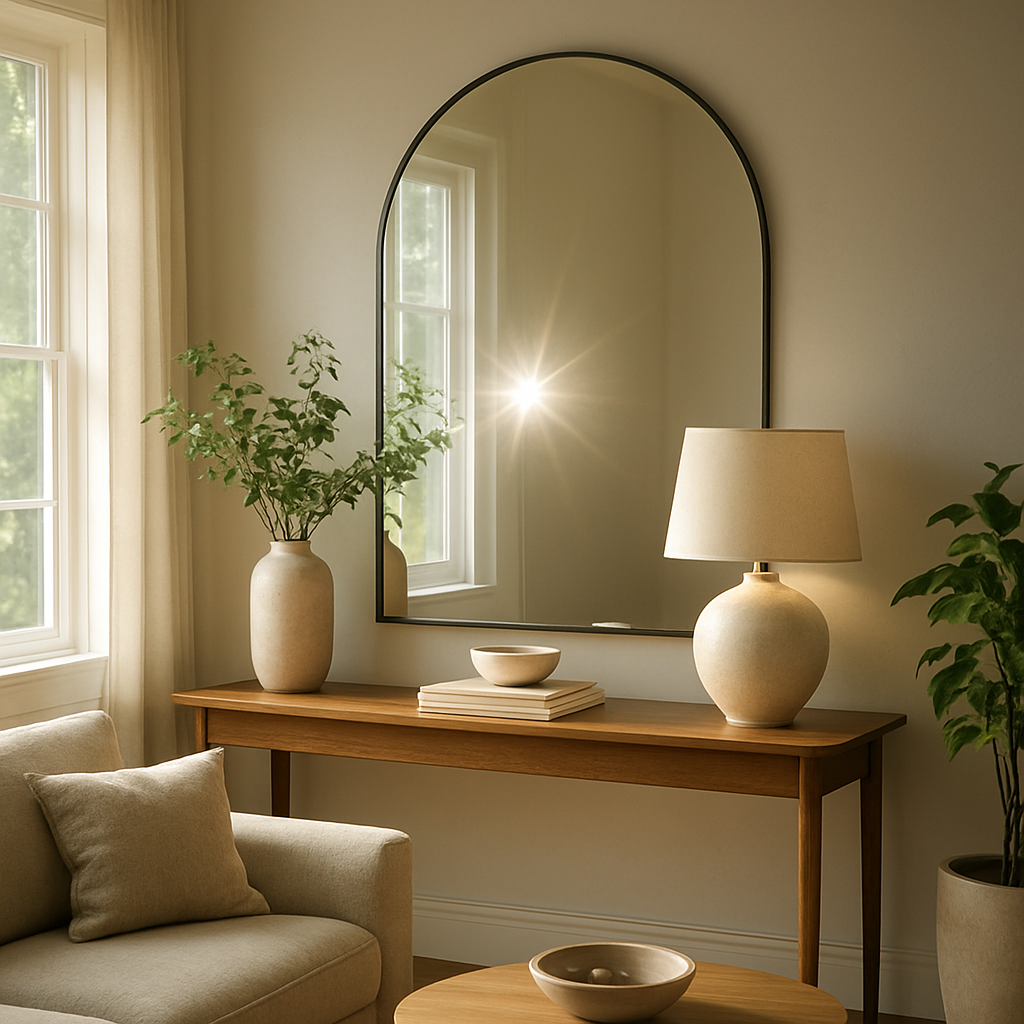
Styling Ideas: Pairing Large Arched Wall Mirrors with Bespoke Homeware
Okay, you’ve got that gorgeous large arched wall mirror hanging, and now you’re wondering how to make the whole room feel like a curated gallery rather than just a reflective slab. The trick isn’t adding more “stuff” – it’s about choosing pieces that echo the curve, the material, and the vibe of the mirror. Below are seven styling ideas that walk you through real‑world pairings, step‑by‑step actions, and little designer secrets we’ve picked up over years of helping homeowners create luxe interiors.
1. Frame the arch with a matching console
Think of the mirror as a picture frame for the wall behind it. A low, sleek console in a finish that mirrors the mirror’s frame (think walnut or brushed brass) creates a visual line that leads the eye straight into the reflection. Place a few decorative objects – a sculptural vase, a stack of coffee table books, or a tray of candles – right in the centre of the console. The arch then acts like a natural spotlight, drawing attention to those accents.
Action step: Measure the width of your console, then leave a 2‑inch gap on each side before the mirror’s edge. Use a level to ensure everything sits perfectly horizontal.
2. Mirror‑paired gallery wall
Instead of fighting the mirror’s presence, let it become the centerpiece of a curated gallery. Choose three to five pieces of art that share a common colour palette or theme – perhaps a series of abstract landscape paintings. Hang them in a loose grid directly beneath the arch, leaving a narrow strip of wall exposed so the mirror still reflects the ceiling and surrounding light.
We love pairing a large arched mirror with a set of abstract landscape paintings because the soft hues bounce off the glass, amplifying the room’s calm vibe.
3. Play with texture: plush rugs and woven throws
The curve of the mirror softens hard edges, so balance it with tactile softness. Lay a high‑pile rug in a neutral tone that stretches from the foot of the furniture up to the mirror’s base. Drape a knitted throw over a nearby armchair – the throw’s loose folds will be reflected, adding depth without overwhelming the space.
Quick tip: Choose a rug with a subtle pattern (like a herringbone) to avoid visual clutter when the mirror reflects it.
4. Light it right: sconces and LED strips
Lighting is the secret sauce that makes an arched mirror glow. Install wall sconces on either side of the arch at eye level; their soft wash will be captured by the glass and spread across the room. For a modern twist, add a thin, warm‑white LED strip behind the mirror’s frame – it creates a halo effect that accentuates the curve after dark.
How to do it: Use a plug‑in LED strip with a remote dimmer; set it to 30% brightness for a cozy ambience that never feels harsh.
5. Mix metal finishes for a curated look
Don’t be scared of mixing metals. Pair a brushed nickel side table with a brass‑finished lamp on the console; the mirror will reflect both, tying them together visually. The arch’s gentle curve acts like a unifier, making the eclectic mix feel intentional.
In our experience, a copper pendant light placed a foot away from the mirror adds a warm glow that changes throughout the day, turning a simple hallway into a mini‑showroom.
6. Incorporate bespoke storage pieces
Large arched mirrors often sit above a console or mantel, leaving the space below ripe for bespoke storage. A hand‑crafted wooden chest or a set of lacquered sideboards can hold decorative trays, heirloom dishes, or even a curated collection of vintage perfume bottles. The mirror will bounce the textures of the wood, making the storage feel like part of the décor rather than a functional afterthought.
Step‑by‑step: Choose a storage piece no wider than 80% of the mirror’s width, then align the top edge of the storage 6‑8 inches below the mirror’s lowest point for balanced proportion.
7. Add a pop of colour with cushions and accessories
Finally, sprinkle in colour through cushions, decorative bowls, or a statement artwork. Because the mirror reflects everything, a bold sapphire cushion on a neutral sofa will echo across the wall, creating a cohesive colour story without overwhelming the space.
Pro tip: Use a colour wheel app to find a complementary hue to your mirror’s frame – if the frame is matte black, a mustard‑yellow accent will pop without clashing.
All of these ideas can be visualised with the Luxury Wall Mirrors collection, where you’ll see full room set‑ups that illustrate each pairing in action. Pick the concept that resonates most with your style, follow the actionable steps, and watch your large arched wall mirror transform from a simple reflective surface into the heart of a beautifully styled space.
Conclusion
We’ve taken you from picking the perfect frame all the way to keeping your reflection pristine, and by now you’re probably picturing that large arched wall mirror becoming the quiet star of your home.
Think about how a single curve can double the light in a hallway, make a modest sitting room feel more spacious, and even lift your mood when you catch your own smile in the morning. That’s the subtle power we’ve explored together.
So, what’s the next step? Grab a measuring tape, locate the studs, and choose a frame that sings with the rest of your décor. If you’re leaning toward a dimpled‑wood finish or a sleek metal border, trust the checklist we built – it’s designed to keep the process stress‑free.
Remember, a well‑mounted large arched wall mirror isn’t just a functional piece; it’s a design anchor that reflects your style back at you. A quick once‑a‑year hardware check and a microfiber dusting routine will keep it looking showroom‑ready for years.
Ready to make that transformation real? Browse our curated range and let the perfect mirror find its home on your wall – the rest is just a little adjustment away.
Enjoy the brighter, larger feeling and watch your space come alive.
FAQ
What size should a large arched wall mirror be for a standard hallway?
Most hallways benefit from a mirror that's about 5‑6 feet wide and 3‑4 feet tall at the widest point. That size captures enough of the wall to double the visual space without overwhelming the ceiling. Measure the clear wall area, leave a few inches of breathing room on each side, and hang the arch so the top sits roughly 150 mm below the ceiling. This placement lets natural light bounce back and creates a seamless flow.
Can I mount a large arched wall mirror on plaster without studs?
Yes, but you’ll need heavy‑duty anchors rated for at least 30 lb each. Toggle bolts work well in plaster because they spread the load across a wider area. First, locate any hidden studs; if none are present, drill pilot holes, insert the anchors, and tighten the screws until snug. Double‑check with a level and give the mirror a gentle wiggle – it should feel rock solid before you step back.
How do I choose the right frame finish for my decor?
Think about the room’s dominant materials. If you have warm wood furniture, a dimpled walnut or oak frame will echo those tones and add cohesion. For sleek, modern spaces, brushed nickel or matte black metal frames provide contrast without clashing. Pairing the arch’s curve with a finish that mirrors nearby hardware – like brass lamp bases – creates a subtle visual thread that ties the whole room together.
Is safety‑tempered glass necessary for a large arched mirror?
Absolutely. Tempered glass is engineered to shatter into small, blunt pieces if it ever breaks, protecting you, pets, and kids from sharp shards. For arches wider than four feet, the extra strength also reduces flexing over time, especially if the mirror spans a long stretch of wall. Most reputable suppliers, including Harvey Bruce, default to tempered glass on larger formats for that peace of mind.
How often should I clean and maintain the mirror and its frame?
Dust the surface weekly with a lint‑free microfiber cloth – that prevents a film from building up. For smudges, lightly dampen the cloth with distilled water; avoid abrasive cleaners. Wood frames enjoy a quarterly polish with a natural furniture wax, while metal frames benefit from a non‑abrasive metal cleaner once every few months. Finally, check the mounting hardware twice a year and tighten any loose screws.
What’s the best height to hang a large arched wall mirror above a console?
Place the bottom of the arch about 6‑8 inches above the top of the console. This gap lets the mirror reflect the console’s details without crowding them. The top of the mirror should sit roughly 150 mm (6 in) below the ceiling, which maximises light bounce while keeping proportions balanced. Step back, tilt your head, and adjust until the reflection feels natural from eye level.
Will a large arched mirror work in a small bedroom?
Yes, but choose a narrower arch – around 3‑4 feet wide – and keep the frame slim. Position it opposite a window or a light source so it reflects daylight across the room. The curve adds depth without swallowing the space, and the reflected light makes the room feel airy. Pair it with a low‑profile nightstand and a soft rug to keep the look light and cohesive.
← Older Post Newer Post →