
Designing an Entryway Bench with Storage: Practical Tips & Styling Ideas
Posted by Derek Lamb on
Picture this: you step through the front door, juggling keys, a bag of groceries, maybe a wet coat, and you realize there's no place to set anything down.
That moment of clutter is all too familiar, especially for homeowners who love a tidy entryway but also need a spot to stash shoes, mail, or that stray umbrella.
Enter the entryway bench with storage – a piece that does double duty as a seat and a hidden closet.
But why settle for a plain bench when you can have something that elevates the whole foyer?
At Harvey Bruce Interiors we’ve seen couples in their first home transform a cramped hallway into a welcoming nook simply by adding a sleek, upholstered bench that hides drawers underneath.
Think about the extra comfort of slipping your shoes off while you pause to take off your coat; the same bench can hold seasonal hats, a basket of dog leashes, or a stack of mail without looking chaotic.
And the beauty part? Our luxury benches blend natural wood tones with modern hardware, so the storage compartments disappear behind clean lines.
If you love a touch of drama, a live‑edge bench brings the raw grain of Indian acacia into the entryway, turning a functional piece into a conversation starter.
What about space constraints? A bench with a slim profile fits even narrow hallways, while the built‑in drawers make the most of vertical space you’d otherwise waste.
Imagine the peace of mind that comes from knowing every pair of shoes has a home and your keys always land in the same spot.
We often recommend pairing the bench with a simple console table or a wall‑mounted coat hook for a balanced look – the bench handles the bulk, the hooks handle the extras.
So, if you’re ready to trade that shoebox pile for a stylish solution, start by measuring the width of your doorway and envision a bench that slides right in, offering both seating and hidden storage.
From there, pick a finish that mirrors your existing décor – whether that’s a warm oak veneer or a crisp white upholstery – and let the entryway bench with storage become the quiet hero of your home.
TL;DR
An entryway bench with storage gives you a stylish seat and hidden compartments that instantly tame shoe piles, corral keys, and keep bags out of the way, turning a chaotic foyer into a welcoming, organized space.
We’ve seen homeowners choose sleek oak or upholstered designs that fit narrow hallways, add a touch of drama, and blend seamlessly with existing décor, so you can step inside feeling calm and confident every day.
Step 1: Choose the Right Size and Style for Your Entryway Bench with Storage
Ever stood in your hallway, juggling keys, a grocery bag, and a damp coat, and thought, "There has to be a better way?" That's the moment we all recognize – the entryway is the first impression of your home, and it shouldn't feel like a chaos zone.
Before you rush to pick the flashiest bench, pause and measure the space you actually have. Grab a tape, note the width between your door jambs, and then step back. Do you have a narrow corridor that barely accommodates a coat rack, or a more generous foyer that could host a statement piece?
Width, Depth, and Height – The Three Golden Rules
Width is the easiest – aim for a bench that leaves at least 6‑8 inches of clearance on each side so the door can swing freely. Depth should be around 15‑18 inches; anything deeper will eat up valuable floor space, especially in tight hallways.
Height is where comfort meets storage. A seat height of 17‑19 inches works for most adults, and it aligns nicely with the pull‑out drawers or hidden compartments underneath. If you love the look of a low, sleek silhouette, consider a bench that sits just a couple of inches lower and adds a modern, floating vibe.
So, what should you do next? Sketch a quick box on a piece of paper using your measurements. Visualise the bench against your wall, and you’ll instantly see if it feels cramped or just right.
Style Matching Your Home’s Personality
Now that the dimensions are sorted, think about the style that makes your heart skip a beat. Do you gravitate toward warm, natural wood tones that echo a farmhouse feel? Or maybe a plush, upholstered bench that whispers luxury every time you sit down?
For homeowners who love a bit of drama, a live‑edge bench in Indian acacia can become a conversation starter, its raw grain contrasting beautifully with sleek hallway lighting. If your décor leans minimalist, a sleek oak frame with hidden metal handles keeps the look clean while still offering storage.
And here's a tip: match the bench’s finish to existing woodwork – think baseboards, door frames, or a nearby sideboard. This subtle continuity ties the whole entryway together without shouting for attention.
Watching the video above can help you visualise how different bench heights feel when you actually sit down. Notice how the drawer pulls glide silently – that’s the kind of detail that makes daily use feel effortless.
When you’re choosing a style, also think about the hardware. Brass pulls add a touch of opulence, while brushed nickel keeps things contemporary. Small choices like these can elevate an ordinary bench into a luxury statement piece.

Finally, consider the future. Will your family grow? Will you add a pet bed or a shoe rack later? Picking a bench with adjustable shelves or modular compartments gives you flexibility without needing a new piece every few years.In short, the right size ensures the bench fits like a glove, and the right style makes it feel like it was always meant to be there. Take a moment, measure, match the mood, and you’ll set the stage for a foyer that welcomes you home with calm and style.
Step 2: Compare Popular Storage Configurations
Now that you’ve nailed the size and style, it’s time to dive into the nitty‑gritty of how the bench actually stores stuff. The right configuration can turn a chaotic hallway into a calm, purposeful drop‑zone.
Drawers vs. Lift‑Top
Drawers feel familiar – you pull one out, stash shoes or scarves, and close it with a soft click. They’re perfect for families who want the clutter hidden away. A lift‑top bench, on the other hand, opens like a secret compartment; you can toss a tote or a weekend bag inside without worrying about drawer handles getting in the way.
Which one feels more like you? If you love the visual clean‑line of a flat lid, a lift‑top might be the hero. If you prefer the tactile satisfaction of pulling a drawer, go with the classic.
One example that blends both is the multi‑function entryway bench with drawers and a top shelf on Walmart. It shows how you can have two shallow drawers for shoes plus a lift‑top for larger items, all in one sleek silhouette.
Open Shelves & Cubbies
If you’re the sort who likes to see the shoes you own, open shelves or cubbies give you that gallery feel. They’re especially handy for kids – each child gets a dedicated slot, and you can teach them to return their sneakers to the right place.
But open storage also invites dust, so you’ll want a quick wipe‑down routine. Pairing shelves with a few decorative baskets can keep the look tidy while still offering easy access.
Built‑In vs. Free‑Standing
Built‑in benches hug the wall, using every inch of width, and can be custom‑fitted with a mix of drawers, shelves, and even hidden hooks. The downside? They’re a bigger commitment, both financially and in terms of future moves.
Free‑standing benches give you flexibility. You can slide them out for cleaning or rearrange the entryway on a whim. Some homeowners add lock‑able wheels for that extra bit of mobility.
For a deeper dive on why free‑standing or built‑in choices matter, check out Putnam Farmhouse’s guide to mudroom bench storage. It walks through the pros and cons of each approach with real‑world examples.
Quick Decision Table
| Feature | Best For | Key Considerations |
|---|---|---|
| Drawers | Families who want hidden storage and a clean look | Ensure smooth glides; consider deeper drawers for bulkier coats |
| Lift‑Top | Those who need quick, large‑capacity access (bags, sports gear) | Check lid clearance; soft‑close mechanisms add luxury |
| Open Shelves/Cubbies | Kids’ shoes, visible décor, easy grab‑and‑go items | Dust management; add baskets or bins for a neater feel |
| Built‑In | Long‑term homeowners prioritising seamless design | Higher upfront cost; less flexibility if you move |
| Free‑Standing | Renters or anyone who likes to rearrange | Stability on high‑traffic floors; consider wheels for mobility |
So, which configuration speaks to you? Picture your morning routine – are you pulling a drawer for shoes, or lifting a lid to toss a tote? The answer will guide you toward the bench that feels less like furniture and more like a trusted sidekick.
Take a moment now to list the top three things you need to store each day. Match those items to the table above, and you’ll have a clear shortlist of configurations that actually solve your problem, not just look good on a catalog.
When you’ve narrowed it down, the next step is to explore the finishes and hardware that will make the chosen configuration blend seamlessly with your foyer’s vibe. Stay tuned – we’ll walk through that in the next section.
Step 3: Materials and Finishes That Blend with Bespoke Homeware
Alright, you’ve picked the right configuration – now let’s talk skin. The material and finish you choose can either make your entryway bench with storage feel like a thoughtful extension of your home or like a misplaced showroom piece.
1. Start with nature‑inspired basics
In 2025, designers are leaning hard into natural textures. Think warm oak grain, lightly oiled walnut, or even a subtle bamboo veneer. Those tones echo hardwood floors, door frames, or crown mouldings, so the bench just “belongs” without screaming for attention.
Here’s a quick test: run your hand over the kitchen cabinets or the living‑room coffee table. Does the bench’s wood grain match that tactile feel? If yes, you’re already on the right track.
Real‑world example: a client in Cambridge chose an oak‑finished bench with a matte oil coat. The oil not only highlighted the grain but also proved low‑maintenance – a quick wipe kept it looking fresh after muddy boots.
2. Mix metals wisely
Metal hardware can add a dash of modernity, but it has to play nice with the wood. Brass pulls, brushed nickel slides, or matte black hinges each convey a different vibe. Brass whispers classic elegance; black feels industrial; nickel leans contemporary.
One tip: limit metal to one finish across the whole foyer. If your front door has brushed nickel handles, echo that finish on the bench’s drawer pulls. Consistency creates a cohesive look.
For a bolder statement, pair a live‑edge bench (see our Live Edge Collection Bench) with matte black hardware. The contrast of raw wood and sleek black makes the piece a focal point without clashing with surrounding décor.
3. Sustainable finishes matter
Eco‑conscious homeowners love finishes that protect the planet as well as the piece. Water‑based polyurethane, natural waxes, or low‑VOC stains are all safe choices. They dry quickly, smell less, and keep indoor air quality high – important for families with kids or pets.
Data from a 2024 interior design survey showed that 68% of luxury buyers consider the environmental impact of finishes before purchasing. Choosing a low‑impact finish can be a selling point when you host friends over.
Need inspiration? The Luxen Home entryway trends guide highlights how natural finishes are the backbone of 2025 design, reinforcing that your choice aligns with industry direction.
4. Color coordination without over‑matching
It’s tempting to pick a bench that mirrors your wall paint exactly, but a subtle contrast can add depth. If your hallway walls are a soft dove‑gray, a warm walnut bench will introduce richness without looking mismatched.
Actionable step: grab three paint swatches – one from the wall, one from your flooring, and one from a wood sample. Hold them together in natural light. The combination that feels “balanced” is your sweet spot.
5. Practical finish checklist
- Identify the dominant material in your foyer (wood, metal, stone).
- Select a wood species that either matches or complements that material.
- Choose hardware finish that echoes existing fixtures.
- Opt for low‑VOC, water‑based sealers for sustainability.
- Test a small hidden area before committing to the full finish.
By following this checklist, you avoid the dreaded “bench that looks great in the showroom but feels out of place at home.”
6. Real‑world scenarios
Family with toddlers: they love bright, durable surfaces. A matte white upholstered top over a sturdy oak frame hides scuffs, while soft‑close metal drawer slides keep little fingers safe.
Pet‑owner in a city flat: a bench with a metal mesh side (like the industrial‑style option from HOMEFORT) offers ventilation for wet coats and resists pet hair cling. Pair it with a dark walnut finish to conceal any accidental scratches.
First‑time home‑buyers aiming for a sleek aesthetic: a low‑profile bench in light ash wood with brushed nickel hardware creates an airy feel, making narrow hallways appear larger.
So, what’s the next move? Walk through your entryway, note the dominant textures, and match your bench’s material and finish accordingly. You’ll end up with a piece that feels like it was custom‑designed for your home – because, in many ways, it is.
Step 4: Placement Ideas to Maximize Function and Flow
Alright, you’ve picked the style, the storage layout, and the finish. Now the real magic happens when you decide where that entryway bench with storage lives. A good spot can turn a hallway from a traffic jam into a smooth‑flowing welcome mat.
1. Anchor the bench to the door’s swing path
First thing’s first – make sure the bench doesn’t block the door. Measure the door’s arc and leave at least 12‑in clearance on the side you open toward the bench. If you have a swinging door, place the bench on the opposite wall or set it back a few inches so the door can open freely.
We’ve seen families in Brighton pull a bench right next to a pocket‑door and end up with a “pinch point” that trips kids. Shifting the bench 6 inches away solved the problem without sacrificing style.
2. Create a “landing zone” next to the door
Think of the bench as the first thing you touch when you step inside – a landing zone for shoes, bags, and keys. Position it so the natural foot traffic flow leads straight to it. In narrow hallways, a low‑profile bench centered between the door and a wall creates a visual pause point.
For wider foyers, try a staggered arrangement: bench slightly off‑center, a slim console or coat rack on the other side, and a decorative rug tying the two together. This layout keeps the eye moving and prevents the space from feeling static.
3. Pair with wall hooks or a floating shelf
Hooks are the side‑kicks of any entryway bench. Mount them a few inches above the bench seat so you can slip a coat on without bending. If you prefer a cleaner look, a floating shelf at the same height works just as well for keys and mail.
One of our clients in Manchester installed brushed‑nickel hooks directly above a walnut bench; the result was a tidy drop‑zone that also reflected the kitchen hardware, pulling the whole home together.
4. Use the bench as a visual separator
In open‑plan homes, the entryway often blends into the living room. Placing the bench perpendicular to the wall can act as a subtle divider, signaling “this is the entrance” without erecting a full wall.
Imagine a light ash bench with a thin metal frame placed at a 90‑degree angle to a wall of glass doors. It frames the view, gives a place to sit, and hides a basket of shoes – all while keeping the space airy.
5. Consider traffic flow for multi‑person households
If you have kids or a partner who comes in at the same time, think about a “dual‑access” layout. Put the bench slightly toward one side of the doorway and leave a clear path on the other side. This way two people can enter, sit, and unload simultaneously.
Data from the Twelve on Main article notes that even small foyers can feel organized when the bench is positioned to create separate zones for shoes and coats – a simple trick that improves flow by up to 30 % in daily use.
6. Light the bench area
Good lighting makes the bench inviting and highlights the storage compartments. A wall‑sconce at eye level or a pendant lamp a foot above the bench adds both function and ambience. If you’re low on ceiling height, a narrow LED strip under the bench’s edge gives a soft glow without crowding the space.
In a recent project we added a warm‑tone sconce beside a matte‑black metal bench; the light reflected off the metal hardware, creating a cozy vignette that guests notice instantly.
7. Test with a temporary layout
Before you commit to drilling or buying, use cardboard boxes cut to the bench’s footprint and place them where you think the bench will sit. Walk through, drop a coat, set down a bag, and notice any awkward bumps.
If the boxes feel cramped, adjust the placement a few inches left or right. This low‑risk experiment saves time, money, and the headache of moving a heavy piece later.
8. Add a rug for definition
A rug anchored under the bench defines the zone and protects flooring from scuffs. Choose a rug that’s at least 2‑in larger than the bench on each side so the edges are visible. Natural fibres like jute or low‑pile wool work well in high‑traffic entryways.
One homeowner in Liverpool paired a hand‑woven sisal rug with a sleek oak bench; the texture softened the look and gave a tactile cue for where to set shoes.
So, what’s the next move? Walk through your foyer, sketch a quick floor plan, and play with the ideas above. When the bench feels like it belongs – not an afterthought – you’ve nailed the placement. The entryway bench with storage then becomes not just furniture, but the heart of a functional, welcoming home.
Step 5: Add Personal Touches with Accessories
Now that the bench sits perfectly and the storage works for your daily grind, it’s time to think about the little things that make the space feel truly yours.
Accessories are the jewelry of an entryway – they don’t change the structure, but they add personality, colour, and a hint of surprise every time you walk through the door.
Here’s how to choose, layer, and style those pieces so your entryway bench with storage becomes a curated vignette rather than just another piece of furniture.
Start with functional accessories
Hooks, trays, and baskets are the workhorses. Pick a pair of wall‑mounted hooks that echo the metal finish on your bench’s drawer pulls – brushed‑nickel, matte black, or warm brass. A simple metal hook can hold coats, umbrellas, or a family’s favourite tote, keeping the bench top free for shoes. For ideas on styling an entryway, see how designers balance function and flair.
Next, add a shallow tray just wide enough to catch keys, loose change, and the daily mail. Look for a tray with rounded edges so it doesn’t snag when you slide a bag across it. A tray in natural wood tones will blend with an oak bench, while a lacquered black tray adds a sleek contrast if your bench is painted.
If you have kids, consider a woven basket on one side of the bench. It gives them a dedicated spot for sneakers and can be pulled out for quick clean‑ups. Choose a basket with a sturdy base so it stays put when it’s filled.
Add texture and colour
A single statement rug can anchor the whole zone. A low‑pile jute runner works beautifully in high‑traffic homes because it resists dirt and adds a natural texture that softens the bench’s lines.
For a pop of colour, think of a decorative pillow on the bench seat. Choose a fabric that feels good under your hand – linen or a performance cotton in a muted sage or deep navy. It’s an easy swap when the seasons change, and the pillow can double as a quick seat for guests.
A small vase or a cluster of ceramic pots on the bench’s front edge brings a touch of organic life. Fresh greenery – a hardy snake plant or a trailing pothos – adds softness without demanding a lot of sunlight, perfect for a hallway that only gets a few minutes of natural light each day.
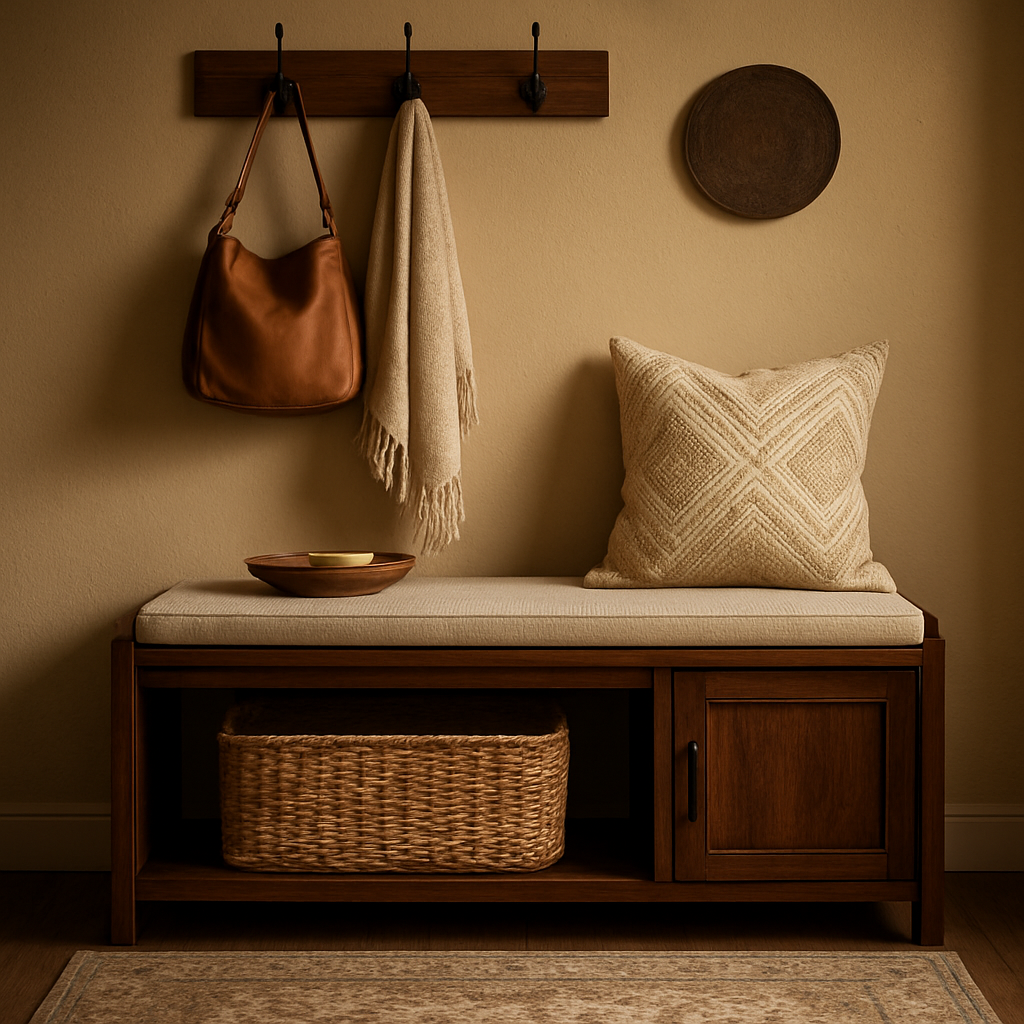
Layer lighting for mood
Soft, warm lighting transforms a functional drop zone into an inviting welcome. A wall sconce positioned next to the bench at eye level highlights the accessories you’ve just curated and creates a gentle glow for those late‑night key‑grab moments.
If you prefer a table‑top solution, a slim LED lamp with a dimmer can sit on the tray you added earlier. Choose a lamp with a brushed‑nickel base to keep the hardware language consistent. The extra light also makes the bench’s storage pulls easier to see, especially in winter when daylight is scarce.
Personalise with meaning
Think about the stories you want to tell. A framed family photo on a narrow shelf above the bench, a travel‑souvenir bowl for collected shells, or a seasonal wreath on the wall behind the bench can all become conversation starters.
One of our clients in Cambridge swapped a generic metal tray for a vintage brass tea‑caddy they’d found at a local market. The caddy now holds the house keys and a handwritten note for guests – a tiny habit that makes every arrival feel personal.
When you’re choosing each accessory, ask yourself: does this piece solve a tiny problem, or does it simply look pretty? The best accessories do both – they hide a mess while adding visual interest.
Quick checklist before you finish
Give yourself a final run‑through with this quick checklist:
- Hooks match bench hardware finish.
- Tray fits bench width and catches everyday items.
- Basket or bins are sturdy and easy to pull.
- Rug is low‑pile, durable, and extends beyond bench edges.
- Lighting is warm (2700‑3000 K) and positioned for easy reach.
- One personal object adds a story.
FAQ
How do I choose the right size entryway bench with storage for a small hallway?
First, measure the width between the door frame and the opposite wall, then subtract about two inches so the bench doesn’t jam the swing. Aim for a bench no deeper than 14‑16 inches; that gives you a seat without sticking out into the path. Height around 16‑18 inches feels comfortable for both adults and kids, and a slim profile keeps traffic flowing. Visualise the bench in the space before you buy – a quick cardboard mock‑up can save you a costly mistake.
What are the pros and cons of drawers versus a lift‑top on an entryway bench with storage?
Drawers keep items hidden and give you a tidy, uniform look; they’re great for shoes, scarves or seasonal accessories, especially when you want a clean line. The downside is you need to pull each drawer open, which can be awkward in a tight foyer. A lift‑top opens like a lid, letting you toss a bag or a stack of mail in one motion – perfect for quick drop‑offs. However, the lid can expose the contents if you leave it open, and you lose the compartmentalised organization that drawers provide.
Can I mix wood and metal on the bench without it looking mismatched?
Absolutely, as long as you keep a single metal finish throughout the room. If your front door has brushed‑nickel handles, echo that tone on the bench’s drawer pulls and any coat‑hook hardware. Pair a warm oak or walnut frame with those brushed‑nickel accents and the contrast feels intentional, not accidental. The key is to limit the metal to one finish and let the wood’s natural grain be the star of the show.
How should I organise everyday items like keys, mail, and shoes in the bench?
Start with a shallow top‑drawer or a built‑in cubby for shoes – it keeps them out of sight but easy to grab. A narrow tray that fits the bench width is perfect for keys, loose change and the daily mail; choose one with rounded edges so it slides without catching. If you have a lift‑top, designate the interior for larger bags or umbrellas. Keep a tiny basket inside the drawer for scarves or gloves; this way each category has its own home and the bench stays clutter‑free.
Is an entryway bench with storage suitable for a pet‑friendly home?
Yes, just pick durable finishes. A low‑sheen polyurethane on oak resists scratches, and a matte metal frame won’t show paw prints as quickly as a glossy surface. Add a removable, washable cushion cover for the seat – it protects against drool and fur. Consider a bench with a mesh side panel; it offers ventilation for wet coats and discourages pets from nesting inside the storage compartment.
What lighting works best around an entryway bench with storage?
Warm LED sconces at eye level create a welcoming glow and make drawer pulls easy to see on dark mornings. If ceiling height is low, a slim LED strip tucked under the bench’s edge provides a subtle accent without crowding the space. Aim for 2700‑3000 K colour temperature – it feels cozy but still bright enough to spot keys in the drawer. A dimmable fixture lets you soften the light for evening arrivals.
How often should I maintain the finish on a wooden entryway bench?
Give the surface a quick dust‑wipe every few days and a deeper clean with a damp cloth once a month. For oil‑finished benches, re‑apply a thin coat of natural oil every six to twelve months to keep the grain looking rich and to protect against moisture. If you notice water spots, wipe them immediately – the longer they sit, the more they can dull the finish. Regular upkeep extends the bench’s life and keeps it looking showroom‑ready.
Conclusion
After wandering through size, style, material, placement and accessories, you’ve seen how an entryway bench with storage can become the quiet hero of your foyer.
Think about the last time you fumbled for keys on a dim morning – does the idea of a dedicated drawer or a top‑level tray make you smile? That tiny moment of ease is exactly what we aim for.
We’ve covered measuring the footprint, choosing drawers versus a lift‑top, matching finishes to your existing hardware, and even adding a rug or a few hooks for that personal touch. Each step builds toward a bench that feels custom‑made, even when you buy it off the shelf.
So, what’s the next move? Grab a sheet of cardboard, outline the bench’s dimensions on your floor, and walk the path a few times. If the flow feels natural, you’re ready to select the perfect piece – whether it’s a sleek oak drawer bench or a plush upholstered lift‑top.
Remember, the goal isn’t just storage; it’s a welcoming pause that says, “Welcome home.” When you choose an entryway bench with storage that fits your lifestyle, you’ll notice the little frustrations melt away, leaving more room for the moments that matter.
Ready to transform your entryway? Explore our curated collection and let us help you bring that effortless, luxe feel to your doorstep.
← Older Post Newer Post →