
Elegant Window Treatment Ideas for Bay Windows to Elevate Your Living Space
Posted by lamb27671@gmail.com on
Picture this: you’ve just moved into a bright new home, and that gorgeous bay window is staring back at you, begging for something that feels just right.
Does that feeling of “what do I even do with this space?” ever hit you? Trust me, you’re not alone. Those curved panes can feel like a design puzzle, but they’re also a golden chance to showcase your style.
In the next few minutes we’re going to walk through a handful of window treatment ideas for bay windows that blend luxury with practicality, all without turning your living room into a showroom.
Think about the last time you curled up with a good book by a window. Maybe you wished the light was softer, or you wanted a bit more privacy without blocking the view. That’s the sweet spot we’re aiming for – treatment that frames the view, adds texture, and feels personal.
We’ll explore everything from breezy sheer curtains that let the sunrise dance across the room, to tailored plantation shutters that echo the elegance of Harvey Bruce’s bespoke interiors. And yes, we’ll sprinkle in a few unexpected twists like floating wood panels or decorative mirrors that double‑up as art.
What’s the biggest obstacle? Often it’s the fear of choosing something that looks “too heavy” or “too plain.” The good news? There’s a middle ground where comfort meets couture, and we’ll show you how to land there.
So grab a cup of coffee, imagine the perfect backdrop for your bay window, and let’s dive into ideas that will make your home feel both luxurious and lived‑in.
Whether you lean toward soft, flowing fabrics that whisper in the breeze, or you prefer sleek, built‑in solutions that hug the curve of the bay, there’s a style to match every mood. Let’s uncover the options, weigh the pros and cons, and help you pick the perfect finishing touch that makes your bay window the centerpiece of your room.
TL;DR
Looking to style your bay window without sacrificing light or privacy today? Our guide offers practical window treatment ideas for bay windows—from airy sheers and sleek shutters to chic mirrors, plus thoughtful accessories that tie the room together—helping you blend luxury and comfort while showcasing your truly own personal taste.
Idea 1: Classic Drapes with Tailored Panels
Imagine pulling back a soft, floor‑to‑ceiling drape and instantly feeling the room breathe. Classic drapes are the go‑to when you want drama without the bulk, and when you add tailored panels they hug the curve of the bay like a custom‑made suit.
Why do we love this look? Because it gives you privacy, controls light, and still lets the beautiful shape of the window shine through. The key is choosing fabric that moves – think linen‑cotton blends or a subtle silk‑weave that catches the afternoon sun without blinding you.
Step 1: Measure the curve
Start by measuring each segment of the bay separately. Write down the width of the center pane, then the two side panes. Add a couple of inches on each side so the panels can overlap a tiny bit – that overlap creates a neat, finished edge.
Does that sound like a lot of math? Not really. Grab a tape, a notebook, and picture the drape sliding smoothly across each pane. If you’re unsure, many of us have been there – a quick call to a local tailor can save you a night of guesswork.
Step 2: Choose the right heading
For a classic vibe, go for a neutral heading – ivory, dove‑grey, or a muted navy. These colors act like a backdrop for the rest of the room. If you love a pop, a deep emerald or rust can become the statement piece you’ve been craving.
And here’s a little secret: pairing your drape heading with a subtle patterned lining (the hidden side of the fabric) adds depth without shouting.
Step 3: Tailor the panels
Tailored panels differ from standard curtains because each panel is cut to the exact width of its window segment. This prevents the dreaded “pooling” effect where fabric gathers in the middle of a bay.
Ask your upholsterer to add a small pocket at the top for a hidden rod. That pocket lets the panel glide on a discreet track, keeping the look sleek.
Need inspiration on how a perfectly fitted panel can transform a space? Check out Designing Plantation Shutters for Bay Windows: A Home Interior Guide – the principles are the same, just swapped for fabric.
Step 4: Accessorise with ambience
Once your drapes are up, think about the mood you want to create. A warm glow from a scented candle can make the space feel like a private retreat.
For a curated candle pick, see the Find the Best Soy Candles Near Me guide. A vanilla‑scented soy candle on the windowsill adds a subtle, cozy aroma that complements the fabric without overwhelming it.
And if you’re looking for a unique decorative accent – maybe an art piece or an unusual tray – the folks at Midnight Scriber have a curated selection that pairs beautifully with classic drapes.
Here’s a quick visual recap:
Notice how the video shows the panels sliding on a hidden track, then stopping just before the side walls – that’s the “tailored” part in action.
Final tip: Hang a thin, decorative tie‑back on each panel. It adds a touch of elegance and lets you pull the drapes aside for a sunny reading nook.
Now you have a clear roadmap for classic drapes with tailored panels – a timeless window treatment idea for bay windows that feels both luxurious and lived‑in.
Idea 2: Layered Sheer Curtains with Statement Valances
Ever stared at a bay window and thought, “I love the light, but I’m craving a little drama without hiding the view?” You’re not alone. Layering sheer curtains with a bold valance is a sweet spot that adds texture, privacy, and a splash of personality—all while keeping the bay’s graceful curve front and centre.
Why the combo works
Sheer panels act like a soft filter, letting the sunrise stream in while still giving you a hint of seclusion. The valance, perched at the top, frames the window like a piece of art and can be a colour or pattern that ties the room together. It’s the kind of trick designers love because it creates depth without bulk.
According to Window World’s guide to bay window coverings, sheer curtains paired with statement valances are a “modern, versatile option” that works in both casual and formal spaces. That’s exactly the vibe we’re after when we talk about window treatment ideas for bay windows.
Choosing the right sheer
Look for lightweight fabrics—cotton voile, linen blends, or a subtle silk‑like sheen. The key is drape: the material should glide without pulling at the curve. If you have a sunny south‑facing bay, go for a slightly denser sheer to tame glare; for a north‑facing view, a whisper‑thin panel keeps the room bright.
Tip: buy a sample swatch and hold it up to the window at different times of day. You’ll instantly see how the light dances through the fabric.
Making the valance pop
Valances don’t have to be plain. Think of a solid, rich hue that echoes a sofa cushion, or a patterned strip that mirrors a rug you already love. Keep the fabric lighter than the sheer to avoid a heavy silhouette—flat, straight lines work best for a contemporary feel, as the Livingetc article points out.
And don’t be shy about texture: a velvet‑finished valance adds luxe, while a crisp linen keeps things breezy. The important part is that the valance sits just above the arch, creating a visual “cap” that draws the eye upward.
Step‑by‑step installation
1. Measure each bay segment. Record width and height, then add 10 % extra for the sheer’s natural sway.
2. Pick a flexible curtain rod. A telescoping or bend‑able pole follows the curve without looking makeshift.
3. Hang the valance first. Attach it to the rod using hidden rings or small clips, ensuring it sits evenly across the arch.
4. Layer the sheers. Slide the sheer panels onto the same rod or use a separate, slightly lower rod for a staggered look.
5. Fine‑tune length. Let the sheer just kiss the floor or hover a couple of inches above—both feel intentional, but floor‑kissed sheers add a touch of elegance.
6. Style the surrounding space. A low‑profile side table, a plush cushion on the window seat, and a few curated accessories will amplify the layered look.
So, what’s the secret sauce? Consistency. Pick one colour family and let the valance be the statement, while the sheer remains the subtle backdrop.
Watch the short video above for a quick visual of how the layers sit on a typical three‑panel bay. Notice the way the valance frames the curve and how the sheer still lets the view shine through.
Final styling pointers
– Pair a navy‑blue valance with ivory sheers for a coastal feel.
– Use a patterned valance that picks up a wallpaper motif for a coordinated look.
– Add a thin, metallic tie‑back to the sheer for a polished finish.
When you step back, you’ll see a window that feels both airy and intentional—exactly what every homeowner wants from their window treatment ideas for bay windows. Give it a try, and let your bay become the room’s quiet yet confident centrepiece.
Idea 3: Floor-to-Ceiling Roman Shades with Custom Patterns
Imagine a shade that drapes from the ceiling all the way to the floor, its fabric patterned just for your space, and still lets the bay’s curve shine through. That’s what floor‑to‑ceiling Roman shades can do, and they’re surprisingly easy to make your own.
Why do we love them? First, they create a sleek, built‑in look without the bulk of a full‑length drape. Second, the custom pattern lets you echo a wallpaper, a rug, or even a piece of art, turning the window into an extension of your décor.
How the style works for bay windows
Roman shades fold in soft, even pleats that follow the angle of each pane. Because the shade hangs from a single headrail, you don’t have to worry about separate rods for each segment – the fabric simply bends around the curve. The result feels seamless, like the shade was carved for the bay.
According to The Shade Store explains, Roman shades are one of the six unique styles that work well with bay windows, offering both style and functionality.
Choosing the right fabric and pattern
Start with a fabric that matches the room’s mood. If you’re after a calm, coastal vibe, think about a soft linen in muted blues and a subtle wave pattern that mirrors the sea outside. For a bold, modern look, a high‑contrast geometric print in charcoal and gold can become the room’s focal point.
Remember to consider light control. A sheer backing lets daylight filter in while a blackout lining offers privacy at night. Many manufacturers let you combine both layers in a single shade, so you can flip the fabric depending on the time of day.
Quick fabric checklist
- Weight: Light‑to‑medium for easy folding.
- Pattern scale: Large motifs work better on a big window; small prints can get lost.
- Care: Choose washable or dry‑cleanable fabrics for busy households.
Measuring and ordering your custom Roman shade
1. Measure the full height from the ceiling to the floor, not just the window opening. This ensures the shade truly reaches the floor.
2. Measure the width across the entire bay, following the curve. Add 10‑15 % extra so the shade can wrap around the angles without pulling.
3. Decide on the headrail placement – a ceiling‑mount rail creates a clean, floating effect, while a wall‑mount rail can hide a ceiling‑light.
4. Provide your fabric choice and pattern details to the maker. Most bespoke shops will send a digital mock‑up before production.
Styling tips to make the shades pop
Pair the shade with a low‑profile window seat or a narrow console table. A slim brass tie‑back at the bottom adds a touch of elegance without breaking the clean line.
Use accessories that echo the pattern – think pillow covers, a rug, or a piece of art that picks up one colour from the shade. This creates a cohesive look that feels intentional rather than accidental.
And don’t forget the lighting. A recessed LED strip above the headrail can highlight the fabric’s texture at night, turning the shade into a subtle backlight.
Real‑world example
We recently helped a client in Brighton with a three‑panel bay. They chose a navy‑blue linen Roman shade printed with a delicate pinecone motif that matched the living‑room wallpaper. The floor‑to‑ceiling drop made the room feel taller, while the custom pattern tied the whole space together. The client says they now “actually look at the window” instead of ignoring it.
So, if you’re after a window treatment that blends luxury, custom style, and practicality, floor‑to‑ceiling Roman shades with a pattern made just for you are a winner.
Ready to start? Sketch your favourite pattern, grab a fabric swatch, and let a bespoke maker bring it to life. Your bay window will thank you.
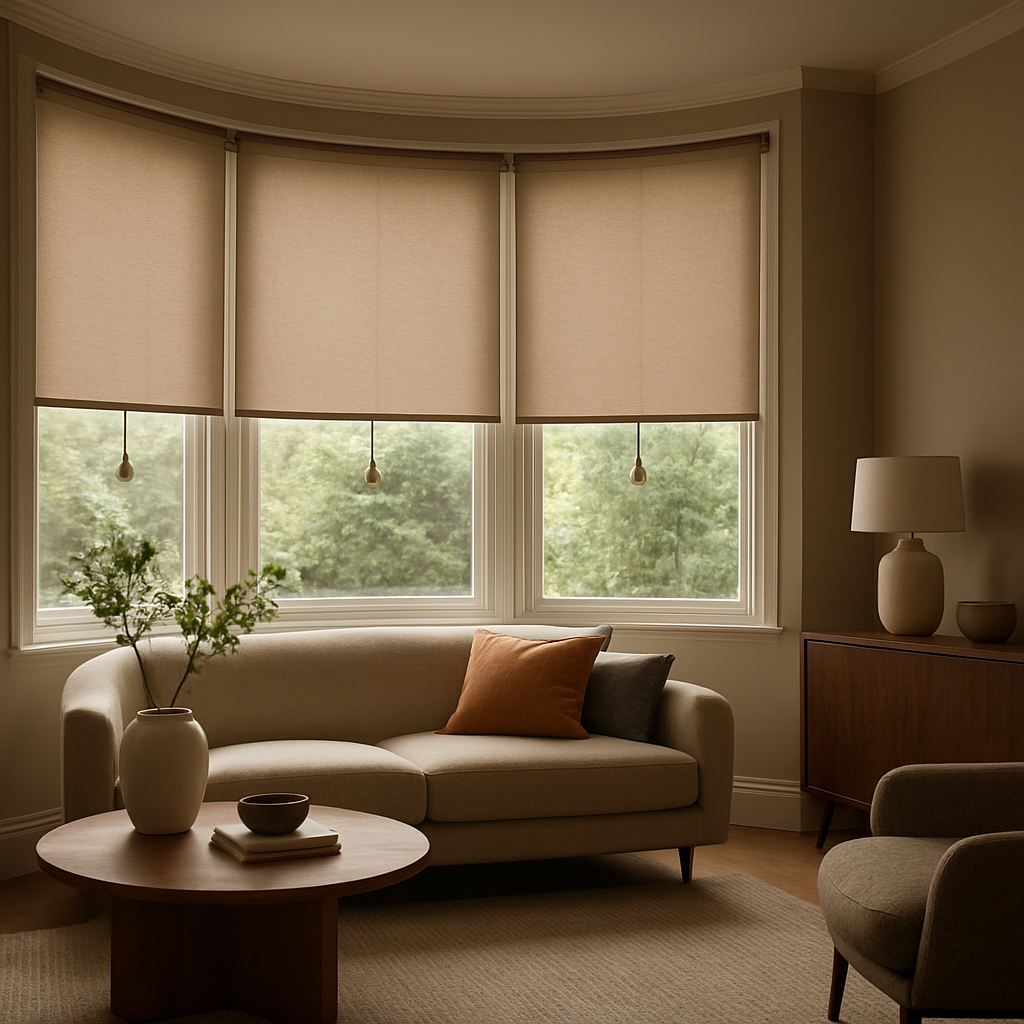
Idea 4: Bespoke Roller Blinds Paired with Decorative Hardware
Imagine you’ve finally found a roller blind that slides like a whisper across your curved bay, but the real magic happens when a piece of hardware—think brass, aged oak, or matte black—turns that simple motion into a statement. That’s what we’re talking about with bespoke roller blinds paired with decorative hardware.
Do you ever feel like standard blinds are… well, boring? They do the job, but they rarely become a conversation starter. When you add a custom‑crafted pull‑chain, a decorative tilt‑rod, or a sculptural headrail, the blind stops being “just a blind” and starts being part of the room’s personality.
Why choose bespoke roller blinds?
First off, they’re built to hug the exact radius of your bay. No awkward gaps, no fabric sagging in the middle. Because they’re made to order, you can pick a fabric that matches your sofa, a texture that echoes your rug, or a colour that pulls the wall art into focus.
Second, the hardware becomes a design element. A polished brass pull‑handle can echo the warm tones of a coffee table, while a brushed‑nickel tilt‑rod can sit nicely beside a sleek kitchen island. It’s the little details that make the space feel curated, not cookie‑cutter.
And here’s the practical side: roller blinds are easy to operate, great for light control, and they sit close to the window, preserving that coveted view of the bay.
Choosing decorative hardware that sings
Start with the material. Brass adds a vintage‑luxury vibe; matte black feels contemporary; brushed nickel offers a soft industrial edge. Next, think about the finish—polished surfaces catch the light, while aged patinas blend into a more relaxed aesthetic.
Don’t forget the scale. A tiny pull‑chain looks delicate on a large bay, whereas an oversized toggle can overwhelm a modest window. Aim for a proportion that feels balanced—roughly one‑third the width of the blind is a good rule of thumb.
Finally, consider the mounting style. Ceiling‑mounted heads give a floating look, perfect for minimalist interiors. Wall‑mounted brackets can double as decorative hooks for a coat or a scarf, adding a functional twist.
Step‑by‑step guide to install your custom set
1. Measure the curve. Use a flexible tape measure to capture the full width of the bay, then add 5‑10 % for a comfortable fit.
2. Select fabric. Light linens for airy spaces, heavier woven textures for a cozier feel. Ask your maker for a swatch and test it at different times of day.
3. Pick hardware. Choose a pull‑handle and tilt‑rod that complement your existing metal finishes. If you love contrast, pair brass with a dark wood headrail.
4. Order the blind. Provide the measurements, fabric choice, and hardware specs to a reputable maker—Harvey Bruce can source the perfect combination.
5. Mount the headrail. For ceiling mounts, locate joists and use sturdy anchors. Wall mounts need level brackets; a laser level makes this painless.
6. Attach hardware. Slip the pull‑handle onto the headrail, secure the tilt‑rod, and test the glide. Adjust tension if the blind feels sticky.
7. Style the surrounding area. Add a low‑profile window seat, a few plush cushions, and perhaps a small side table that mirrors the hardware finish. The result feels intentional, not afterthought.
Quick comparison of hardware options
| Hardware type | Typical finish | Best‑fit bay size |
|---|---|---|
| Brass pull‑handle | Polished or antique | Medium to large bays |
| Matte black toggle | Flat, non‑reflective | Small to medium bays |
| Brushed‑nickel tilt‑rod | Satin‑smooth | All sizes, especially minimalist rooms |
So, what’s the next move? Grab a fabric swatch, sketch the hardware you love, and let a bespoke maker bring it to life. When the blind finally slides, you’ll hear that satisfying click and see how a simple piece of metal can turn a functional window treatment into a focal point that celebrates the curve of your bay.
Idea 5: Convertible Café Curtains for Cozy Nooks
Picture this: you’ve curled up on a soft cushion by the curve of your bay window, a steaming mug in hand, and you wish the space felt both intimate and airy. That’s the sweet spot café curtains can give you – a light‑filtering veil that you can pull back or fold away, turning the bay into a mini‑reading retreat.
Why do café curtains work so well for a bay? They sit just above the window frame, so they don’t interfere with the glass’s natural sweep. Because they’re hung from a simple rod, you can drape them in a relaxed, gathered look that follows the curve without the bulk of a full‑length curtain. In other words, you keep the view, you add softness, and you get a cozy nook in one go.
Material matters. Think breezy linen, buttery cotton, or a light‑weight voile with a subtle texture. A natural‑woven linen lets the daylight dance through while still offering a bit of privacy for those early‑morning coffee moments. If you love a hint of colour, a muted sage or warm oatmeal can echo the tones of your sofa or rug without shouting.
Hardware is surprisingly low‑key. A sturdy, finish‑matched rod – brass for a warm vibe, matte black for modern minimalism – slides easily across the curve. Add simple tie‑backs or decorative clips at the ends so you can fold the curtains to the side when you want an unobstructed view. The tie‑backs become a decorative detail, a tiny accent that ties the whole nook together.
Step‑by‑step to create your café‑curtain nook
1. Measure the curve. Use a flexible tape to capture the full width of the bay, then add 5‑10 % so the fabric can gather without pulling.
2. Select fabric. Choose a light, breathable material that drapes nicely. Order a swatch and hold it up to the window at different times of day – you’ll instantly see how the light plays.
3. Pick a rod. A thin, adjustable rod that can bend slightly to follow the arch works best. Finish it to match other hardware in the room for cohesion.
4. Hang the curtains. Slide the fabric onto the rod, then attach the rod to ceiling brackets or wall mounts just above the arch. Make sure the rod is level, but don’t worry about perfect symmetry – a tiny offset feels lived‑in.
5. Add tie‑backs. Install small hooks or decorative clips on either side of the bay. When you pull the curtains back, they fold neatly against the wall, revealing the full curve.
Styling the cozy nook
Once the curtains are in place, layer the space with a low‑profile window seat or a plush bench. A couple of throw pillows in a complementary hue, a soft blanket, and maybe a small side table for your tea set complete the vibe. Add a scented candle or a tiny indoor plant to bring in texture and scent.
Think about lighting, too. A slender floor lamp or a pair of wall sconces on either side of the bay creates a warm glow that highlights the curtain folds in the evening. The light reflects off the fabric, making the nook feel inviting without overwhelming the rest of the room.
Real‑world example
One of our Harvey Bruce clients in a seaside cottage turned a three‑panel bay into a “café corner” using ivory‑toned linen curtains on a brushed‑nickel rod. They added a reclaimed‑wood bench with a cushion in muted teal, and the space instantly became their favourite spot for sunrise coffee. The curtains are easy to pull aside for a full view of the ocean, yet they provide just enough privacy for a quiet read.
So, what’s the next move? Grab a fabric swatch that makes you smile, measure that beautiful curve, and let a bespoke maker bring your café‑curtain vision to life. In just a few steps, you’ll have transformed a plain bay window into a cozy nook that feels like a private café, right in your own home.
Idea 6: Mixed‑Material Window Panels with Wood and Metal Accents
Ever looked at a bay window and thought, “What if the frame itself could be a piece of art?” That’s the charm of mixing wood and metal in a single panel – you get the warmth of timber and the sleek punch of metal all in one elegant treatment.
And the best part? You don’t need a full‑blown renovation. A few thoughtfully chosen panels can instantly upgrade the whole room, making the window feel like a curated sculpture rather than just a piece of glass.
Why mix materials?
Mixed‑material panels give you texture on two levels. The wood softens the hard lines of the bay, while the metal adds a contemporary edge that catches the eye. It’s a conversation starter you’ll love hearing about over coffee.
Think about the feeling you get when you run a hand over a smooth walnut surface, then notice the subtle gleam of brushed brass. That tactile contrast translates to visual depth, especially when sunlight hits the metal accents and creates a gentle sparkle.
Experts note that curtains and drapery are often the go‑to way to add luxury to bay windows, and the same principle applies to panels – you’re essentially dressing the window in a bespoke skin according to industry specialists.
Choosing the right wood
Start with a wood that echoes the rest of your décor. If your living room leans toward a coastal vibe, a light‑washed oak or pine works beautifully. For a more dramatic setting, dark walnut or reclaimed mahogany adds gravitas.
Make sure the grain direction runs parallel to the curve of the bay. That way the panel follows the arch without looking forced. A quick tip: cut the wood a little longer than the exact measurement, then sand the ends to fit the curve – it gives you a little “wiggle room” for a perfect fit.
Don’t forget finish. A matte oil‑based stain lets the wood breathe, while a high‑gloss lacquer can reflect light and make the bay feel larger.
Metal accents that shine
Metal can be introduced in a few subtle ways. Brass or brushed‑nickel frames around the wood panel create a clean border that highlights the timber. Alternatively, inset metal strips or decorative rivets can break up a solid wood surface, giving it a modern, industrial twist.
If you’re hesitant about a full metal frame, try a slim metal rod that runs across the top of the panel, acting as both a support and a design element. It’s especially handy if you want the panel to double as a shallow shelf for tiny plants or books.
When selecting metal, think about the rest of the room’s hardware – do you have brass light fixtures or black‑finished drawer pulls? Matching these details ties the whole look together without looking over‑styled.
Putting it all together – a simple checklist
1. Measure the curve. Use a flexible tape, note the total width, then add 5‑10 % so the panel can wrap gently around the arch.
2. Pick your wood. Choose a grain and finish that complements your existing furniture. Order a sample and hold it up to the window at different times of day.
3. Select metal accents. Decide whether you want a full frame, a top rail, or decorative insets. Brass for warmth, matte black for drama.
4. Design the joinery. A floating panel with hidden brackets creates a seamless look; visible brackets can become a design feature if you’re going for an industrial vibe.
5. Order a mock‑up. Many bespoke makers will send a small section of the wood and metal combination so you can see how the colours and textures interact before committing.
6. Install. Mount the brackets at the same height on each side of the bay, then slide the panel into place. A level will keep everything straight, but a tiny tilt is okay – it adds that lived‑in feel.
7. Style the surroundings. Pair the panel with a low‑profile window seat, a few textured throw pillows, and perhaps a narrow side table in the same metal finish. Add a plant or a stack of books to give the space personality.
Does this sound like too much work? Not really. The biggest hurdle is simply deciding on the wood‑metal combo that feels right for you. Once you have a sample, the rest falls into place.
So, what’s the next move? Grab a swatch of your favourite timber, pick a metal tone that matches a piece of hardware you already love, and let a bespoke maker craft a mixed‑material panel that makes your bay window the room’s true centerpiece.
FAQ
What are the best window treatment ideas for bay windows that feel luxurious but still let in light?
Think soft, sheer fabrics layered with a statement valance. The sheer lets sunrise spill across the curve, while a bold valance adds colour and depth without blocking the view. Pair it with a low‑profile window seat and a few textured cushions – you get that high‑end vibe without sacrificing natural light. And because the fabric drapes over the curve, you avoid that dreaded sag.
How do I measure a curved bay window for custom panels or shades?
Grab a flexible tape measure and follow the arch from one end to the other, noting the total width. Add about 5‑10 % extra so the panel can wrap gently around the curve. For height, measure from the ceiling (or where you’ll mount the headrail) down to the floor if you want floor‑to‑ceiling coverage. Write everything down, double‑check, and you’ll have a solid starting point for any bespoke solution.
Can I mix wood and metal in my bay window treatment without it looking over‑the‑top?
Absolutely – the trick is balance. Choose a warm timber that matches existing furniture, like walnut or light‑washed oak, and pair it with a sleek metal accent such as brushed‑nickel or matte black. Keep the metal trim slim – think a thin rail or subtle rivets – so the wood stays the star. The contrast adds visual interest, and the metal catches sunlight for a quiet sparkle.
Are roller blinds a practical choice for a curved bay?
Yes, especially when you opt for bespoke blinds made to the exact radius of your window. They sit close to the glass, preserving the view, and the decorative hardware – a brass pull‑handle or a matte‑black tilt‑rod – becomes a design feature. Choose a lightweight linen for a breezy feel or a heavier woven fabric for coziness. The key is a smooth glide; a quality blind will glide without tugging on the curve.
How can I add a personal touch to my bay window without a full renovation?
Start small: swap out standard curtain rods for a custom‑finished one that matches your décor, then introduce a unique tie‑back or decorative clip. A handcrafted mirror positioned opposite the window can reflect light and double the sense of space. Even a handful of curated accessories – a vintage brass tray, a patterned pillow, or a small indoor plant – can turn the bay into a focal point without a major overhaul.
What maintenance does a mixed‑material panel require?
Wood needs occasional dusting and a light oil or wax finish every six months to keep the grain vibrant. Metal accents can be wiped with a soft damp cloth; avoid abrasive cleaners that could dull the finish. If you’ve chosen fabric inserts, a gentle vacuum on low suction or a professional cleaning once a year will keep them looking fresh. Regular checks for loose brackets will ensure everything stays snug around the curve.
Where can I find bespoke, sustainable window treatments that match my style?
Look for makers who source responsibly and offer a bespoke service – many will let you choose from a curated palette of sustainable woods, recycled metals, and eco‑friendly fabrics. Ask for a mock‑up before committing; it lets you see how the textures play together in your own light. A local artisan can often tailor the piece to your exact measurements, giving you a one‑of‑a‑kind treatment that feels both personal and planet‑friendly.
Conclusion
We’ve walked through a handful of window treatment ideas for bay windows, from airy sheers with bold valances to sleek custom panels that blend wood and metal. Each option shows how a thoughtful detail can turn a curved view into a room’s centerpiece.
So, what’s the next step? Pick the look that makes you pause – maybe the floor‑to‑ceiling Roman shade that mirrors a favourite pattern, or the roller blind with a brass pull‑handle that feels like a quiet moment of indulgence. Then grab a swatch, measure that gentle arch, and let a Harvey Bruce artisan craft it for you.
Remember, the magic lives in the small choices: a tie‑back that matches your coffee table, a mirror that reflects light, or a curated tray that adds personality without clutter. Those details make the bay feel lived‑in, luxe, and uniquely yours.
Ready to give your bay window the upgrade it deserves? Reach out to Harvey Bruce Interiors, and let us help you bring those ideas to life – because a beautiful window treatment should feel as effortless as a conversation over coffee.
Because we care about sustainability, choose fabrics and woods sourced responsibly – they age gracefully and keep your space feeling fresh for years. A timeless design means fewer replacements, which is kinder to the planet and to your pocket.
← Older Post Newer Post →