
Elegant window treatments for French doors that elevate your home interiors
Posted by lamb27671@gmail.com on
Ever stood in front of a pair of French doors and felt like something's missing?
You know that moment when the light floods the room but the view feels unfinished?
That’s because the right window treatments for French doors can turn a simple hallway into a welcoming showcase.
They’re not just about privacy – they set the tone for the whole space.
At Harvey Bruce we get why you want a look that feels both luxurious and lived‑in.
Our bespoke curtains, elegant drapes, and thoughtfully crafted shutters blend style with the practical needs of a busy home.
Picture this: soft, floor‑to‑ceiling linen curtains that sway gently when a breeze slips through, adding a whisper of movement without blocking the view.
Or imagine sleek, custom‑made shutters that slice through the sun, keeping the room cozy in winter and cool in summer.
But it’s not just about aesthetics.
The material you choose influences insulation, sound dampening, and even the longevity of your French doors.
A heavy silk drape might look gorgeous, yet it can trap heat and make the space feel oppressive.
A lightweight, breathable fabric paired with a subtle lining often delivers that airy elegance while still offering privacy when you need it.
So, how do you decide?
Start by asking yourself what mood you want each morning to greet you with – calm, vibrant, or perhaps a touch of drama?
Next, think about the hardware.
A polished brass rod can add a vintage sparkle, while a minimal matte black track keeps the focus on the fabric itself.
And don’t forget the practical side.
Measure twice, install a sturdy rod or track that can handle the weight, and choose fabrics that are easy to clean – especially if your French doors lead to a kitchen or garden.
TL;DR
Choosing the right window treatments for French doors blends style, comfort, and practicality, turning a simple entryway into a welcoming focal point. Consider breathable fabrics, custom shutters, and thoughtful hardware to boost insulation, control light, and reflect your personal taste, all while keeping maintenance easy and enhancing your home's value.
Step 1: Choose the Right Style for French Door Treatments
Ever walked up to your French doors and thought, “Something’s off, but I can’t put my finger on it”? You’re not alone – the style of your window treatments can make or break that airy, welcoming vibe.
What vibe are you chasing?
First, ask yourself what mood you want the room to greet you with each morning. Are you after a relaxed, breezy café feel, or do you crave a dramatic, theatrical backdrop for evening entertaining? Your answer will steer you toward either light, flowing curtains or more structured shutters.
Think about the rest of the space, too. A sleek, minimal living room often pairs beautifully with custom plantation shutters that hug the frame without overwhelming it. On the other hand, a cozy, heritage‑filled hallway might shine with soft linen drapes that whisper as they move.
Fabric, function, and feel
Now that you have a mood in mind, the material becomes the next puzzle piece. Breathable linens and cottons let daylight dance while still offering privacy when you pull them closed. If you need extra insulation for a chilly winter, consider a subtle backing or a heavier weave that still feels light.
Here’s a tip: a sheer voile layered over a light cotton gives you the best of both worlds – privacy on demand and a soft diffusion of light that makes the space feel larger.
Hardware that talks
Don’t forget the hardware. A polished brass rod can inject a dash of vintage glam, whereas a matte black track keeps the focus on the fabric itself. When you’re choosing hardware, think about durability, especially if your French doors open to a busy kitchen or garden.
Sometimes the floor matters more than we realize. If you have a stone or tiled entryway, you might want a sturdy track that can support heavier curtains without wobbling. A recent guide on outdoor flooring suggests pairing robust hardware with the right floor finish to avoid wear – check out this outdoor living flooring tip for inspiration.
And if you love a personal touch, why not add a custom label or a tiny bookmark tucked into the fold of your curtain rod? It’s a quirky way to make the treatment feel truly yours. I found a clever DIY on creating personalized photo bookmarks, which you can adapt to label your curtain panels with a family name or a favorite quote.
Seeing it in action
Sometimes reading about options isn’t enough – seeing them in real time helps lock in the decision. Below is a quick video that walks through different French door treatments, from airy curtains to crisp shutters, and shows how the hardware works in a lived‑in home.
Before you lock in a style, think about proportion. French doors are often wider than standard windows, so a treatment that looks great on a single pane can look lost across the full span. Choose panels that either span the whole width or split the view with a central rod for balance. Also, consider how often you’ll be opening the doors – lighter fabrics slide more easily, while heavier drapes may need stronger brackets.
Take a minute to watch, then pause and picture your own doors. Does the look feel right? If you’re still on the fence, make a quick checklist:
- Desired mood – calm, vibrant, dramatic?
- Fabric weight and opacity.
- Hardware finish that matches other fixtures.
- Floor and track compatibility.
- Personal touches like custom labels.
When you tick those boxes, you’ll have a clear direction for the perfect window treatments for French doors. Next up we’ll dive into measuring and ordering, so you can avoid any surprise at install time.
Step 2: Measure and Plan for a Perfect Fit
Okay, you’ve picked a style that sings with your space – now it’s time to make sure the curtains, shades, or shutters actually fit. I know measuring can feel like a tiny nightmare, but stick with me and you’ll end up with a perfect‑fit solution that looks like it was built into the doors.
Grab Your Tools, Then Take a Breath
First things first: get a steel measuring tape, a pencil, and a piece of paper (or a digital worksheet if you’re feeling fancy). Measure the width of the door opening at three points – top, middle, and bottom – and record the largest number. That’s your baseline width.
Next, measure the height from the floor (or the point where you want the treatment to end) up to the top of the frame. Again, note the highest measurement. Most French doors are too shallow for an inside mount, so you’ll likely be looking at an outside‑mount approach.
Need a quick reference? SelectBlinds' measuring guide breaks the process down step‑by‑step and even offers a printable worksheet.
Inside vs. Outside Mount – Which Wins?
Inside mounts look sleek because the hardware hides behind the frame, but they demand a deep rebate that French doors rarely have. Outside mounts sit on the wall or just above the frame, giving you extra leeway for hardware, handles, and the door swing.
Here’s a pro tip: add at least two inches to each side of your width measurement when you’re planning an outside mount. That extra buffer prevents the brackets from bumping into the door handles and lets the doors open fully without the fabric snagging.
Everhem points out that outside‑mount shades “provide enhanced light control, privacy, and aesthetic appeal” for French doors, making them a go‑to choice for many homeowners according to Everhem’s outside‑mount tips.
Real‑World Example: The City Apartment
Imagine a compact city apartment where the French doors open onto a balcony. The client wanted sheer curtains for a breezy feel, but the doors are only 1.5 inches deep. We opted for an outside‑mount track, added 2.5 inches on each side, and installed a lightweight voile that slides effortlessly. The result? A seamless look that lets the balcony view dominate, while the fabric still offers modest privacy on the street side.
In a suburban home with a garden‑facing set of French doors, the homeowner chose motorised cellular shades for energy efficiency. By measuring the exact width (including the hardware) and adding the extra clearance, we mounted the shades on the wall above the doors. The cellular honey‑comb pockets now keep the summer heat out and the winter chill at bay, all without compromising the door’s swing.
Checklist Before You Order
- Measure width at top, middle, bottom – record the largest.
- Measure height from floor to top of frame – note the highest.
- Add 2–2.5 inches to each side for outside mounts.
- Confirm hardware clearance (handles, locks, brackets).
- Decide on mounting style (outside vs. inside) based on door depth.
- Double‑check the manufacturer’s product specifications for any extra tolerances.
Once you’ve ticked those boxes, you’re ready to place an order with confidence. Most custom manufacturers, including Harvey Bruce, will honour those exact measurements and even allow a tiny tolerance (often ± 1/8 inch) to ensure a snug fit.
And remember, a perfect fit isn’t just about looks – it protects the doors from wear and tear, keeps the fabric from snagging, and makes daily use a breeze.
So, what’s the next move? Grab your tape, jot those numbers down, and let the planning phase be as enjoyable as the final reveal.
Step 3: Material and Fabric Comparison
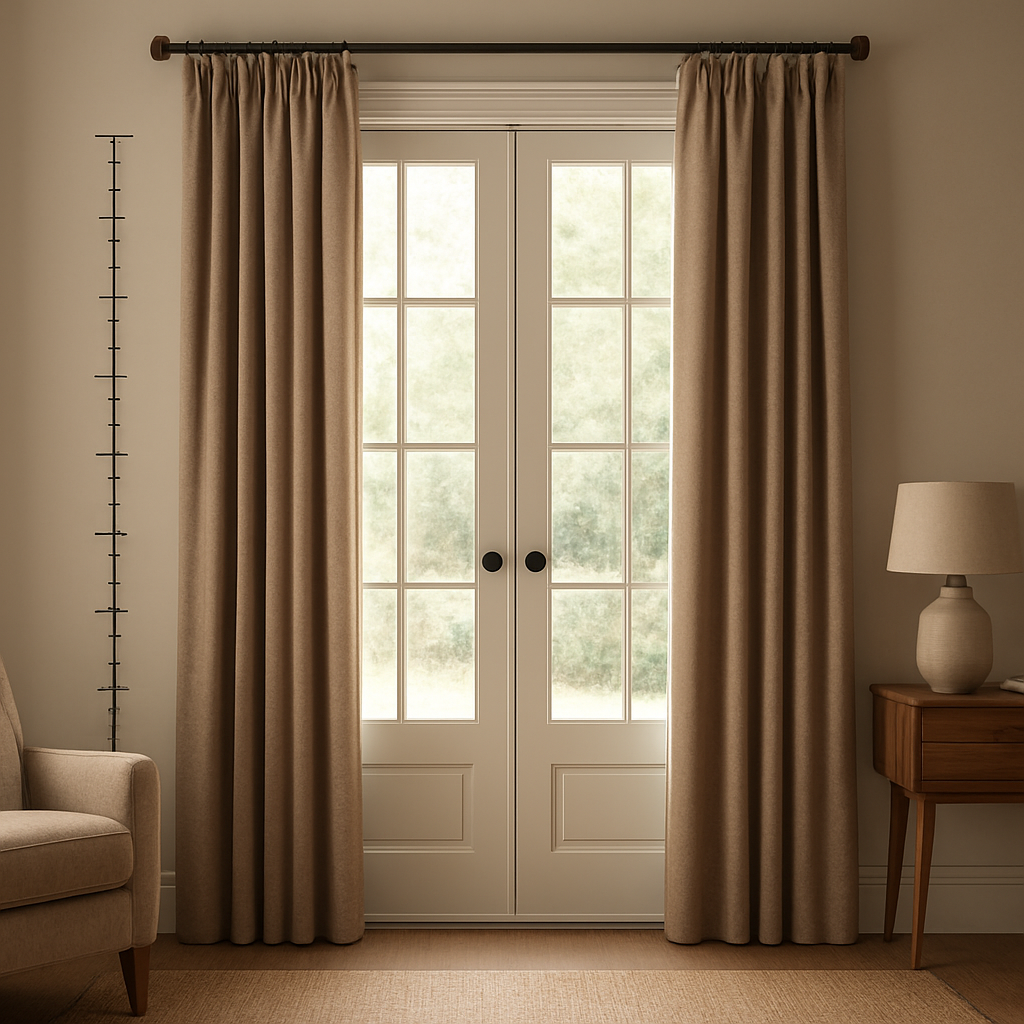
Now that you’ve measured and picked a mounting style, the next big decision is what actually goes between your French doors and the room. The material you choose isn’t just a style choice – it dictates how the space feels, how much energy you save, and how easy it is to keep everything looking fresh.
Think about the last time you pulled back a heavy drape and felt the room get a little stuffier. Or the moment you lifted a sheer panel and watched the morning light spill in like coffee on a cold morning. Those sensations are what we’re trying to capture, and the right fabric can turn a good‑looking door into a room‑wide experience.
1. Light‑Filtering Voile & Sheer
Voile and sheer fabrics are perfect when you want privacy without shutting out the view. They’re usually made from cotton or polyester blends that let diffused light in while masking silhouettes. Because they’re lightweight, they’re a breeze to operate on a track or a simple rod. A real‑world example: a client in a coastal cottage chose a buttery‑soft linen‑voile for their garden‑facing French doors. The fabric let the sea breeze glide through, yet offered enough privacy for early mornings.
Tip: Pair a sheer with a blackout liner for night‑time control – you get the best of both worlds.
2. Mid‑Weight Linen or Cotton
When you crave a bit more presence, linen or cotton in a 200‑300 gsm weight adds subtle texture without feeling oppressive. These fabrics drape nicely and can be lined with a thin thermal layer to boost insulation. In a suburban home, we fitted a double‑stitched cotton curtain with a light‑blocking backing on a set of French doors that lead to a home office. The result was a room that stayed cooler in summer and still felt airy enough for video calls.
Maintenance note: Spot‑clean with a gentle detergent; most linen‑cotton blends tolerate a mild steam cycle.
3. Heavyweight Silk or Velvet
If drama is your goal, silk and velvet deliver depth and richness. Silk has a natural sheen that catches light, while velvet offers a plush, sound‑dampening quality. However, both can trap heat, so they’re best suited to rooms that stay cool or where you can add a thermal liner. A boutique hotel in London used deep navy velvet on a pair of French doors leading to a lounge; the fabric turned the space into an intimate retreat and reduced echo.
Pro tip: Use a hidden roller backing so you can pull the fabric aside when you need full daylight.
4. Cellular (Honey‑Comb) Shades
Cellular shades are the unsung heroes of insulation. Their honey‑comb pockets trap air, giving R‑values up to R‑4 in double‑cell constructions. They’re ideal for energy‑savvy homeowners who want a sleek, minimal look. In a city apartment, we installed motorised cellular shades on French doors overlooking a busy street. The shades cut the summer heat gain by roughly 15 % and kept the winter chill at bay.
Because they stack to the side, they never interfere with the door swing – a must‑have for high‑traffic entries.
5. Panel Track Systems
Panel tracks work like oversized curtains that glide on a rail, perfect for extra‑wide French doors or corner installations. Choose a fabric that matches your décor – think woven linen for a relaxed vibe or bold printed silk for a statement. One client with a garden‑to‑living‑room set opted for a light‑filtering linen panel that stacks neatly, preserving the view when fully opened.
Installation tip: Measure the exact width of the opening plus the stacking space; add at least 2‑3 inches on each side to avoid the panels hitting the door handles.
Quick Decision Table
| Material | Light Control | Insulation | Maintenance |
|---|---|---|---|
| Voile/Sheer | Soft diffused | Low (no core) | Spot‑clean, gentle wash |
| Linen/Cotton (mid‑weight) | Filtered, moderate | Medium (with liner) | Machine‑wash gentle, steam |
| Silk/V velvet | Rich, low‑filter | High (adds warmth) | Dry‑clean recommended |
| Cellular Shades | Adjustable, blackout optional | High (R‑4 double‑cell) | Wipe with damp cloth |
So, how do you pick? Follow these three actionable steps:
- Identify your primary goal – privacy, insulation, or drama. Write it down next to the door on your floor plan.
- Grab a swatch of each material you’re leaning toward. Hold it at different times of day to see how the light plays.
- Check the R‑value or thermal rating if energy savings matter. For most homes, a double‑cell shade or a lined linen curtain will give a noticeable difference.
One more thing: if you want a professional hand to install custom shutters or heavy drapery, consider a specialist. Monroe Plantation Shutter Pros offers expert installation for high‑end treatments, ensuring a flawless finish that matches your bespoke vision.
And if you’re curious about how plantation shutters can complement these fabrics, take a look at our guide on Designing Elegant Spaces with Plantation Shutters for French Doors. It walks you through pairing solid wood shutters with lighter fabrics for a balanced, layered look.
Step 4: Layering with Curtains, Sheers, and Decorative Accents
Let’s be honest: a single curtain can feel a bit flat when you’ve got those wide‑open French doors inviting the outside in. That’s why we love layering – it’s like adding a soundtrack to a great movie, each piece playing its part while the whole thing feels richer.
Why layer in the first place?
Layering gives you three super‑powers in one go: light control, privacy, and visual interest. You can pull back the sheer for a sunrise glow, then drop a heavier drape for evening privacy without swapping out the whole treatment. It also lets you showcase decorative details – think tie‑backs, tassels, or a pop of colour that ties the room together.
And you don’t need a PhD in interior design to pull it off. A few thoughtful choices go a long way.
Pick your base layer
Start with the heaviest piece you want to use most often – usually a linen or cotton panel that reaches the floor. This becomes the anchor for the whole look. Choose a fabric that matches the room’s vibe: a soft neutral for a calming bedroom, or a bold printed linen for a dining area that wants drama.
If you’re after a touch of luxury, a mid‑weight linen with a subtle texture adds depth without feeling oppressive. Remember, the base layer should be wide enough to cover the doors completely when closed – a good rule of thumb is 1.5 to 2 times the door width for that full, gathered look.
Add a sheer whisper
Next, slip in a sheer or voile panel behind the base. Sheers filter daylight beautifully, creating that ethereal glow we all love in the morning. They also give you privacy without turning the space into a box.
Better Homes & Gardens points out that pairing a sheer floral fabric with a heavier outer drape creates both function and charm, especially in dining spaces according to their design guide. The sheer can be a solid white, a pale dot, or even a subtle pattern that echoes other textiles in the room.
Dress it up with decorative accents
Now for the fun part: accents. Tie‑backs in brass or woven rope give you a moment to pull the curtains aside and frame the view. A simple valance in a coordinating hue can hide the rod and add a finished look.
Don’t forget hardware that sings with the rest of your décor. A matte black track works wonders in modern lofts, while polished brass adds vintage sparkle to a cottage‑style interior. If you’re juggling two layers, a double‑rod system makes life easier – you can slide the sheer on one rod and the heavier panel on the other.
Kwik‑Hang suggests using their double‑rod brackets for a seamless layer without extra hardware headaches as explained in their hanging guide. It’s a quick win that keeps the look tidy and the doors swinging freely.
Quick installation checklist
- Measure the full width of both doors, then add at least 2‑3 inches on each side for clearance.
- Install a sturdy outer rod that spans the entire opening – this will carry your base panels.
- Mount a second, slightly narrower rod or track behind the first for sheers.
- Attach tie‑backs, tassels, or a valance that matches your design story.
- Test the doors’ swing; make sure the fabric never catches on hardware.
When you step back, you should see a layered look that feels intentional yet relaxed – the kind of setting that makes you want to linger by the doors with a cup of coffee.
So, what’s your next move? Pick a fabric you love, add a sheer for that light‑kissed glow, and finish with a decorative touch that feels uniquely yours. Layering isn’t just a technique; it’s a way to give your window treatments for French doors personality, flexibility, and that bespoke feel only Harvey Bruce can deliver.
Step 5: Installation Tips and Maintenance Best Practices
Pre‑Installation Prep
Before you even grab a drill, take a moment to picture yourself pulling the curtains back on a lazy Sunday morning. That mental snapshot helps you spot the tiny obstacles – a door handle, a chunky trim, or a low ceiling – that can turn a smooth install into a headache.
Start by measuring twice, but this time add a safety margin for the hardware. A good rule of thumb is an extra 2–3 inches on each side of the opening. That extra clearance prevents the rods or tracks from rubbing against the door handles when you swing the doors open.
Next, lay out all the pieces on the floor: brackets, rods, fabric panels, and any optional liners. Seeing everything together lets you check that the length of your panels matches the width of the opening plus the extra buffer you just calculated.
So, what should you double‑check before you drill?
- Are the mounting brackets level? A quick bubble‑level test saves you from a crooked look later.
- Do the brackets clear the beveled trim? If not, consider spacer blocks to push the hardware out just enough.
- Is the wall surface flat enough for the brackets? Uneven plaster may need a small shim.
Mounting Tips for a Smooth Swing
When you’re ready to mount, start with the outer rod – the one that will carry your base panels. Use a stud finder to locate a solid wood stud or a sturdy backing board. Screwing into a stud gives you the strength to hold heavier fabrics like linen or velvet without sagging.
If you’re working with a lighter sheer or a cellular shade, an anchor into the drywall is usually sufficient, but make sure the anchor is rated for the weight of the treatment.
Now, the little details that make a big difference: install hold‑down brackets or spacer blocks to keep the shade from swinging when the doors are opened. Blinds.com notes that hold‑down brackets are often available and can stop the shade from swinging, which is especially important in high‑traffic areas or homes with kids and pets.
After the outer rod is secure, mount the inner rod or track for sheers or panel tracks. Keep the inner hardware a few inches behind the outer rod so the fabric slides easily without catching on the door frame.
Give everything a test run. Open and close the doors a few times, pull the curtains, and watch the fabric glide. If you hear any snagging, backtrack a millimeter or two – that tiny adjustment saves you a lot of frustration later.
Maintenance Routine to Keep Them Fresh
Installation is only half the story; keeping your window treatments looking pristine is where the real value lives. The good news is most treatments for French doors are low‑maintenance if you set a simple routine.
For fabric curtains, spot‑clean spills with a gentle detergent and a soft cloth. If the fabric is machine‑washable, use a cold, gentle cycle and tumble dry on low – but always check the care label first. A quick vacuum with a brush attachment removes dust from the folds without disturbing the drape.
Wooden or woven‑wood shades benefit from a dust‑off with a microfiber cloth weekly. In high‑traffic spots, add edge banding or a protective strip to guard against fraying – a tip we often recommend for French doors that see a lot of use.
Cellular shades are a breeze: a damp cloth wipes away fingerprints, and because they sit close to the wall, they stay out of the way of the door swing. If you notice the cords or lift mechanisms getting sticky, a few drops of silicone spray on the moving parts (away from the fabric) will keep them gliding smoothly.
Finally, schedule a quick visual inspection each season. Look for loose brackets, warped rods, or fabric wear. Tightening a screw or swapping out a worn‑out tie‑back is a 5‑minute task that prevents larger repairs down the line.
Does this feel manageable? Absolutely. With a little prep, a careful mount, and a light‑touch maintenance plan, your window treatments for French doors will stay gorgeous and functional for years to come.
Step 6: Budgeting and Cost Considerations
Okay, you’ve nailed the style, the fit, the fabric – now it’s time to talk money. Budgeting for window treatments for French doors can feel like juggling a latte price tag with a sofa cost, but a clear plan keeps the project from blowing up your wallet.
Set a realistic budget range
Start by deciding how much you’re comfortable spending on the whole treatment package – hardware, fabric, labor, and any optional extras like motorisation. A good rule of thumb is to allocate 15‑20% of your overall room makeover budget to the doors. If you’re renovating a living‑room for $10,000, expect $1,500‑$2,000 for the treatments.
Does that number feel daunting? It’s okay to adjust. You can dial back on fabric cost and splurge on premium hardware, or vice‑versa, as long as the total stays within your comfort zone.
Break down the cost components
Here’s a quick checklist you can print out:
- Fabric or shade material – linen panels, sheer voiles, cellular shades, etc.
- Hardware – rods, brackets, tracks, motorised kits.
- Installation – DIY (tools, brackets) vs professional fitting.
- Finishing touches – tie‑backs, valances, custom liners.
Each line item has a price range. For example, a custom‑made linen panel from Harvey Bruce typically runs $200‑$400 per panel, while a basic aluminium track might be $80‑$120.
Factor in long‑term value
Cheaper isn’t always smarter. A higher‑quality, insulated cellular shade may cost a bit more upfront, but it can shave up to 15% off your heating and cooling bills. Over five years that saving often outweighs the initial premium.
Think of it like buying a well‑crafted sofa: you pay more now, but you won’t be replacing it every couple of years.
DIY vs professional installation
If you’ve got a decent drill and a level, you can save $150‑$300 by mounting the brackets yourself. The trade‑off is time and the risk of a crooked rod. If you’re nervous about a perfect finish – especially with heavy drapes – a professional installer ensures everything sits straight and the doors swing freely.
Pro tip: ask your installer for a “fixed‑price quote” that includes any hidden extras like extra screws or wall anchors. That way you avoid surprise add‑ons.
Plan for contingencies
Unexpected costs pop up – maybe the wall isn’t as flat as you thought, or you need a longer rod to cover a wider opening. Set aside a 10% buffer in your budget for these little hiccups. It’s easier to have it and not use it than to scramble at the last minute.
Imagine you budget $1,800 and a wall‑prep issue adds $120. Because of your buffer, you still stay on track.
Prioritise sustainability
Harvey Bruce is all about sustainable solutions, so consider eco‑friendly fabrics that are durable and recyclable. They might carry a modest premium, but you’re investing in pieces that last longer and reduce future waste – a win for your pocket and the planet.
And if you’re eyeing motorised shades, look for systems that use low‑energy batteries. The upfront cost is higher, but the operating expense stays low.
So, what’s the next step? Grab a notebook, sketch out each cost bucket, and plug in real numbers from your preferred supplier. Seeing the total in black and white makes the decision feel less abstract.
Remember, budgeting isn’t about cutting corners; it’s about aligning your dream look with a sensible financial plan. When you walk through those French doors and see the perfect blend of style, function, and value, you’ll know the numbers were worth every penny.
Conclusion
We've walked through everything from picking a style to measuring, budgeting, and installing, and now it's time to pull it all together.
Think about the moment you stand in front of your French doors, pull the curtains aside, and watch the morning light spill across the room. That feeling of satisfaction is the real reward for all the planning.
If you pause for a second, you’ll notice three things that made the project click: a clear vision of the ambience you want, precise measurements that left no guessing, and a budget that balanced luxury with practicality.
So, what’s the next step? Grab that notebook, jot down the final numbers, and give Harvey Bruce a call to turn your sketches into bespoke window treatments for French doors.
Remember, the details matter – from choosing a breathable voile for a breezy feel to adding a hidden motor for effortless control. Each choice adds comfort, style, and even a touch of sustainability.
And don’t forget to schedule a quick test of the hardware before the final install; a tiny adjustment now saves a big headache later.
When everything is in place, you’ll walk through those doors and feel proud of a space that’s both beautiful and functional.
Ready to make your French doors the centerpiece of your home? Let’s bring your vision to life today.
FAQ
What are the best window treatments for French doors in a sunny living room?
If the sun pours in all day, you’ll want something that softens the glare without sacrificing the view. Light‑filtering voile or a sheer panel slides easily on a track and lets the daylight dance, while a hidden roller blind or cellular shade can be dropped for extra privacy on hot afternoons. We usually suggest pairing a sheer base with a motorised shade on top – you get the breezy feel you love and the blackout power when you need a movie night.
How do I measure French doors for an outside‑mount curtain system?
Measure the full width of both doors at the top, middle and bottom, then record the largest number. Add at least 2‑2.5 inches to each side so the brackets clear the handles and the fabric doesn’t snag. For height, measure from the floor (or the point where you want the curtain to end) up to the top of the frame, then add a couple of inches for a clean fall. Write those numbers down, double‑check, and you’re ready to order a perfectly‑fitting panel.
Can I automate my window treatments for French doors, and is it worth the cost?
Absolutely. Motorised shades or rollers connect to a wall switch, remote, or even a smart home hub, letting you raise or lower the treatment with a tap. The upfront cost is higher than a manual rod, but you gain convenience, especially for hard‑to‑reach high tracks, and you can program schedules that help with energy savings. In a sunny kitchen, a timed shade that closes at peak heat can shave a few degrees off the room temperature, reducing AC use.
What fabric should I choose for a formal dining area with French doors?
For a dining room you probably want a little drama without compromising acoustics. Mid‑weight linen or a cotton‑blend in a deep hue adds texture and helps absorb sound, making conversation easier. If you love the luxe look, a silk‑blend panel provides a subtle sheen that catches candlelight. Pair it with a hidden bottom rail so the fabric pools gracefully on the floor without getting in the way of the door swing.
How often should I clean or maintain my French‑door treatments?
Regular care keeps everything looking fresh and extends the life of the hardware. Spot‑clean fabric spills with a gentle detergent and a soft cloth; if the material is machine‑washable, use a cold, gentle cycle and tumble dry low. For cellular shades, a damp microfiber wipes away dust in seconds. Check brackets and tracks quarterly – tighten any loose screws and make sure the lift cords glide smoothly. A quick seasonal inspection can prevent costly repairs later.
Is it okay to use the same curtain rod for both French doors and adjacent windows?
It can work, but only if the rod is long enough to span the full width of the doors plus the side windows and still leave clearance for the handles. Most designers add a 2‑3 inch buffer on each end to avoid snagging. If the adjacent window is a different height, consider a double‑rod system: one rod for the taller doors and a shorter one for the lower window, keeping everything balanced without a DIY nightmare.
What budget should I set for high‑quality, bespoke window treatments for French doors?
Start by allocating about 15‑20% of your overall room makeover budget to the doors. A custom linen panel from Harvey Bruce typically runs $200‑$400 per panel, while a motorised cellular shade can be $500‑$800 for the pair. Add $100‑$150 for premium hardware and any professional installation. If you keep a 10% contingency fund, you’ll cover unexpected wall prep or extra brackets without breaking the bank.
← Older Post Newer Post →