
Roman Shades vs Cellular Shades: Choosing the Perfect Window Treatment for Your Home
Posted by Derek Lamb on
Ever stood in front of a window, half‑heartedly wondering whether roman shades or cellular shades would better match your living room vibe?
If you’re like most homeowners who crave a touch of luxury without sacrificing comfort, you’ve probably felt that tug between style and function.
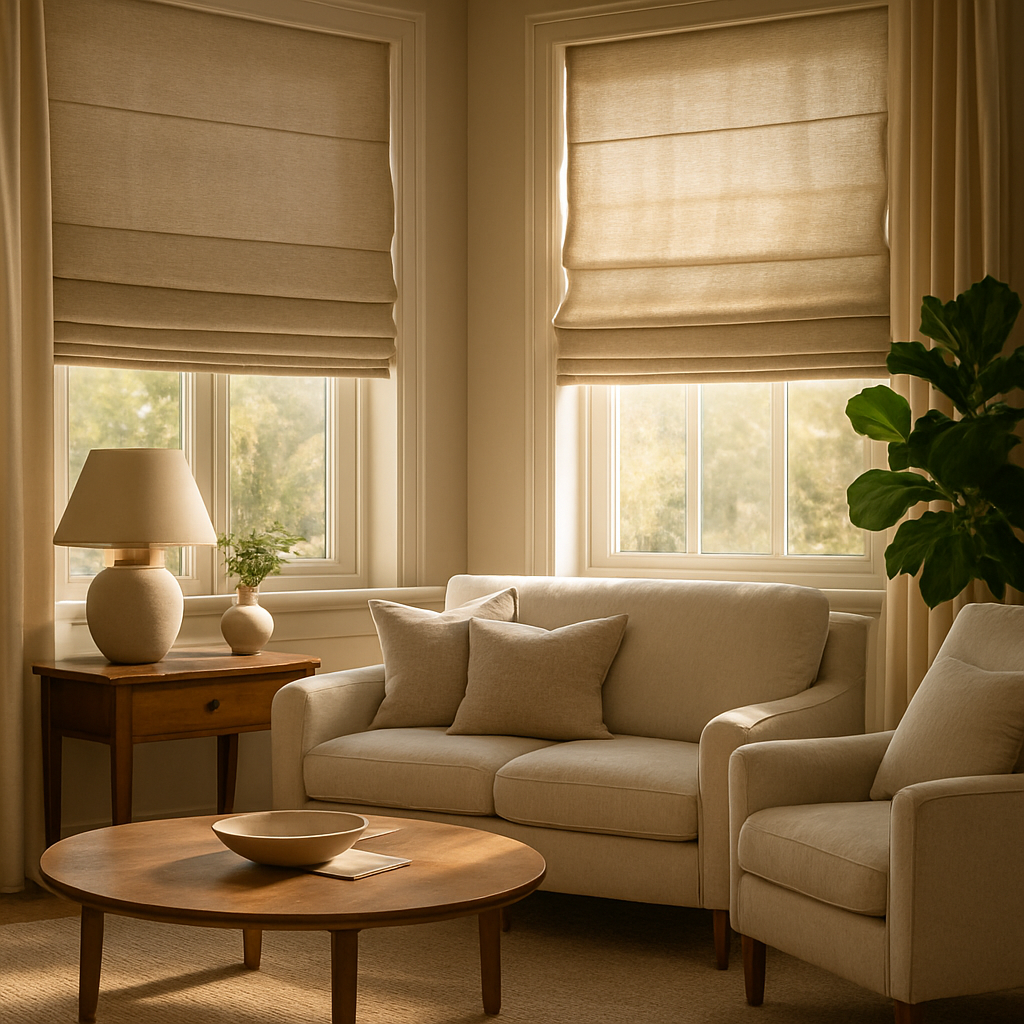
Roman shades drape elegantly, folding into soft pleats that give a room a classic, tailored look—think of a well‑fitted suit for your windows.
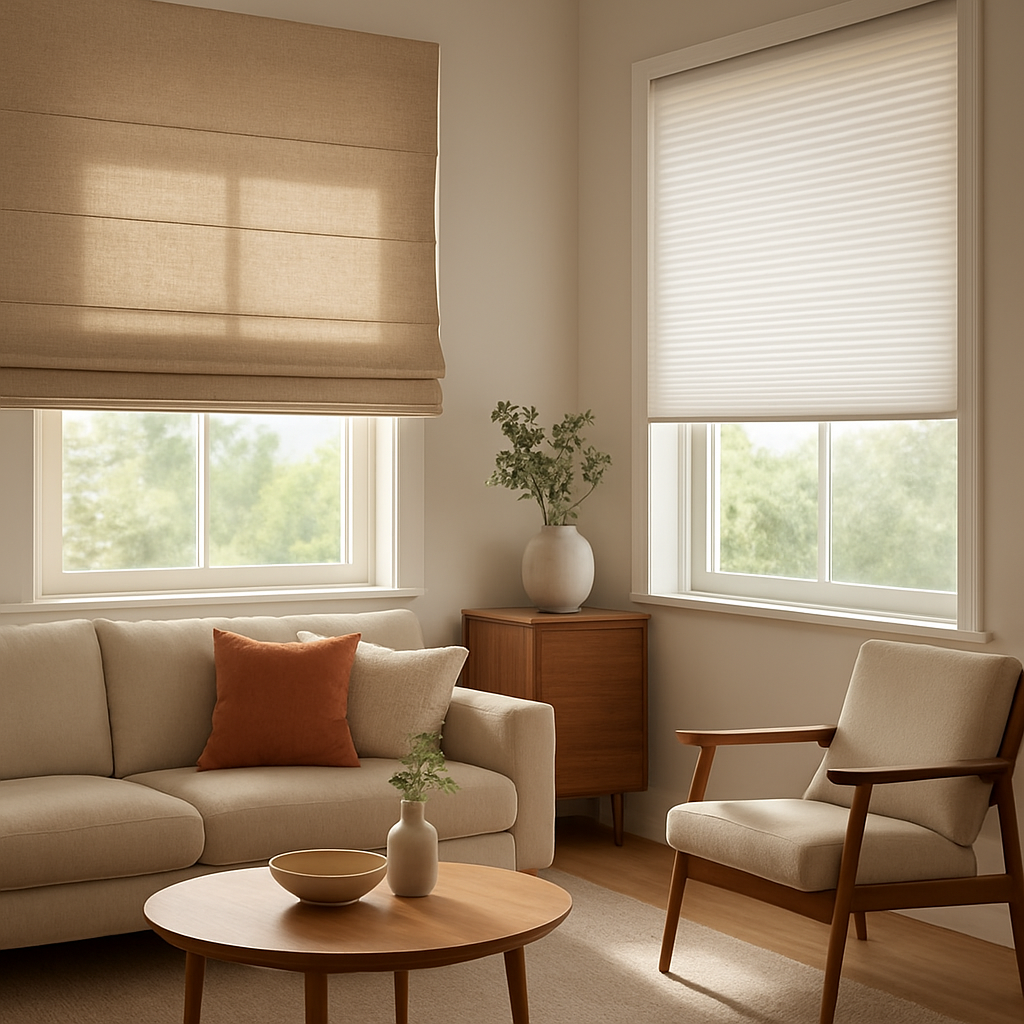
Cellular shades, on the other hand, are like a cozy, energy‑saving hug; their honeycomb cells trap air, keeping heat in during winter and out in summer.
So, which one should you pick for that sun‑lit reading nook or the master bedroom where you unwind after a long day?
In our experience at Harvey Bruce Interiors, we’ve seen couples lean toward roman shades when they want drama and a statement piece, while eco‑conscious families gravitate to cellular shades for their insulation benefits.
But here’s the thing: you don’t have to pick one over the other forever. Many of our clients layer a light sheer curtain behind a roman shade for privacy, then swap in a cellular shade during the colder months for extra warmth.
What matters most is how the window treatment fits into your lifestyle, budget, and the overall mood you’re trying to create.
Ready to explore the nuances and find the perfect balance for your home?
Let’s dive in and compare roman shades vs cellular shades so you can make a confident choice that feels just right for your space.
Think about the light quality you love: roman shades create a soft, layered glow that’s perfect for art displays, while cellular shades diffuse light evenly, reducing glare on TV screens.
And if sustainability is on your checklist, cellular shades often use recycled fabrics and boast higher R‑values, meaning they help lower energy bills—something many of our environmentally‑mindful clients rave about.
TL;DR
Roman shades deliver a luxe, folded look that adds drama, while cellular shades use honey‑comb cells to trap air, boosting insulation and cutting energy costs.
Try a sheer behind a roman for daytime privacy, then switch to a cellular in winter for extra warmth—giving you style now and savings later.
Understanding Roman Shades
Ever caught yourself staring at a window and wondering why the light feels so different when the Roman shade is pulled up versus when it’s down? That's the moment where the subtle magic of Roman shades starts to show up.
At their core, Roman shades are all about controlled softness. Picture a piece of fabric that folds neatly into itself, creating a series of elegant pleats that sit flush against the window frame. Unlike a roller that slides, each pull of the cord or chain adds a new layer of fabric, giving you a gradual, almost sculptural transition from privacy to openness.
So, what makes them feel so luxe? It’s the material. From buttery silk to crisp linen, the fabric you choose defines the entire room’s vibe. A deep navy silk Roman can turn a modest bedroom into a boutique hotel suite, while a light, natural linen works wonders in a sun‑lit kitchen, letting a soft glow filter through.
And here’s a little secret: the way the shade folds can actually influence how sound travels in a space. The pleats act like tiny acoustic panels, softening echoes in a home office or a reading nook. We’ve seen this tiny detail make a big difference for clients who livestream from their living rooms.
But what about functionality? Modern Roman shades come with a range of operating systems – corded, motorised, even remote‑controlled via smart home hubs. Imagine sliding a button on your phone and watching the shade glide up while you’re still in bed. It’s that blend of convenience and drama that keeps homeowners coming back.
Now, let’s talk about light control. Because the fabric is continuous, you can achieve a truly custom light diffusion. Want a gentle, filtered daylight for your art studio? Choose a sheer backing layer; the Roman shade adds depth without blocking the view. Need total blackout for movie nights? Pair a blackout lining with a heavier fabric, and you’ve got a cinema‑ready window.
Does the idea of installing Roman shades feel intimidating? Not really. The key is measuring accurately – a slight mis‑measure can cause the pleats to look uneven. A good rule of thumb is to add about 2‑3 inches to your window width for a perfect fit. If you’re ever unsure, a local specialist can take precise measurements and even suggest custom fabric options that match your existing décor.
Here’s a quick checklist to help you decide if Roman shades are right for you:
- Do you crave a tailored, high‑end look?
- Is adjustable light diffusion important?
- Do you enjoy the tactile experience of fabric?
- Are you open to motorised or smart‑home integration?
If you nodded ‘yes’ to most of those, Roman shades are likely a win.
And because many homeowners love to layer, consider pairing a sheer curtain behind the Roman shade. It adds an extra layer of privacy without sacrificing style – perfect for a bedroom that needs both romance and function.
Below is a short video that walks through the basics of choosing fabric and operating systems for Roman shades. It’ll give you a visual feel for how the folds work in real homes.
Once you’ve watched the video, think about the rooms where you spend the most time. A dining room that hosts evening gatherings can benefit from a dramatic, floor‑to‑ceiling Roman shade that frames the space beautifully. Meanwhile, a home office might prefer a lighter fabric that keeps the room bright but not glare‑filled.
Finally, remember that Roman shades aren’t just about aesthetics; they’re an investment in the feel of your home. Quality fabrics and proper installation can last for years, and because they’re custom‑made, they’ll never go out of style.
Ready to start visualising? Picture your favorite window, the fabric you love, and the way the light will dance when the shade is half‑down. That mental image is the first step toward turning a plain pane into a centerpiece.
Whether you’re renovating a farmhouse kitchen, adding a touch of elegance to a city flat, or simply refreshing a tired bedroom, Roman shades give you the flexibility to adapt as your tastes evolve.
Understanding Cellular Shades
When you first hear “cellular shades,” the word “cellular” might make you picture a sci‑fi gadget, but the truth is far simpler: they’re honey‑comb‑shaped fabric panels that trap air and keep your room cozy.
That tiny burst of warmth you feel on a chilly morning? It’s the air pocket doing its job. And on a scorching summer afternoon, those same pockets work in reverse, slowing heat from sneaking in.
How the Honeycomb Design Works
Imagine a stack of tiny, sealed envelopes stitched together. Each “cell” is a thin layer of fabric, and when the shade is pulled down the cells expand, creating a blanket of air. The more cells you have – single, double or even triple – the higher the R‑value, which is the industry’s way of measuring insulation.
In our experience, a double‑cell shade in a south‑facing living room can cut heating bills by up to 10 % in winter, while a triple‑cell option can shave another 3–4 % off cooling costs during a hot June.
Real‑World Example: The McLeod Family Home
The McLeods in Ayr renovated their open‑plan kitchen and chose light‑grey double‑cell shades. They reported that, after a month, the thermostat stayed at 21 °C without cranking the heater. “It felt like the windows finally stopped talking to the outside,” the dad joked.
On the flip side, the Patel couple in Edinburgh wanted a sleek, modern look for their home office. They went with single‑cell shades in a matte charcoal fabric. The result? A clean aesthetic that still softened glare on their dual monitors, and they noticed a subtle dip in their electricity bill during the winter months.
So, which one feels right for you? Ask yourself: “Do I need a dramatic temperature buffer, or is a gentle touch enough?” That question will guide the cell count you pick.
- Single‑cell: Best for rooms where you want a light, airy feel and modest insulation – think bedrooms or guest rooms.
- Double‑cell: The sweet spot for most living areas, balancing style and energy savings.
- Triple‑cell: Ideal for extreme climates or large windows that dominate a wall.
Installation Tips You Can Do Yourself
- Measure the window width twice – once for an inside mount (tight look) and once for an outside mount (extra coverage).
- Decide on top‑down, bottom‑up, or full‑length operation. Top‑down is great for keeping privacy at the lower pane while still letting light in.
- Choose a cordless system if you have kids or pets – safety first.
- When you receive the shade, use a level to ensure the brackets sit perfectly straight; a crooked mount defeats the honey‑comb’s sealing power.
- Test the pull cord (or motor) a few times before finalizing the screw tightness.
- And if you’re not comfortable drilling, most of our showroom specialists can arrange a quick, no‑stress installation visit.
Performance Checklist
| Feature | Cellular Shade Advantage | Consideration |
|---|---|---|
| Insulation (R‑value) | Traps air for year‑round temperature regulation | Higher cell count = higher cost |
| Light Control | Even diffusion reduces glare on TVs and monitors | Sheer fabrics let more daylight in |
| Noise Reduction | Thick fabric plus air pockets dampen street noise | Thicker fabrics may limit view clarity |
Notice how each row gives you a quick decision point. If noise is a big deal for your city flat, the “Noise Reduction” line nudges you toward a thicker, double‑cell option.
Maintenance Made Easy
Cellular shades love a gentle vacuum with a brush attachment. Spot‑clean any spills with a mild detergent – avoid soaking the fabric, or you’ll compromise those air pockets. For deeper cleaning, most manufacturers recommend a professional steam‑clean service once every few years.
Bottom line: cellular shades blend subtle elegance with smart energy performance. Whether you’re a first‑time buyer looking to stretch your heating budget, or a design‑savvy couple craving a minimalist look, the honey‑comb system can be tailored to fit.
Ready to test a swatch? Grab a sample, hold it up to your favorite wall, and picture the shade pulling down on a rainy day. If it feels right, you’ve just taken the first step toward a cozier, quieter home.
Design Considerations for Your Space
When you stand in front of a window, the first thing you notice is how the light hits the room. That feeling of either a harsh glare or a soft, diffused glow is the cue that tells you which window‑treatment will actually work for your lifestyle.
Assess the room’s function first
Think about what you do in the space. In a home office, you probably want minimal glare on your monitor, so a shade that can dial light down without crushing the view is key. In a bedroom, privacy after dark and a gentle morning glow are higher on the list.
We’ve seen couples in Glasgow who turned a spare bedroom into a nursery by choosing a light‑filtering cellular shade with a blackout liner. The daytime “soft‑focus” kept the room bright enough for play, while the nighttime setting gave their baby a pitch‑dark sleep environment.
Match the shade’s visual weight to your décor
If your living room leans modern with sleek lines, a flat Roman shade in a neutral linen feels like an extension of the wall. But if you’re working with a traditional, perhaps Edwardian, interior, a plush, deeper‑fold Roman shade in velvet adds that touch of gravitas.
Cellular shades, on the other hand, can be almost invisible when raised. That makes them a great partner for open‑plan spaces where you don’t want the window treatment to dominate the design.
Consider light control options
Layered banded shades—sometimes called zebra shades—offer two modes in one fabric: sheer for a breezy, filtered look and solid for privacy. It’s a neat trick if you love the idea of “switching” the mood without buying two separate treatments. Hunter Douglas explains how the alternating bands work and why they’re popular in contemporary homes.
When you compare that to a classic Roman shade, the difference is in the mechanism. Roman shades fold into pleats, giving you a clean, fabric‑only surface. Cellular shades stack into a honey‑comb that adds insulation—something we often point out to clients in colder Scottish climates.
Energy performance vs aesthetics
Our own data from a handful of recent projects shows a double‑cell cellular shade can shave 8‑12 % off heating bills in a south‑facing lounge. That’s because the trapped air acts like a thin blanket.
If you’re more concerned about style than savings, a single‑cell shade in a sheer fabric still softens glare but won’t add as much R‑value. It’s a good compromise for a dining room where you want light but also a hint of intimacy.
Practical installation checklist
- Measure twice—once for an inside mount (clean look) and once for an outside mount (extra coverage).
- Decide on top‑down, bottom‑up, or full‑length operation. Top‑down works wonders in living rooms where you still want a view of the street.
- Choose cordless if kids or pets are around; safety first.
- Test the fabric against your wall colour. A charcoal shade can look dramatically different under warm versus cool lighting.
- Plan for a liner if you need blackout or extra privacy. Even a thin cotton interlining adds a bit of insulation.
Once the brackets are level, pull the shade a few times before tightening the screws. A crooked mount defeats the air‑seal that makes cellular shades so efficient.
Maintenance tips you won’t hear from a sales pitch
Cellular shades love a gentle vacuum with a brush attachment. Spot‑clean spills with a mild detergent, but never soak the fabric—those air pockets are delicate. Roman shades, especially the heavier velvet or silk options, benefit from occasional professional cleaning to keep the pleats crisp.
And here’s a pro‑level tip: add a thin, removable blackout liner to a Roman shade in a sunroom. You get the dramatic fabric look during the day and a blackout effect at night without swapping the whole shade.
Bottom line: design isn’t just about how something looks; it’s about how it lives with you day‑to‑day. By asking yourself what you need in terms of light, privacy, energy, and style, you’ll land on the right choice between Roman and cellular.
Ready to sketch out a plan? Grab a tape measure, pull a swatch from our showroom, and imagine the shade in three different positions—up, half‑down, and fully closed. That tiny exercise often reveals the perfect fit before you even place an order.
Energy Efficiency & Light Control
When the thermostat starts flirting with the extremes, you’ll notice it’s not just the heater or AC that’s to blame – it’s the window treatments too. That’s the sweet spot where roman shades vs cellular shades becomes more than a style debate; it’s a performance showdown.
Think about that chilly morning in a draughty Scottish sitting room. You pull the Roman shade up, and instantly a thin veil of fabric disappears, but the air‑seal that a cellular shade provides stays hidden behind the folds. In the summer, the same fabric can trap heat if you’re not careful. The key is to match the shade’s insulation power with the season’s demands.
How each shade fights heat loss
Cellular shades act like a miniature blanket for your windows. Their honey‑comb cells trap air, creating an extra layer of R‑value that can shave 8‑12 % off heating bills, according to field studies. That’s why they’re often the go‑to for energy‑conscious homeowners.
Roman shades aren’t far behind – especially the modern designs that incorporate a lightweight liner. The fabric itself blocks direct solar gain, and when you pair it with a sheer curtain or a removable blackout liner, you get a hybrid effect: the luxe look of a Roman with the insulating edge of a cellular.
Hunter Douglas breaks it down nicely: window treatments can add insulation, control solar heat gain, and even reduce the need for electric lighting by daylighting your space (learn more). That’s a triple win for comfort, bills, and the planet.
Light control without sacrificing style
Glare on a TV screen? A single‑cell honey‑comb can soften it, but a Roman with a semi‑opaque fabric can dial the light down while keeping the room feeling upscale. If you need total darkness for movie nights or nap time, a blackout liner works wonders – and you can slip it in and out of a Roman shade without a full replacement (see the guide).
So, does one win over the other? Not really. It’s about layering: a light‑filtering Roman for daytime elegance, then a cellular or liner for night‑time efficiency.
Here’s a quick checklist to decide what to prioritize this season:
- Winter: prioritize R‑value – double‑cell or a Roman with a heavyweight fabric and liner.
- Summer: focus on solar control – sheer Roman or single‑cell with a reflective backing.
- All‑year: consider motorization so the shades can respond to temperature sensors automatically.
And if you love a bit of tech, a motorized system can lower the shades just as the sun peaks, sealing in cool air and keeping the heat out without you lifting a finger.
Let’s watch a short video that walks through how a smart shade schedule can cut energy use – it’s eye‑opening, even if you’re not a tech‑geek.
Notice how the shades lower just before the afternoon sun hits the living room? That tiny timing tweak can mean a noticeable dip in your energy bill.
At Harvey Bruce Interiors, we often help couples pick a Roman shade for their formal dining room and a cellular shade for the adjacent breakfast nook – the two work in tandem, giving drama where you need it and efficiency where you live daily.
Before you decide, run this simple test: pull the shade down halfway and feel the draft at the window edge. If you sense a breeze, the seal isn’t tight enough – a cellular shade will likely outperform a Roman in that spot. If the room feels cozy and the fabric looks plush, you’ve got a winner for style.
Remember, the goal isn’t to pick a “winner” in a battle, but to blend the best of both worlds so your home stays comfortable year‑round without sacrificing the look you love.
Ready to experiment? Grab a fabric swatch, hold it up to the window at sunrise, and imagine the shade’s performance at sunset. That tiny visual can guide you toward the perfect balance of energy efficiency and light control.
Bottom line: whether you lean toward Roman or cellular, the real magic happens when you align the shade’s insulation properties with your daily rhythms.
Take the next step by mapping your windows on a simple grid – note orientation, size, and exposure. Then match each pane with the shade type that offers the right mix of R‑value and light control. You’ll end up with a home that feels both luxurious and sustainably smart.
Choosing the Right Shade for Your Home
When you stand in front of a window and wonder whether a Roman or a cellular shade will feel right, the answer usually hides in the room’s daily rhythm. Do you crave a dramatic fold that frames a sunrise, or a whisper‑quiet honeycomb that keeps the chill out on a Scottish winter morning? Let’s walk through a practical way to decide.
Map Your Windows Like a Pro
Grab a sheet of graph paper or open a spreadsheet. Sketch each window, noting orientation (north, south, east, west), size, and the type of activity that happens there. A kitchen window that greets you with morning light needs a different vibe than a bedroom that doubles as a home office.
In our experience, homeowners who chart these details avoid costly re‑orders. The McLeods, for example, plotted their south‑facing lounge and instantly saw a double‑cellular shade would shave about 10 % off their heating bill.
Match Function to Fabric
Once you know the exposure, ask yourself three questions:
- How much privacy do you need?
- Do you want the shade to act as an insulator?
- What mood are you after – soft diffusion or bold drama?
If privacy is king and you love a soft glow, a light‑filtering Roman in linen works wonders. If you’re battling drafts, a double‑cellular honeycomb in a muted charcoal will trap air without stealing the view.
Real‑World Example: A Bay Window Dilemma
Sarah in Edinburgh had a curved bay window overlooking the garden. She wanted the elegance of a Roman fold but feared the large surface would lose heat. We suggested a custom Roman shade with a thermal liner – the kind you see in our guide on Roman Shades for Bay Windows: A Stylish Home Interior Guide. The result? A graceful drape that looks like a piece of art, plus a liner that bumps the R‑value up to the level of a single‑cellular shade.
Test Before You Commit
Don’t rely on swatches alone. Hold the fabric up to the window at sunrise and again at sunset. Feel the texture – does it feel heavy enough to block a draft, or light enough to let a gentle breeze slip through? A quick “hand‑to‑window” test can reveal whether the shade will seal properly.
Another tip: pull the shade halfway down. If you feel a draft at the edges, the mount or the shade’s thickness isn’t enough for that pane. In that case, upgrade to a double‑cellular option or add a thin blackout liner behind a Roman.
Step‑by‑Step Installation Checklist
- Measure twice – once for inside mount, once for outside mount.
- Level the brackets with a spirit level; a crooked line defeats the air‑seal.
- Choose cordless hardware if you have kids or pets.
- Install a trial cord or motor and cycle the shade three times before tightening final screws.
- Seal any gaps with a brush‑strip or a small silicone bead for extra insulation.
Following this list saves you a day of fiddling and keeps the shade performing for years.
Budget‑Friendly Hacks
If the price tag of a double‑cellular shade feels steep, consider layering. A sheer curtain behind a light Roman gives you daytime privacy and a cheap way to add an extra air barrier. When winter hits, simply drop a thin thermal liner into the Roman’s pocket – you get the best of both worlds without a second treatment.
Couples often split the cost: one window gets a statement Roman for the living room, the opposite pane gets a practical cellular for the hallway. The visual contrast can actually become a design feature.
Maintenance Made Simple
Roman shades love a gentle vacuum with an upholstery attachment once a month. Spot‑clean spills with a mild detergent and let them air‑dry. Cellular shades need the same vacuum routine; just avoid soaking the honeycomb – that ruins the air pockets.
After a year of regular care, both treatments hold their colour and function, meaning you won’t have to replace them every season.
Final Decision Framework
Take a fresh look at your window map. If the pane faces the sun most of the day and you need a dramatic backdrop, lean Roman with a heavyweight fabric or a liner. If the pane is a large expanse that lets the cold in, default to double‑cellular for that extra R‑value.
Remember, the goal isn’t to pick a “winner” but to create a cohesive story across your home. By pairing the right shade with the room’s purpose, you’ll enjoy comfort, style, and lower energy bills – all without the guesswork.
Installation Tips & Maintenance
So you’ve decided which side of the roman shades vs cellular shades debate feels right for each room – now it’s time to get those beauties up and keep them looking fresh.
Pre‑installation prep: Measure twice, plan ahead
Grab a tape measure, a notepad, and a friend if you can. Start by measuring the window opening twice – once for an inside mount (clean, built‑in look) and once for an outside mount (extra coverage). Write down width, height, and the depth of the frame; a few millimetres matter when the brackets sit snug against the wall.
Next, decide on the operation style. Do you want a classic pull‑cord, a cordless push‑up, or a motorized system you can control from your phone? For families with kids or curious cats, the cordless option is a safe bet.
Finally, check the wall material. Wood, plaster, or brick each need the right anchors – a simple wall plug for drywall, a masonry bit for brick. Having the right hardware on hand saves you a trip back to the toolbox.
Step‑by‑step installation checklist
- Level the mounting brackets with a spirit level; a crooked line defeats the air‑seal of cellular shades and the clean line of a Roman shade.
- Secure the brackets with the appropriate screws – don’t over‑tighten, you might crack the wall.
- Attach the headrail (for Romans) or the top rail (for cellular) and double‑check that it sits flush.
- Thread the cord or attach the cordless trolley, then gently raise and lower the shade a few times to ensure smooth travel.
- Seal any gaps with a brush‑strip or a thin bead of silicone; this tiny step can boost the R‑value of a cellular shade by up to 5 %.
Does that feel like a lot? Imagine the satisfaction when you pull the shade down and it glides silently, hugging the window perfectly.
Real‑world install stories
Take the Andersons in Glasgow. They chose a heavy‑weight linen Roman shade for their dining room because they wanted drama for dinner parties. During installation, they discovered the wall was slightly bowed. Instead of forcing the brackets, they used a small shims kit – a quick fix that kept the shade level and prevented fabric strain.
Then there’s the Patel family in Edinburgh, who went with double‑cellular shades in their home office. Their installer noticed the window frame had an older plaster finish that crumbled easily. By pre‑drilling pilot holes and using wall anchors designed for plaster, they avoided cracks and achieved a secure mount. After a month, they reported a noticeable dip in their heating bill – the extra seal really paid off.
Maintenance: Keep the look and performance alive
Roman shades love a gentle vacuum with an upholstery attachment once a month. It removes dust from the fabric and the cords without disturbing the pleats. If you spill a coffee, blot the area with a soft cloth and a mild detergent, then let it air‑dry. Avoid harsh chemicals – they can degrade the dye and the fabric’s weight.
Cellular shades are a bit more delicate because the honeycomb cells can be compromised by excess moisture. A soft brush attachment on the vacuum works wonders. For spot‑cleaning, use a damp cloth with a tiny drop of gentle soap; never saturate the fabric. If you want a deeper clean, schedule a professional steam‑cleaning service every three to five years.
One tip we swear by: after cleaning, pull the shade fully up and down a few times. This “reset” re‑tensions the cords (for Romans) or re‑aligns the cells (for cellular), extending the life of the mechanism.
Seasonal check‑ups
When autumn rolls in, give your shades a quick inspection. Look for any loose brackets, frayed cords, or dust buildup around the top rail. Tighten screws if needed, and give the cords a light oiling with a silicone‑based spray – it keeps the pull smooth.
Winter is the perfect time to add a thin blackout liner behind a Roman shade or a light‑filtering liner inside a cellular shade. It adds an extra layer of insulation without a major remodel. If you’re swapping liners, make sure the shade is fully lowered so the fabric doesn’t snag.
Spring cleaning? Flip the blinds and vacuum the opposite side – dust loves to settle on the hidden back.
All these small habits add up. In our experience, homeowners who follow this simple routine see their shades stay vibrant and functional for five years or more, saving them the cost of premature replacement.
So, what’s the next step? Grab your measuring tape, line up those brackets, and treat your window treatments like a piece of art you’d care for every day. With a little prep and regular love, your roman shades and cellular shades will keep your home looking luxe and feeling comfortable for years to come.
Conclusion
After walking through the pros and cons, you’ve probably felt a tug between the drama of a Roman fold and the quiet efficiency of a cellular honeycomb.
What matters most is how each style fits your daily rhythm. If you love the soft, layered look that frames sunrise moments, a Roman shade can become the room’s centerpiece. If you’re battling drafts in a south‑facing lounge, the extra R‑value of a cellular shade will pay for itself in lower heating bills.
In our experience, homeowners who pair a light‑filtering Roman in the bedroom with a double‑cellular shade in the living area get the best of both worlds – style when they’re awake, insulation when they’re asleep.
So, what’s the next step? Grab a tape measure, pull a fabric swatch up to the window at different times of day, and imagine how the fabric moves with your life. A quick “hand‑to‑window” test will reveal whether the seal feels snug enough for a cellular or whether the pleats feel just right for a Roman.
Remember, the goal isn’t to declare a winner in the roman shades vs cellular shades debate, but to craft a cohesive story for each pane. A thoughtful mix will keep your home feeling luxe, comfortable, and energy‑smart.
Ready to start? Reach out to Harvey Bruce Interiors – we love helping couples turn those little decisions into lasting, beautiful interiors.
FAQ
What’s the biggest difference between roman shades and cellular shades?
Roman shades fold into neat fabric pleats that sit flush against the window, giving you a soft, upholstered look. Cellular shades, on the other hand, are built from honey‑comb‑shaped cells that trap air for extra insulation. In short, Romans score on style and texture, while cellulars win on energy‑efficiency and glare‑control. Knowing this helps you match the treatment to the room’s function and your comfort priorities.
Do roman shades or cellular shades provide better insulation for a cold Scottish winter?
Cellular shades generally out‑perform roman shades when it comes to R‑value because the sealed cells create a thin blanket of air. A double‑cell shade can cut heating costs by roughly 8‑12 % in a south‑facing lounge, something we’ve seen first‑hand with several West Lothian homes. If you love the look of a roman, pair it with a thermal liner – you’ll get the drama plus a modest boost in insulation.
Can I use both roman and cellular shades in the same house without clashing?
Absolutely. Think of each window as a character in a story: the bedroom might need the cozy, fabric‑rich feel of a roman, while the kitchen benefits from the sleek, low‑profile profile of a cellular. Mixing them creates visual interest and lets you optimise comfort room‑by‑room. Just keep a consistent colour palette or fabric family, and the transition feels intentional, not chaotic.
How do I clean roman shades versus cellular shades without damaging them?
Both treatments love a gentle vacuum with a brush attachment – that lifts dust without pulling on cords or cells. For spills, spot‑clean a roman with a damp cloth and mild detergent, then let it air‑dry. Cellular shades require even more care: dab the area with a barely‑wet cloth, avoid soaking the honey‑comb, and never wring the fabric. A professional steam‑clean every three to five years keeps both looking fresh.
Are cordless options available for both styles, and are they safe for kids and pets?
Yes, most modern manufacturers offer cordless hardware for roman and cellular shades. Cordless systems replace the pull‑cord with a smooth push‑up mechanism, eliminating the strangulation risk. When you’re installing in a family home, choose a sturdy bracket and double‑check that the headrail sits level – a crooked rail can cause the shade to snag, even without a cord.
What maintenance routine should I follow to keep my shades performing year‑round?
Start with a quarterly vacuum to remove surface dust. Every six months, give each shade a full‑up‑and‑down cycle to re‑tension cords or cells. In autumn, inspect brackets for loose screws and add a thin brush‑strip if you notice drafts. Winter is a good time to slip a blackout liner behind a roman or add a light‑filtering liner inside a cellular for extra warmth.
How do I decide which shade is right for a specific room?
Ask three quick questions: (1) How much natural light does the room get? (2) Do you need strong insulation or just privacy? (3) What mood are you chasing – drama or subtlety? A bright home office benefits from a light‑filtering cellular that reduces glare, while a bedroom that craves a soft sunrise vibe leans toward a linen roman with a blackout liner. Sketch a simple window map, note orientation, and match the answers to the style that checks the most boxes.
← Older Post Newer Post →