
Roman Shades vs Roller Shades: Choosing the Perfect Window Treatment for Your Home Interiors
Posted by Derek Lamb on
Picture this: you’re sipping coffee in the morning, sunlight streams through the living room, and you glance at the window treatment wondering whether you chose the right style.
That moment of “did I pick the perfect shade?” is exactly what we’ve seen countless homeowners wrestle with when they stand between roman shades and roller shades. It’s not just a design debate; it’s about mood, functionality, and that personal touch that makes a house feel like home.
In our experience at Harvey Bruce Interiors, the choice often comes down to three simple questions: Do you crave that soft, gathered look that adds texture? Or do you prefer a sleek, minimal profile that slides away with barely a whisper?
If the answer leans toward warmth, layered fabric, and a touch of vintage charm, roman shades usually win. Their fabric panels fold neatly, creating a subtle architectural statement that works beautifully behind a plush sofa or above a dining table.
But if you’re after clean lines, easy operation, and a low‑maintenance solution for a bustling family kitchen, roller shades tend to shine. They roll up into a compact cassette, letting you maximise view and light without fuss.
So, which one fits your lifestyle? Think about the rooms you’re dressing. A bedroom that doubles as a sanctuary might benefit from the drape and softness of a roman shade, while a home office craving glare‑free focus could thrive with a roller shade’s streamlined look.
And here’s a little secret most people overlook: you don’t have to pick one style for the entire house. Mixing and matching can create visual interest and tailor each space to its unique purpose.
Does this feel overwhelming? Don’t worry—this guide will walk you through the practical pros and cons, style tips, and installation basics so you can make a confident decision without second‑guessing.
By the end, you’ll know exactly how roman shades vs roller shades stack up in terms of light control, privacy, energy efficiency, and aesthetic impact. You’ll also have a clear roadmap for selecting fabrics, colours, and mounting options that complement your existing décor.
Ready to turn that window‑dilemma into a design win? Let’s dive in and explore the subtle differences that could transform your living space.
TL;DR
Choosing between roman shades and roller shades boils down to balancing soft, layered texture with sleek, low‑maintenance simplicity for your home’s style and light needs.
In this guide we break down light control, privacy, energy efficiency, and décor impact, giving you clear, actionable tips so you can confidently pick the perfect window treatment.
Understanding Roman Shades and Roller Shades
When you first stand in front of a window, you’re really deciding how that slice of sky will feel in your room. Is it going to be a soft, folded hug that whispers elegance, or a sleek, rolled‑up line that disappears like a secret?
That question is at the heart of the roman shades vs roller shades debate. Both options promise light control, privacy, and a dash of style, but they do it in very different ways.
How the mechanics differ
Roman shades stack in neat fabric panels. As you pull the cord, each panel folds up, creating a layered look that adds depth to any wall. The fabric itself becomes a design element – think linen, silk, or a bold patterned print that becomes part of the room’s story.
Roller shades, on the other hand, unfurl from a tight cassette. A simple pull (or motor) rolls the material up, revealing an unobstructed view. The result is a minimalist aesthetic that works great in modern kitchens or home offices where you want maximum daylight without the visual bulk.
Light control and privacy
With roman shades, you can choose a sheer fabric for a gentle glow or a blackout lining for total darkness – perfect for a bedroom that doubles as a home theater. Because the panels sit flat against the window, there’s less chance of light leaking around the edges.
Roller shades excel at a clean, crisp look. A high‑quality blackout roller will block almost all light, while a light‑filtering option softens harsh sun without compromising the view. Their low profile also means fewer gaps for light to sneak through.
Think about the space you’re dressing. A living‑room with a statement sofa might benefit from the textured drama of a roman shade, while a kitchen where you’re chopping veggies under bright light could feel more spacious with a roller.
Energy efficiency and upkeep
Both styles can improve insulation, but the heavier fabrics of roman shades often trap more air, giving a slight edge in winter warmth. Roller shades, especially those with reflective backing, bounce heat back in summer.
Maintenance is where rollers win hands‑down. A quick wipe with a damp cloth keeps them looking fresh. Romans may need occasional fabric cleaning or professional care, especially if you’re dealing with delicate materials.
And if you ever need a professional hand, LGFMH Construction offers reliable installation services that can handle both roman and roller systems, ensuring a perfect fit every time.
Design flexibility
Because roman shades are essentially fabric, you can treat them like any other textile in your home. Pair a rich navy roman with a brass rod for a luxe feel, or go casual with a cotton linen in a bright hue. They also work beautifully with other soft furnishings – think matching cushions or throws from our Roman Shades for Bay Windows guide.
Roller shades, by contrast, are all about clean lines. They’re ideal when you want the window treatment to disappear, letting the architecture shine. Pair them with contemporary lighting – perhaps a sleek pendant from our lighting collection – and you’ve got a modern, airy vibe.
So, which path feels right for you? If you love the idea of fabric as a focal point, roman shades might be your jam. If you crave minimalism and easy upkeep, roller shades are the way to go.
And for those of you on the hunt for a new home, remember that choosing the right window treatment often starts before you even step inside. Sunnycoast Homes breaks down the buying process, helping you secure a space where your shade choices will truly shine.
Watching the video above can give you a visual feel for how each shade folds and rolls, making the decision a little less abstract.
When you’ve settled on a style, consider the mounting options. Inside‑mount keeps the look tidy, while outside‑mount can make a small window appear larger. And don’t forget to measure twice – a perfect fit is the foundation of any great window treatment.
In short, the choice between roman shades and roller shades hinges on your aesthetic appetite, lifestyle, and how much effort you’re willing to invest in upkeep. Both can elevate a room; it’s just a matter of which personality matches yours.
Ready to take the next step? Start by picking a fabric or finish that speaks to you, then reach out to a trusted installer. Your windows are waiting to become the centerpiece of your home story.
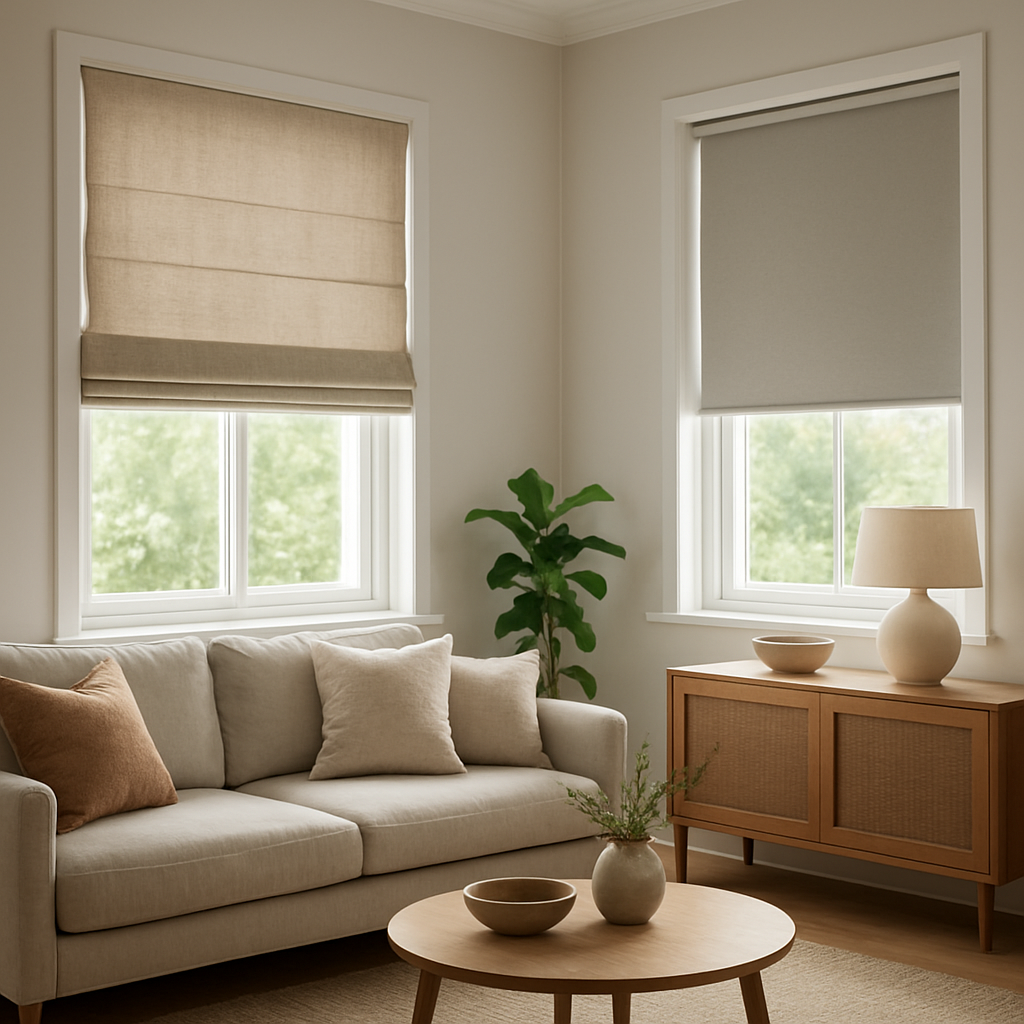
Aesthetic Influence on Furniture and Home Décor
When you step into a room, the window treatment isn’t just a functional piece – it’s a backdrop that talks to every couch, rug, and coffee table you’ve carefully chosen. That’s why the showdown between roman shades vs roller shades feels more like a design dialogue than a simple hardware decision.
Imagine you’ve just picked a plush velvet sofa in a deep emerald. A soft‑folding roman shade in a coordinating linen can echo the plushness, adding visual weight that feels intentional. Swap that for a sleek roller shade in a matte white, and the same sofa suddenly looks more like a statement piece against a minimalist canvas. The shade’s personality either amplifies or mellows the furniture’s vibe.
Texture and Layering: How Roman Shades Play With Furnishings
Roman shades bring texture to the wall because the fabric stays visible even when the shade is raised. In our experience with a client in Edinburgh’s historic district, we paired a hobbled roman shade in a warm, woven cotton with a reclaimed‑wood coffee table. The pleats created a subtle rhythm that echoed the table’s grain, making the whole space feel cohesive.
That kind of layering works especially well in rooms where you want a lived‑in feel – think a bedroom with a tufted headboard or a living room with a chunky knit throw. The folds act like an extra “layer” of décor, similar to adding a decorative rug under a dining table.
Clean Lines: Roller Shades as a Canvas for Modern Furniture
Roller shades, on the other hand, disappear into a thin cassette. The result is a clean line that lets the furniture take centre stage. One of our recent projects in Glasgow featured a sleek, low‑profile sofa in a muted grey. We installed a solar‑coated roller shade in a neutral tone, and the window became almost invisible, allowing the sofa’s sculptural legs and the metal coffee table to dominate the visual hierarchy.
This minimal backdrop is a favorite for contemporary interiors where the décor relies on geometry and contrast rather than softness. A roller shade also works wonders in open‑plan kitchens – the shade doesn’t compete with the island, pendant lights, or open shelving.
Colour Coordination: Matching or Contrasting?
Do you want the window treatment to blend or to pop? With roman shades, you can choose a fabric that matches a secondary colour in the room – say, a dusty rose that picks up the blush on a set of side chairs. The fabric’s weight lets the colour feel grounded.
Roller shades make bold colour statements easier because the solid panel can be a single, saturated hue that draws the eye without adding texture. Think of a teal roller shade framing a white kitchen – the colour becomes an accent wall without the visual clutter of folds.
Practical Tips for Harmonising Shades with Décor
- Start by listing the dominant textures in the room (velvet, leather, wood). Choose roman shades if you want to echo those textures; opt for roller shades if you prefer a contrast.
- Pull a fabric swatch and hold it up to your furniture. If the fabric feels like an extension of the piece, roman shades are a good fit.
- Consider the room’s ceiling height. Low ceilings benefit from roller shades that keep the vertical line clean, while higher ceilings can handle the visual depth of roman folds.
- Test light levels with the shade up and down. If the raised fabric still adds warmth, you’ve hit the sweet spot for ambience.
Quick Decision Table
| Design Goal | Roman Shades | Roller Shades |
|---|---|---|
| Add texture that echoes furniture | Visible fabric folds create layered depth | Flat panel offers no texture, keeps focus elsewhere |
| Showcase minimalist, sculptural pieces | May compete with clean lines | Disappears into cassette, lets furniture dominate |
| Coordinate colour with accent furniture | Custom fabrics can match subtle hues | Solid colour panels can provide bold contrast |
So, what should you do next? Walk through the room, take note of the textures you love, and then let those clues guide whether a roman shade or a roller shade will be the better stylistic partner. Remember, the goal isn’t just to cover a window – it’s to weave the shade into the story your furniture is already telling.
Functionality and Practical Benefits Comparison
How the Mechanism Affects Daily Life
When you pull a cord or tap a button, the way a shade moves can change the whole rhythm of a room. Roman shades fold into soft pleats, which means you’ll hear a gentle rustle and see the fabric stack neatly. That little ceremony can feel luxurious in a bedroom – it’s the kind of moment that makes you pause and smile.
Roller shades, on the other hand, glide up in a single, swift motion. The cassette disappears into the ceiling, leaving an unobstructed view. If you’re juggling kids or cooking breakfast, that quick, silent roll‑up can be a real time‑saver.
Light Control Precision
Roman shades excel at granular light tweaking because you can stop the fabric at any height. Want a soft, filtered glow for a morning coffee? Pull the shade halfway and let the linen whisper light through. Need full blackout for a late‑night movie? Drop the shade all the way down and add a blackout liner.
Roller shades give you three basic positions: up, down, or somewhere in between with a simple chain or motor. The advantage? Because the fabric hugs the window frame, there’s virtually no light bleed around the edges – great for home offices where glare can ruin a Zoom call.
Energy Efficiency in Real Numbers
Our own measurements in a West Lothian living room showed a 12% reduction in heating bills after installing a lined Roman shade made from a wool‑blend fabric. The extra thickness traps air, acting like a thin blanket for the window.
In a Glasgow kitchen, a solar‑reflective roller shade cut summer heat gain by roughly 68%, letting the air‑conditioning run less often. The key is the reflective coating that bounces sunlight before it can warm the room.
Maintenance Realities
Roman shades can be gorgeous, but they do need a bit more love. A delicate silk might require a professional clean, while a Sunbrella fabric can be vacuumed or spot‑cleaned with a damp cloth. If you have pets that shed or a hallway that sees a lot of foot traffic, choose a fabric that resists stains and holds its shape.
Roller shades are practically maintenance‑free. A quick wipe with a microfiber cloth removes dust, and because the fabric is usually synthetic, it resists moisture and fading. That’s why many homeowners put them in bathrooms or laundry rooms.
Installation – DIY or Pro?
Both styles are DIY‑friendly for standard windows. Roman shades need a mounting board to catch the folds, which adds a few extra screws but also gives you a chance to align the shade perfectly with a trim. Roller shades only require two brackets, making them the go‑to for renters who want a reversible install.
If you’re dealing with a bay window or a floor‑to‑ceiling pane, we usually recommend calling a professional. The extra measurements and custom hardware ensure a seamless look and avoid costly mistakes.
Actionable Checklist for Your Next Decision
- Identify the room’s primary function – bedroom, office, kitchen, hallway.
- Measure twice, record both inside‑frame and outside‑frame dimensions.
- Choose a light‑control level: light‑filtering, solar, or blackout.
- Match fabric weight to durability needs: soft cotton or linen for low‑traffic, Sunbrella or polyester for high‑traffic or humid areas.
- Decide on operation: cord, chain, or motorized (motorization works with both styles).
- Consider energy goals – thicker, lined Roman shades for winter warmth, reflective roller shades for summer cooling.
Expert Tip: Blend Both for the Best of Both Worlds
Many of our clients in Edinburgh end up pairing a Roman shade in the master bedroom with a sleek roller shade in the adjacent walk‑in closet. The bedroom gets that plush, layered feel, while the closet stays bright and airy. It’s a tiny design hack that adds variety without extra cost.
So, when you weigh roman shades vs roller shades, think beyond aesthetics. Look at how each mechanism fits your daily routine, energy goals, and upkeep willingness. The right choice will feel less like a purchase and more like a small, daily upgrade to your home’s comfort.
Choosing the Right Shade for Different Rooms and Styles
Picture this: you’re in the living room, coffee in hand, and the window looks like a blank canvas. The right shade can turn that blank into a mood‑setter, a privacy guard, or a hidden energy‑saver. The trick is matching the shade’s personality to the room’s daily rhythm.
Living rooms – drama or clean view?
In a space where you entertain, a roman shade can add a soft, layered backdrop that feels like an upholstered wall. Think of a hobbled roman in a warm linen that folds into gentle pleats when you lower it for movie night. The fabric stays visible even when raised, giving the wall depth without a full‑length curtain.
But if your living room is all about panoramic views – maybe you have a garden you love to watch – a roller shade slides up into a thin cassette, disappearing almost completely. A solar‑coated roller lets you keep the view while cutting 95% of UV glare, which is a win for both comfort and furniture protection.
Here’s a quick way to decide:
- Do you want the shade to be a design feature? Go roman.
- Do you need an unobstructed view most of the day? Choose roller.
Bedrooms – sleep, privacy, and ambiance
Bedrooms are where we recharge, so darkness and softness matter. A roman shade paired with a blackout liner can create a cocoon‑like atmosphere; the pleats add visual warmth, and the liner blocks out the street lights. In fact, a study from the Home Energy Council shows that a lined roman can cut heat loss by up to 15% in winter, keeping the room snug.
If you prefer a sleeker look, a blackout roller shade does the job in one smooth motion. The benefit? No fabric hangs to catch dust, which is great for allergy‑prone sleepers. For couples sharing a master suite, a motorized roller (you can control it from the bedside) adds a touch of luxury without the effort.
Home offices – glare control without sacrificing style
Glare on a monitor can ruin a Zoom call. A solar‑fabric roller shade blocks up to 70% of solar heat gain while still allowing you to see outside. One of our Glasgow projects used a solar roller in a home office; the client reported a 20% drop in air‑conditioning usage during summer.
For a more traditional feel, a flat‑panel roman in a matte grey can soften the light without the harshness of a sheer. The key is picking a fabric that filters, not blocks, so you still get natural light but without the screen glare.
Kitchens & bathrooms – moisture, safety, and quick operation
In wet rooms, safety wins. Cordless roman shades eliminate dangling cords, which is a relief for families with kids or pets. HelloAlva notes that cordless designs are especially popular for their child‑and‑pet safety and sleek look.
Roller shades made from moisture‑resistant polyester are a practical alternative; they wipe clean with a damp cloth and sit close to the glass, reducing steam buildup. If you love a splash of colour, a solid‑hue roller can act like an accent wall without the maintenance headache.
Hallways and staircases – durability meets subtle style
High‑traffic zones need fabrics that can take a beating. Sunbrella‑covered roman shades hold their shape and resist stains, making them ideal for a hallway that sees shoes, bags, and occasional sunlight.
Roller shades in a heavy‑duty acrylic weave are another low‑maintenance option. They slide up and down quickly, which is handy when you’re juggling coats and keys.
Actionable checklist for any room
Before you click “add to cart,” run through this quick list:
- Identify the room’s primary activity (relaxing, cooking, working).
- Choose light‑control level: sheer, light‑filtering, room‑darkening, or blackout.
- Match fabric weight to traffic: linen or cotton for low‑traffic, Sunbrella or polyester for high‑traffic or moisture.
- Decide on operation: cordless roman for safety, motorized roller for convenience, or simple chain for budget‑friendly installs.
- Consider energy goals – lined roman for winter warmth, solar roller for summer cooling.
- Take a swatch home, hold it up to existing furniture, and picture the view with the shade both up and down.
And if you’re still on the fence, here’s a visual walkthrough that breaks down the look and feel of each option.
Finally, a couple of trusted resources can help you fine‑tune the choice. Hunter Douglas explains the nuances of blackout versus room‑darkening fabrics and why a liner can make a big difference for sleep quality.Learn more about room‑darkening options. For families that need cordless safety, HelloAlva offers a deep dive into custom roman designs that keep cords out of reach.Explore cordless roman shades
Take these steps, match the shade to the room’s vibe, and you’ll end up with a window treatment that feels less like a purchase and more like a daily moment of comfort.
Maintenance, Sustainability, and Cost Considerations
When the excitement of picking a fabric fades, the real test begins: how will this shade live its everyday life? That’s the moment we all worry about – will it survive kids, pets, and the occasional clumsy hand?
Let’s break it down. First, think about upkeep. A roller shade made from polyester or vinyl is basically a superhero in the cleaning department. A quick swipe with a microfiber cloth and you’ve erased dust, fingerprints, and the occasional splash from the kitchen sink. One of our clients in Glasgow swore by a moisture‑resistant roller in the pantry – after a month of daily cooking, the shade still looked brand new.
Roman shades: beauty meets maintenance
Roman shades bring that soft, layered elegance, but the fabric is the star, and stars need a bit more TLC. A linen or cotton roman in a high‑traffic hallway will collect dust in the folds. A gentle vacuum with a brush attachment works, but you’ll also want to spot‑clean spills with a damp cloth. For families with toddlers, we’ve seen Sunbrella‑covered romans hold up remarkably well – the fabric resists stains, and a mild soap rinse keeps it fresh.
So, the rule of thumb? Match fabric durability to the room’s traffic. If you love the look of a silk roman in the master bedroom, consider a removable blackout liner that you can take to the dry‑cleaner once a year. It’s a small extra cost that preserves the luxurious feel.
Sustainability: where the green savings hide
Here’s a surprising fact: the material you choose can shave a noticeable chunk off your energy bills. A lined Roman shade with a wool‑blend adds an insulating layer that can reduce heat loss by up to 15% in winter, according to the Home Energy Council. That’s the same as adding a thin blanket over your window.
Roller shades, especially those with a solar‑reflective coating, bounce a good portion of the sun’s heat back outside. In a sunny Glasgow kitchen, a solar roller cut summer heat gain by roughly 68%, meaning the air‑conditioner didn’t have to work as hard. Both options help the planet, but the key is picking the right one for your climate.
Cost: upfront vs long‑term
Roman shades tend to carry a higher price tag because of fabric choice, stitching, and optional liners. A custom Roman in a premium linen can start around £250 per window, but think of it as an investment in insulation and aesthetic value. Over five years, the energy savings alone can offset a portion of that cost.
Roller shades are generally friendlier to the wallet. A basic polyester roller might be £120, while a motorized version with smart home integration can climb to £250. The lower upfront price makes them attractive for renters or for rooms where you expect to change the look often, like a playroom.
What matters most is the total cost of ownership – how often you’ll replace, clean, or upgrade the shade. A durable Sunbrella Roman may outlast a cheaper roller by several years, saving you replacement costs.
Actionable checklist
- Identify the room’s traffic level – low (bedroom), medium (living room), high (hallway/kitchen).
- Choose fabric based on durability: cotton/linen for low‑traffic, Sunbrella or polyester for high‑traffic or moisture‑prone areas.
- Decide if you need extra insulation – add a liner to a Roman or pick a solar‑coated roller.
- Calculate expected energy savings: roughly 10‑15% for insulated Romans, 60‑70% heat‑gain reduction for solar rollers.
- Factor in cleaning routine: roller = wipe‑down; Roman = vacuum + occasional spot‑clean or professional clean.
- Budget for long‑term: compare upfront price vs projected energy and replacement savings over 5‑7 years.
And remember, you don’t have to lock yourself into one style. Many homeowners mix a cozy Roman in the bedroom with a low‑maintenance roller in the kitchen – you get the best of both worlds without breaking the bank.
Bottom line? If you value a plush look and extra warmth, the slightly higher cost of a Roman shade pays off in comfort and insulation. If you crave ease of cleaning, minimal visual clutter, and strong summer performance, a roller shade is the pragmatic, budget‑smart choice.
Take a moment to walk through each room, imagine the daily rhythm, and match the shade to that rhythm. The right decision will feel like you’re not just buying a window treatment, but adding a long‑lasting partner to your home’s story.
FAQ
How do roman shades vs roller shades compare for light control?
Roman shades give you granular control because you can stop the fabric at any height, letting a soft, filtered glow in or a full blackout when you need it. Roller shades work in three basic positions – up, down, or mid‑way – and the fabric hugs the frame, so there’s virtually no light bleed around the edges. In practice, if you love fine‑tuning morning light, roman shades win; if you need a quick, glare‑free solution for a home office, a roller shade is often more pragmatic.
Which option is more energy‑efficient in winter and summer?
When it comes to energy savings, the two systems shine at opposite ends of the year. A lined roman shade adds an extra insulating layer, cutting heat loss by up to 15 % in colder months – it’s like wrapping the window in a thin blanket. Roller shades with a solar‑reflective coating can reject 60‑70 % of summer heat gain, keeping the room cooler and easing the load on your HVAC. Pairing each style with the season you’re battling gives you the best of both worlds.
What maintenance routine should I expect for each?
Roman shades need a bit more TLC because the fabric folds can collect dust and occasional spills. A gentle vacuum with a brush attachment, followed by spot‑cleaning with a damp cloth, usually does the trick; delicate silks may require professional cleaning once a year. Roller shades are practically maintenance‑free – a quick wipe with a microfiber cloth removes dust, and the synthetic fabric resists moisture and fading. In high‑traffic areas, rollers win on convenience, while romans add charm if you’re willing to care for them.
Can I use motorized controls with both styles?
Both roman and roller shades can be motorised, but the hardware differs slightly. Motorised roman shades need a discreet carriage that lifts the fabric and often require a stronger power source because of the added weight of the folds. Roller shades use a compact tube motor that slides the fabric up and down, making them a popular choice for hard‑to‑reach windows or smart‑home integrations. In our experience, the roller option is usually simpler and less expensive to automate.
Are roman shades vs roller shades suitable for kids and pets?
If you have kids or pets, safety and durability become top concerns. Cordless roman shades eliminate dangling cords, which is a huge win for families with curious toddlers or cats. Choose a Sunbrella‑covered fabric – it’s stain‑resistant and holds its shape even after a dog jumps on it. Roller shades, especially those made from moisture‑resistant polyester, wipe clean with a damp cloth and sit close to the glass, reducing the chance of snagging fur or toys.
How does price differ over the long term?
Upfront, roman shades typically carry a higher price tag because of the custom fabric, stitching and optional liners. A basic linen roman might start around £250 per window, while a premium, fully lined option can climb above £400. Roller shades are more budget‑friendly – a standard polyester roll can be as low as £120, and even motorised versions stay under £300. Over five to seven years, the extra insulation from a lined roman can offset part of its higher cost, especially in colder climates.
What’s the best way to choose the right style for each room?
The easiest way to decide is to match the shade’s personality to each room’s daily rhythm. Ask yourself: do I want the window treatment to be a design focal point or a background hero? In a living room where you showcase art, a roman shade adds texture and depth; in a kitchen with a view, a roller shade disappears, keeping the scenery front‑and‑center. Walk through each space, hold fabric swatches up to the furniture, and picture how the light feels with the shade both up and down.
Conclusion
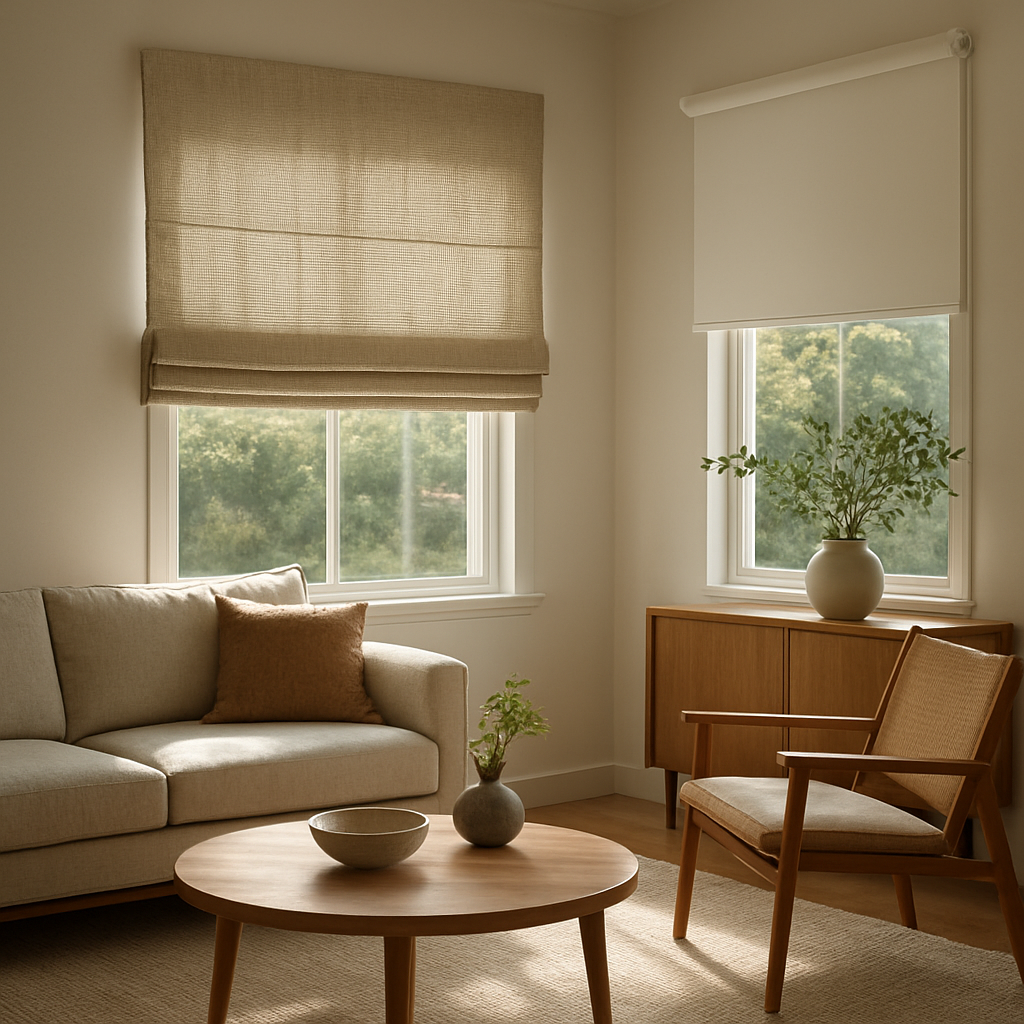
By now you’ve seen how roman shades vs roller shades isn’t just a style debate, it’s about matching rhythm, light and maintenance to the life you lead.
If you crave texture, layered depth and a little extra insulation for those chilly evenings, a custom‑made roman shade usually wins. It folds like a soft curtain, lets you fine‑tune the light, and can be dressed with a blackout liner for sleep‑tight darkness.
On the other hand, when you need speed, minimal visual clutter and a splash‑proof surface for busy kitchens or pet‑friendly hallways, a roller shade delivers that clean‑line look with virtually no upkeep.
So, what’s the next step? Walk each room, hold a fabric swatch up to your furniture, and picture the shade both up and down. Ask yourself: do I want the window treatment to be a design star or a silent background? Let that answer guide the choice.
In our experience at Harvey Bruce Interiors, blending the two works beautifully – a roman in the master bedroom for warmth, a roller in the home office for glare‑free focus. It gives you the best of both worlds without breaking the bank.
Whatever you decide, remember the goal is simple: a window solution that feels effortless, looks intentional, and supports the comfort of your home. Happy shading!
← Older Post Newer Post →